


- Carnival has announced a rise in gratuities for USA sailings. But apparently it won’t affect prices here because we don’t pay gratuities.
- While Americans see gratuities on their bills, Australians have little transparency.
- Gratuities are among the most contentious areas of cruise. But is it just a marketing trick?
Carnival Cruise Lines has announced an increase in gratuities for sailings in the US. Guests pay a daily gratuity, and the money is distributed to crew onboard – Carnival’s daily gratuity has risen US$1 to US$17 per day.
It appears on guests’ bills in the US, and it’s a constant source of irritation. Crew have reported a growing number of guests using the system of removing default gratuities by going to guest services and having the payments stopped.
In Australia, however, things are not so straightforward.
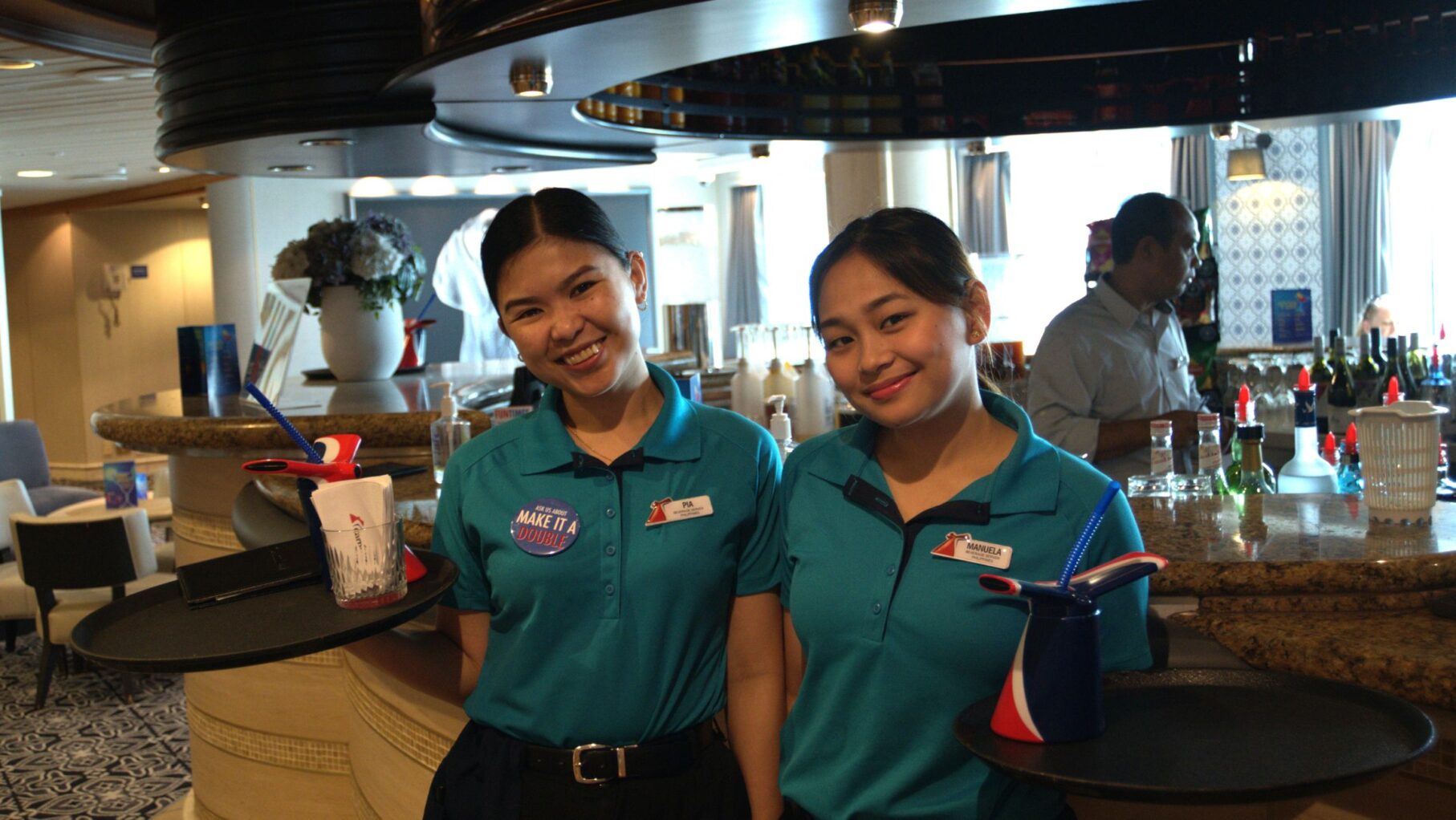
When Carnival Australia was asked whether the US rise will affect prices for Australian fares, they told us: “This has no link to Carnival’s Australian fares and does not affect them”.
The explanation for this is that Australians don’t pay these separate gratuities like Americans do. They are simply quoted the cruise fare and pay the quoted amount.
But does that mean they don’t pay gratuities?
Americans who sail on the ships and book in USD from their home countries do pay gratuities. It allows cruise lines to quote lower prices – great for marketing and a bit of a David Copperfield sleight of hand.
After all, if Americans were paying gratuities and Australians not pay, the crew would be up in arms. Unless, of course, they pay and rewards don’t change.
While cruise lines such as Carnival and Princess claim that Australian’s aren’t charged any gratuities, Royal Caribbean has a different approach. Royal Caribbean recognises that “for sailings in Australia, service charges for stateroom attendants and dining room staff are included in the fare”.
But they are not broken out on bills.
Apparently, its a cultural thing. While people from the US are accustomed to adding taxes and tips to the advertised price, Aussies prefer seeing the full price up front.
Some in the industry say because Australians don’t like tipping, it isn’t shown on the bill. But some cruisers find that argument insulting. Just because Australians don’t like tipping doesn’t mean hiding it is justified.
What’s less commonly scrutinised is how this system actually works.
For example, if a Princess ship sails half the year in Australia, where guests aren’t apparently being charged gratuities, and half the year in Alaska, where guests are paying USD$17 per gratuity per day, what does this actually mean for the crew’s wages and the passengers’ wallets?
Does this mean that crew members receive more money in locations where gratuities are separately and explicitly charged? If so, this is surely unfair for the cruise ship worker.
If crew members are receiving equal wages in both destinations, this would either mean that paying of gratuities by US passengers doesn’t mean more money is actually going to the crew, or that Australians are being charged gratuities but the amount is hidden.
Before you think the numbers are small here, check out the calculations.
On a 10-day cruise, passengers would be paying an average of USD$19 for their gratuities, so a ship of 4800 people would be paying USD $912,000 into the pool. If we say this is getting divided between 1300 crew members, that is USD$700 each.
However, if there are only 3000 on that same ship, on a voyage that didn’t sell as well, divided between the crew members, the total gratuities would only be USD$415 each, a significant difference.
As the American and Australian systems has been presented to us, on a cruise with more people than usual, American crew members would get paid extra, but crew sailing Australia would be paid the same as usual.
There is another argument for lines such as Royal Caribbean. If service charges are included in Aussie fares, why are US passengers able to have transparency over the quantity of gratuities they are paying, and remove gratuities from their fare if they wish, while Australians cannot?
The confusing world of cruise ship gratuities creates many contradictions, and cruise passengers should be able to have more clarity.
It would appear that either US cruisers are paying gratuities that Aussies don’t have to, or Aussies have gratuities built into their cruise fare without being aware of it.
More transparency for Aussies would mean cruisers could feel confident that they’re treating crew fairly and rewarding exceptional service where necessary, but also that they’re not spending extra on tipping when they’ve technically already added a surcharge to their fare.
What do you think? Tell us your stories about how you handle gratuities on board ships in Australia in the comments below.

Related Posts
-

Carnival Elation Published by Jane Archer Published on 27 November 2024 AccommodationFoodActivitiesFamilies .entry-header{display:none;} For first time cruisers, choosing your first cruise can make or break whether you love this holiday…
-
Carnival Cruises has opened it's previously exclusive SEA (sailings exclusively for adults) to the public.
-
Now it’s in its third life as a Carnival ship, it will continue serving up family-oriented vacations, sailing year-round of Sydney.
-
Carnival Cruise Line is launching a new ship dedicated to sail out of Port Canaveral in the spring of 2027.






No shipping line should charge gratuities for service regardless of hidden or not.
If a ships passenger wants to tip for ” excellent service ” that should be up to the passenger .
One would expect that all crew members would give good service. That’s what they are there for !
If the crew are not being paid market rates then it’s up to them to correct with their employers. Tipping in the USA is farce and just an excuse for employers to underpayment their employees .
We always tip our room steward and also give them a little gift to say thank you for your services. On our last cruise our cabin steward went out of his way to help us. In Australia we don’t tip unless the service given is exceptional. With rising costs with cruising people will tip less in Australia.
The whole cruise gratuity system needs much greater clarity including what happens here in Australia compared to globally – the other issue is whether the crew do actually receive the gratuity division as a gratuity or is some or all of it used to pay wages as I suspect is the case.
The cruise companies need to come clean on this.
It would be much clearer if gratuities were not automatically added or included in the fare and passengers could choose which crew had gone above and beyond in their service to the specific passenger and reeatd them.
Then of course the crew behind the scenes would not get anything so the answer to that is that they are paid a performance incentive that is included in the fare as a cost of doing business and that they are paid a fair wage and depending on gratuity split which I reckon does not actually happen!
Cruise companies should pay a fair wage to begin with
I see gratuities as extra profit and always remove them on sailings outside Australia
Expecting a commercial enterprise to share the component pricing of their service is ridiculous.
So fees are raised where they’re charged. Inclusive fees may rise elsewhere to cover the mandatory fees. They’re all just a cost of doing business. Either accept the cost of the cruise or don’t.
Why can’t America pay their cruise workers a living wage instead of trying to get the customers to subsidise it in tips?
I prefer knowing the total cost of my fare before travelling. I don’t want to be hit with extra charges. We have removed the gratuities when it is applied as an extra.