

- The Iran war has greatly changed the travel landscape.
- Airline prices have skyrocketed, travellers are marooned in uncertainty and people are looking for travel closer to home.
- Aussies are split between those who are continuing to travel through the Middle East as SmartTraveller warnings persist, and those choosing to take on longer flights through Asia.
With more than 100 days passed since the beginning of America’s war against Iran, we’re now seeing clearly the effects on travellers. Some of these effects may be fleeting, but others could be here to stay.
As another weekend of waiting to see if a peace deal is brokered, experts say that travellers are becoming more cautious and that they are seeking out travel closer to home. In general, Australians are seeking more reassurance in their travel plans.
The price of jet fuel has doubled, significantly increasing the price in flights. Travellers no longer have the luxury of booking spontaneous flights and now Australians have to consider their investment into a holiday.
Cruise lines like Norwegian Cruise Line have reported that bookings have been affected ” by softer demand related to heightened geopolitical uncertainty”. Carnival Cruise Line has noted that more Aussies are looking for travel closer to home.
European summer bookings have fallen seven per cent since last year, and airlines are dealing with higher operational costs and more hesitant customers. However, what will all of this mean?
The new normal looks like thinking in back-up flight routes in case you face cancellation, planning holidays further ahead, flight prices taking up a larger chunk of Aussie budgets and checking travel warnings and alerts becoming a regular activity.
Aussies now plan their holidays more meticulously
Gladis Mahfoud, the founder of Investing in Memories, an independent hybrid travel agency says that Aussies are now focusing on ways to feel assured of their holiday getting to happen, or having a way to recover losses if it doesn’t.
“Yes, we’ve noticed some travellers becoming more cautious when planning international holidays, particularly those involving Europe and the Middle East. While many Australians are still eager to travel, there is a greater focus on flexibility, travel insurance and understanding airline routing before booking.”
Mahfoud says that this is leading to Aussies being much more careful and precise in the planning stage of travel.
“Some travellers are booking further in advance to secure preferred itineraries and pricing, while others are taking more time to research their options before committing. We’ve also noticed that travellers are placing greater value on expert advice to help them navigate an increasingly complex travel environment.
“Overall, the desire to travel remains strong, but travellers are asking more questions, exploring wide range of destinations and seeking greater reassurance before making decisions.”
Sharon Summerhayes, owner of Deluxe Travel and Cruise says she’s seeing a mix between Aussies who are showing caution and staying close to home, and those who are leaning into the uncertainty and travelling anyway.
“I have a mixed bag – some travellers are opting to stay close to home and others are not fazed at all. I think most people have come accustomed to uncertainty over the last few years, so are going to book what they really want to do, and hope for the best.”
This is leading to more travel interest close to home, rather than the usual European summer escape.
We’re also seeing increased interest in closer to home, such as Asia Cruising (Royal Caribbean, MSC, Princess, Hapag-Lloyd, Disney…), the South Pacific and domestic cruising. At the same time, demand for destinations across the Americas remains very strong.”
Aussies continue to fly through the Middle East – or take longer routes
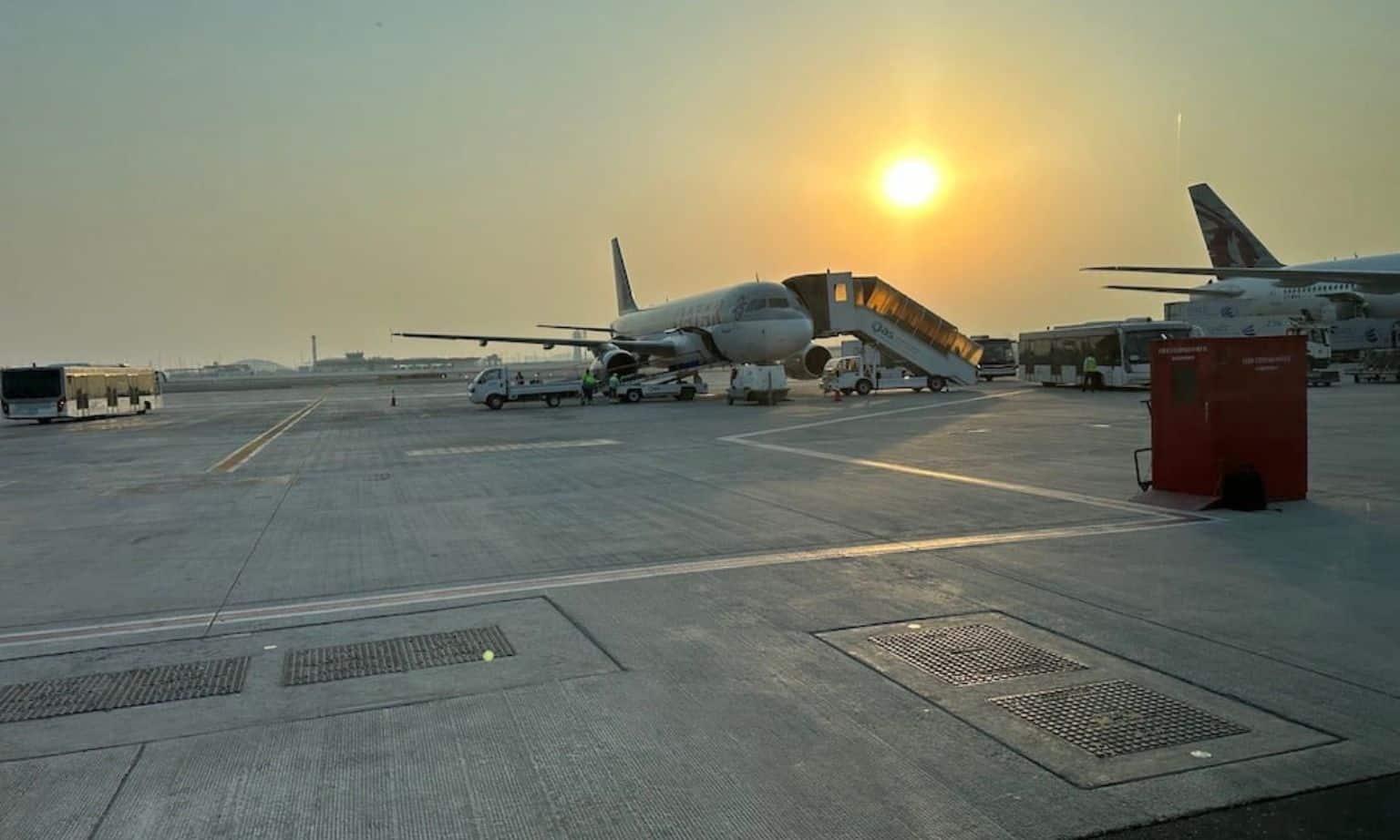
While SmartTraveller warnings of ‘Do not travel’ persist across the Middle East – despite travel industry campaigns to reclassify the region – agents are reporting that while many are seeking out alternative routes, many are continuing to take Middle East connections.
However, many other Aussies are having to accept long haul flights with more stopovers and transit time.
Mahfoud says: “Many travellers continue to fly through major Middle Eastern hubs because they often provide convenient connections and competitive fares. However, we are also seeing increased interest in alternative routings through Asia, particularly via Singapore, Hong Kong and China.
“One option we’re currently recommending to some clients is travelling via the Silk Way, China. In many cases, longer transit times can surprisingly become part of the holiday experience, as some Chinese airlines offer complimentary transit tours that allow travellers to explore the destination during their layover before continuing to Europe.”
Summerhayes says Aussies are already heading back to the Middle East despite the warnings.
“There is now more confidence flying through the Middle East with airlines continually adding flights and being almost back to pre-conflict timetables. Some of our passengers are opting for Asian Carriers out of an abundance of caution.”
The advice to know
Mahfoud shared her advice on how to prepare for travel in times like these.
- Purchase comprehensive travel insurance as soon as they book.
- Keep informed through official government travel advisories and their travel provider.
- Consider flexible fares and booking conditions where available.
- Allow extra time for connections on complex itineraries.
- Work with a trusted travel advisor who can assist if plans change unexpectedly.
- For cruisers, review the cruise line’s itinerary policies and understand that ports of call can occasionally change for operational or safety reasons.”
She added: “Travel remains one of life’s most rewarding experiences. While global events can sometimes create uncertainty, most holidays proceed as planned, and with good preparation travellers can minimise risks and travel with confidence.”
Travel agents are working overtime
Mahfoud explains the toll that uncertain times take on agents, but also the importance of the work they do.
“Travel advisors have had to stay extremely proactive. In recent years, we’ve become accustomed to monitoring changing travel conditions, airline schedules and destination requirements, and that continues today.
“I attended an industry webinar hosted by International Air Transport Association (IATA) yesterday, where one of the key messages was the important role professional travel advisors play in helping both travellers and the industry navigate periods of uncertainty. We’ve seen this during COVID-19, the September 11 attacks, the Gulf War, and now the ongoing conflict in the Middle East.
“While these situations can create additional work when itineraries need adjusting, they also reinforce the value of working with a trusted travel advisor. Travel advisors act as advocates for their clients, helping them understand their options, monitor developments and find solutions when plans need to change.”
Summerhayes added: “Any disruption is difficult, but it’s something we’ve become accustomed to (unfortunately). We are glad to be there for our clients, to advise and facilitate changes. To have a real person on the other end of the phone to provide support would be invaluable in uncertain times, and I know my clients are very grateful to have me in their corner.”

Related Posts
-

The travel industry's peak body is mounting a campaign to persuade the government to lift its Do Not Travel ban.
-
Around Australia, travel agents are battling to get guests to their ships despite the grounding of Middle Eastern airlines. Peter Lynch talks to Michael Middleton of My Cruises about this…
-
New survey reveals that our readers are among the world's most resilient travellers, carrying on cruising despite a world in crisis
-
While the wealthy throw money at their problems, the budget-savvy are snapping up deals to markets away from Europe, such as Canada, Hawaii and Japan.