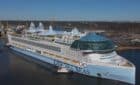
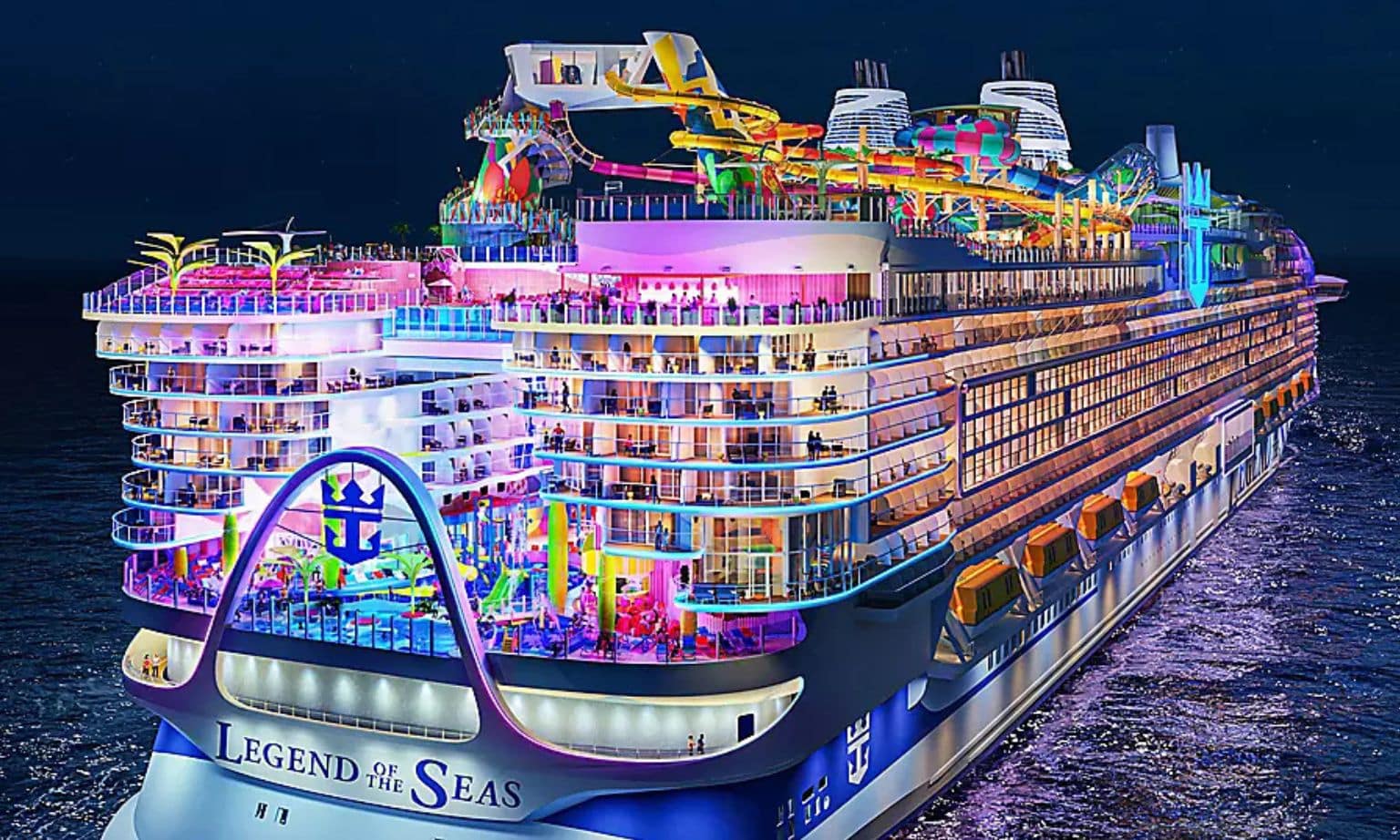
- Legend of the Seas arrives in Barcelona as Royal Caribbean takes its boldest European gamble yet.
- The ship, which can carry 7,600 passengers and with crew has 10,000 on board.
- But she is an amazing piece of engineering, powered by LNG and claims the best green credentials in cruise.
The arrival of Legend of the Seas in Barcelona this week is about far more than launching another record-breaking cruise ship.
For Royal Caribbean, it is a test of whether the world’s biggest and most technologically advanced cruise ship can change perceptions in one of Europe’s most outspoken anti-cruise cities.
Barcelona has become the global symbol of overtourism. Images of protesters squirting tourists with water pistols have flashed around the world. City authorities have tightened cruise policies, reduced terminal capacity and repeatedly questioned the role of mega ships in the city’s future.
Yet this week, Royal Caribbean has done something remarkable. Rather than avoiding the controversy, it has sent its newest flagship, the world’s largest cruise ship, straight into the debate.
It’s a bold statement. And the industry will be awaiting the results with baited breath.
Europe’s first Icon Class ship
Legend of the Seas is the third ship in Royal Caribbean’s revolutionary Icon Class, but the first designed to spend its inaugural season in Europe rather than the Caribbean.
After a media preview voyage from Malaga, she has begun her first passenger cruises between Rome and Barcelona before heading to Florida later this year.
Royal Caribbean President and CEO Michael Bayley, who has been holding court aboard his latest mega ship, Europe has always been part of the Icon story. When Legend was announced, Bayley described her as “the next bold step” for the company.
“We look forward to bringing the revolutionary line-up of experiences to more families and adventurers across Europe, the Caribbean and beyond.”
He has previously said it was inevitable that an Icon-class ship would eventually sail European waters. But can Europe learn to love these ships as much as Americans do?
Their sailings in the Caribbean have been record breakers, carrying full payloads on weekend cruises out of Florida. Europe is different.

Barcelona’s complicated relationship with cruising
Few cities benefit more from cruise tourism than Barcelona. Millions of visitors arrive every year. Cruise passengers spend money in hotels, restaurants, taxis, museums and retailers. The city is one of Europe’s most important homeports, generating thousands of tourism jobs.
Yet it has also become one of the loudest critics of mass tourism. And despite the fact that cruise ships cary a very small proportion of the city’s visitors, they have been singled out because they are so visible.
Successive city administrations have sought to limit cruise growth, arguing that congestion, pollution and housing pressures outweigh the benefits. Demonstrations have become increasingly visible, with anti-tourism activists famously using water pistols to spray visitors in symbolic protests against overtourism.
Against that backdrop, the arrival of a 250,000-gross-ton floating resort carrying more than 5,000 passengers might seem provocative. Or perhaps it represents something different.
A cleaner generation of mega ships
Royal Caribbean argues that Legend belongs to a very different generation of cruise ship.
Like her Icon-class sisters, she is powered by liquefied natural gas (LNG), significantly reducing sulphur emissions while cutting particulate matter and nitrogen oxides. The ship is also designed to operate using bio-LNG as supplies become available, alongside advanced waste management systems, shore-power capability where ports provide it and energy-efficient hull and propulsion technology.
Critics point out that LNG may not be a perfect solution because of methane slip, and environmental groups continue to debate whether it should be viewed as a transition fuel rather than an end point.
But there is little argument that Icon-class vessels represent the cleanest large cruise ships yet built. That matters in a city where environmental concerns dominate the cruise conversation.
To demonstrate her amazing technological prowess she passed beneath Denmark’s Great Belt Bridge with barely 30 centimetres of clearance, a margin so small it is jawdropping.
The maneuver was not just a viral maritime spectacle. It showed the strange new reality of cruise engineering, where ships are getting bigger and environmental promises are being tested in public. The real question is: Can the cruise industry keep scaling up and carry the cruising public with it?
Legend of the Seas made the Great Belt passage using retractable funnels, added ballast water, and a carefully controlled speed to lower its effective height as it passed under the bridge. A stunning piece of maritime bragging.
Bigger—but perhaps not busier
There is another argument Royal Caribbean makes. Legend of the Seas doesn’t necessarily mean more tourists. She can replace several smaller ships while delivering more economic value per port call.
Cruise lines increasingly encourage passengers to arrive days early or stay after their cruise, generating hotel nights and broader tourism spending rather than simply delivering day visitors. Barcelona itself remains one of Europe’s most attractive pre- and post-cruise destinations.
So she may represent more value to the city than three medium sized ships.

Reviewers are impressed
Early reviews suggest Royal Caribbean has once again raised the bar. Cruise Critic described Legend as a refinement of an already hugely successful formula, praising the ship’s family appeal, entertainment, neighbourhood design and extensive dining while noting that the European deployment introduces the Icon experience to an entirely new audience.
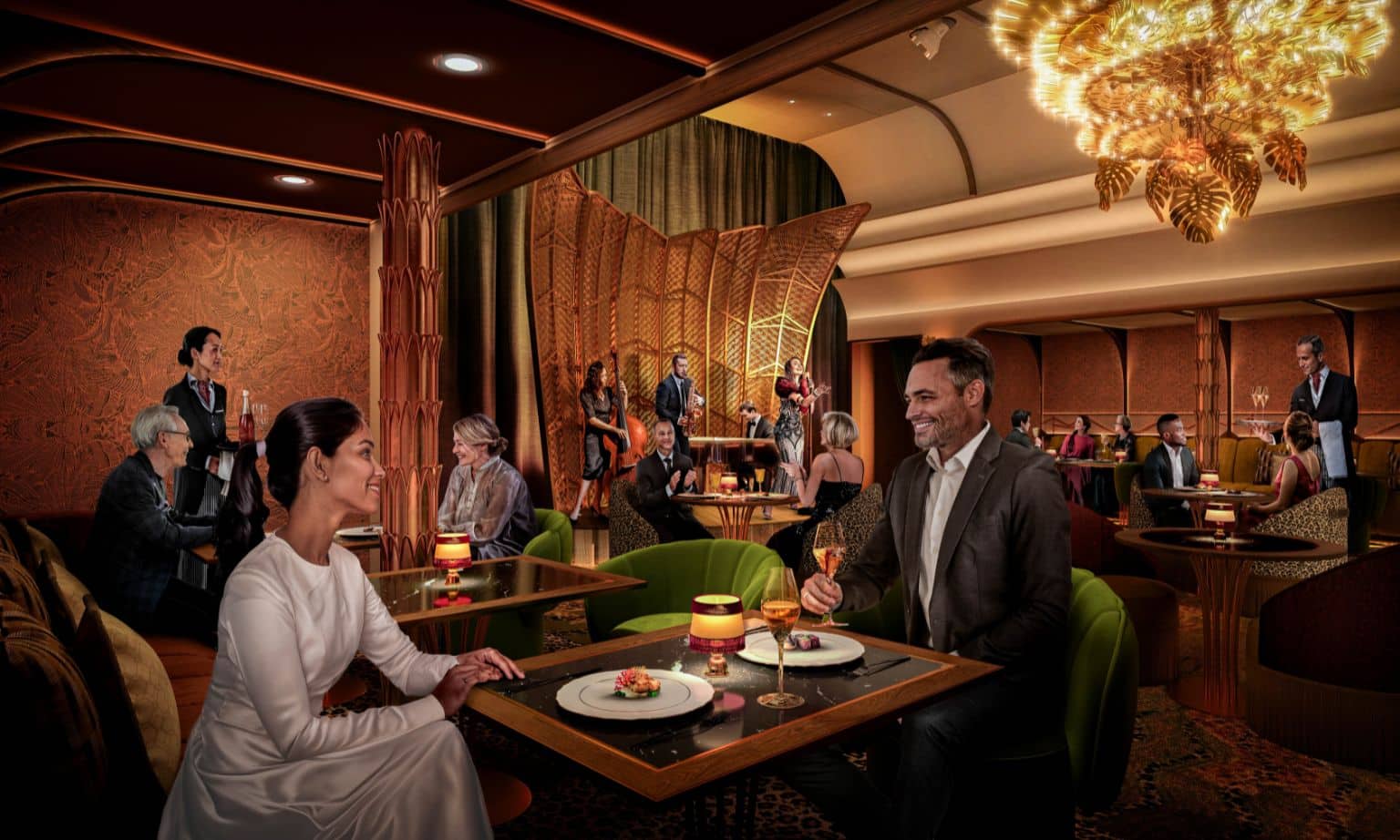
The Times, after sailing on the preview voyage, called Legend “the world’s most technologically advanced ship”, highlighting smoother propulsion, bio-LNG capability, upgraded entertainment and an extraordinary range of attractions ranging from suspended pools to immersive dining experiences. While acknowledging the ship’s high-energy atmosphere won’t suit everyone, the review concluded it pushes the boundaries of what modern cruising can offer.
The Icon Class has already proved enormously popular in North America, where demand has consistently exceeded expectations. Europe now becomes the next proving ground.
The optics matter
For Royal Caribbean, Barcelona offers both risk and opportunity. If Legend of the Seas becomes another symbol of overtourism, critics will point to her enormous scale as evidence that cruise lines have learned little.
But if she demonstrates cleaner technology, responsible operations and continues attracting passengers who spend meaningful time in the city, she may help reshape the conversation.
Cruise lines have spent years investing billions in cleaner propulsion, shore power compatibility and more efficient environmental systems. No ship better showcases that investment than Legend of the Seas.
A defining summer
This Mediterranean season may just become one of the industry’s most closely watched experiments. Not because of passenger numbers. Not because she’s the world’s largest ship.
But because Legend of the Seas is attempting something few cruise ships have tried before—changing minds in a city that has become the global face of anti-cruise sentiment.
Whether Barcelona embraces her—or merely tolerates her—could say as much about the future of European cruising as it does about Royal Caribbean itself.
See more here.

Related Posts
-

Legend of the Seas will be sailing Europe in July. Aussies are particularly welcome.
-
Legend of the Seas Published by Jane Archer Published on 27 November 2024 AccommodationFoodActivitiesFamilies .entry-header{display:none;} Royal Caribbean's Legend of the Seas is one of the line's smaller ships and offers…
-
Regent Seven Seas has reported that its new ship, Seven Seas Prestige, which just opened for bookings, is seeing suites book out at record rates.
-
As of 2024, Carnival Legend was moved from Australia to be deployed in Europe and North America and has undergone another major refurbishment to cater for the international market.