

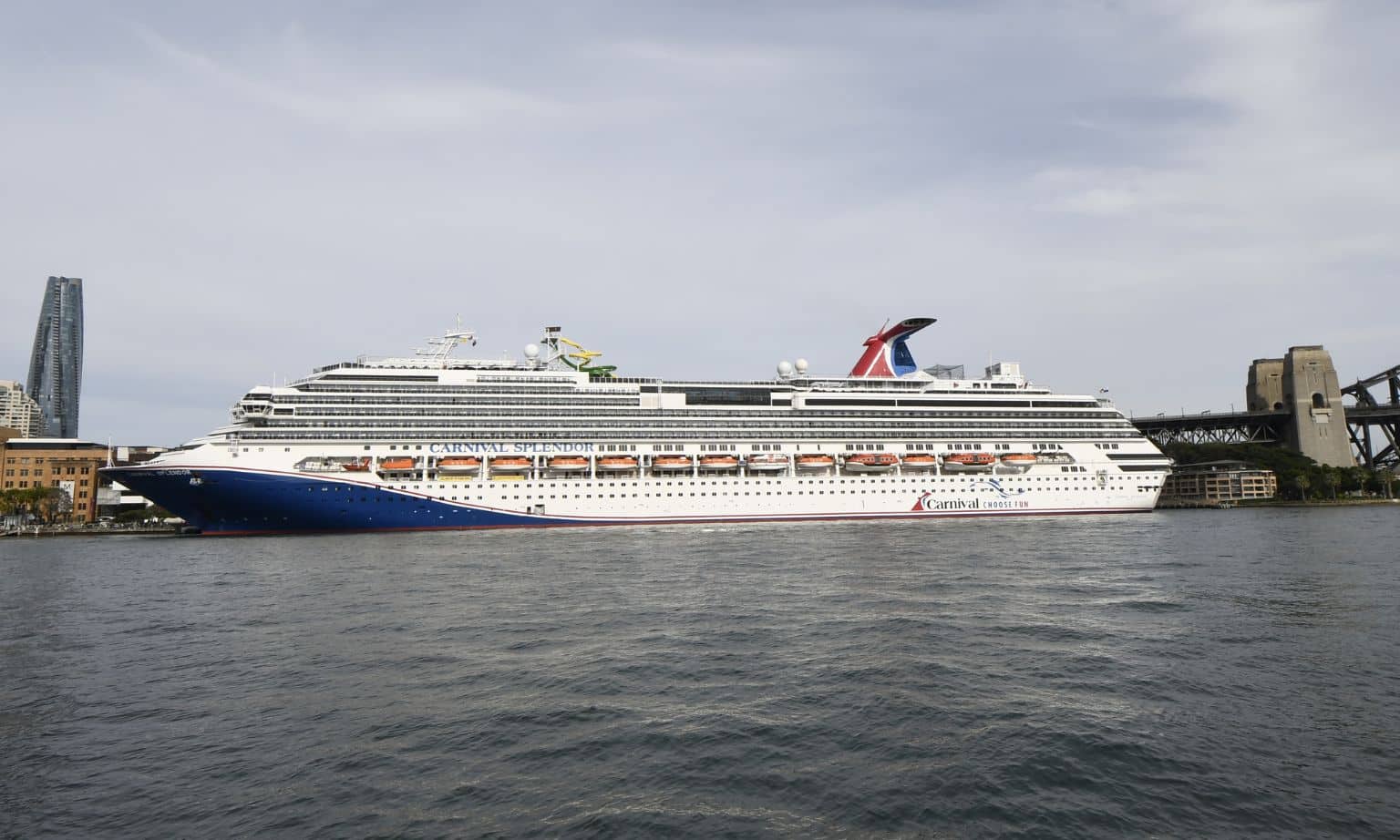
- The Cruise Line International Association’s latest report on cruise numbers reveals that cruise in Australia continues to grow.
- However, the report also reveals that more Australians are cruising overseas, and time spent on ships is declining due to the lack of capacity.
- That’s why we keep urging the government to create a national policy – there are 22,000 job and more than $7 billion of tourism dollars at risk.
CLIA’s latest source market report confirmed some good news: Australian cruise continues to grow, and more Australians are cruising more than ever. The latest numbers show a massive 1.45 million people cruised during 2025, making us the world’s fourth largest source market.
But we didn’t really need to be told that Australians love cruising. What should be causing Canberra to question its policy on cruise tourism is the fact that more Australians than ever before are flying to foreign ports – and taking their tourism dollars with them – because poor regulation and high costs are driving ships away.
In 2025, 241,000 overseas visitors cruised in Australia, New Zealand and the South Pacific. The largest number was from North America (144,000), Europe (42,000), New Zealand (33,000) and Asia (15,000). These bring valuable dollars and support 22,000 jobs in ports around the region. It’s a trade worth $7.3 billion.
Yet here’s Joel Katz, MD of Cruise Lines International Association, at what should have been a celebration to announce the rising numbers of Australian cruisers, instead bemoaning the lack of government action.
“The number of Australians cruising is at record levels and with around 80 new ships coming on line worldwide over the next decade, this passion can only rise,” he said.
“However, Australia is struggling to attract ships to our own waters because of regulatory uncertainties and rising costs, so we are becoming uncompetitive as a destination and losing tourism to other countries.
“Cruising contributes $7.32 billion a year to the national economy and supports more than 22,000 Australian jobs, so it is vital that we bring together federal, state and territory governments under a national action plan so we can create greater regulatory certainty, restore Australia’s competitiveness and attract more cruise tourism.”
While the total number of Australians cruising locally grew 8 per cent to 1.16 million in 2025, the total number of Australians cruising outside the local region grew a massive 17 per cent. This means the number of Aussies looking to cruise overseas is growing twice as fast as those looking to cruise locally, leading to a loss of valuable tourism dollars that are gained when Aussies choose to cruise locally.
Now, one in five Australians who cruise – 20 per cent – opt to cruise overseas rather than in Australia.
Another important statistic is that cruises are getting shorter, meaning that while we have a higher volume of cruising, the total volume of cruising days is not increasing. While cruises in 2024 averaged eight days, this dropped to 7.5 for 2025.
If we look back to 2018, the previous record-breaking year for cruise passengers in Australia, the average cruise was 8.8 days.
CLIA themselves recognise that the primary reason Aussie passenger numbers are able to grow is due to cruise lines creating shorter itineraries: “While the number of ships sailing locally has declined due to regulatory uncertainties and rising costs, an increase in shorter itineraries has allowed more people to sail.”
This shows that while passenger numbers can continue to rise, our local tourism industry generated $1 billion less.
More sailing days means more visits at ports, whereas a shorter average is generally due to the presence of three and four-day cruises, which often don’t visit any ports at all.
This year will perhaps be the year when the Australian cruise industry feels the true effect of this loss in capacity, taking into account the dissolution of P&O Cruises, Princess sailing two ships instead of three, Queen Elizabeth is no longer homeported, and Disney Wonder won’t be back for the end of the year.
The current situation is one where Australia has the demand to see much stronger cruise growth, but due to limited capacity, the industry is only managing to sustain minimal growth, through cruise lines cutting itineraries, and Aussies looking overseas to cruise.

So, what now?
If instead, better regulatory conditions can be created to attract more ships to the region and for cruise lines to sail longer seasons, Australia can stop finding ways to contain its cruise growth and start encouraging it instead.
Having more ships can create space for a higher passenger volume with more overall sailing days, not just shorter itineraries that inflate the overall number of passengers.
The industry needs more room to grow, in the form of attracting more ships who can take passengers, ideally another cruise terminal in Sydney and better port infrastructure in the regions throughout Australia.
Australia’s story isn’t one of a failing industry, numbers are largely going up and ships are full. It’s rather a story of untapped potential, where growth could be rapid but instead is slow and uncertain as Australia’s massive cruise demand reaches the limits of Australia’s limited cruise capacity.

Related Posts
-

Australian cruisers are younger and taking shorter cruises, a new report shows, but we risk losing the next generation to overseas markets.
-
In an exclusive interview, the boss of Cruise Lines International Association has praised some states for proactively welcoming the cruise industry.



Cruising is starting to just about Sydney and Brisbane and the rest of Australia is being forgotten. Even the upcoming Princess cruise season from Fremantle spends the ship spends two months of the 5 months going over to Sydney and New Zealand. Pre-COVID, ships used to sail regularly from Fremantle and would cruise up to Asia often in our winter and their dry season but this brief Princess season comes in Spring and the end of the dry season in Asia and for the limited cruises which do go up to Asia its in their wet season and also departs back to Asia in their wet season.
I love cruising and would do a lot more if they departed from Melbourne. I have Cruised from other states but we pay extra for the airfares. all my friends and family would like to do cruising but find it expensive with the extra cost of airfares.
It’s very disappointing too see Princess cruising ships not coming into the port of Melbourne. The government needs their heads read with them increasing wharf taxes. The retailers are missing out on extra revenue which in this day and age they are really struggling.
There must be away to get around it.
Speaking for my families they would prefer to pay extra this end than to fork out plane fares. The cost and time to get to Sydney or Brisbane by plane is very stressful. It generally works out to be dearer than the cruise itself.
The families and older generation really find this extremely stressful so they just don’t go. My husbands and I have planned our dream holidays for retirement and this is what’s happened. It’s very upsetting as we love to cruise so please Princess try and find a way for us Melbourne cruisers to once again board our beautiful ships in Melbourne
I have done a lot of cruises in the past but feel that lack of ships coming to Melbourne adds a $1000 + onto my fare
Plus ,I am now a solo traveller and even though I expect to pay double for my fare ,I find that I am not welcome on some cruise lines and have been told “Boook for 2 then only one turns up”
Don’t forget ,no cruise passengers also affects the hotel industry with pre and post accommodation.
Also,people might return for a bigger holiday to a region if they like what they see
Very sad about decrease in availability of cruising in Australia and New Zealand
I went on my first cruise in 2010 on the Sun Princess around NZ, and have basically been on a cruise every year since (except covid of course), and this includes America, Trans pacific and Europe. it’s just getting far too expensive to cruise now – it was great value for money once but not anymore – especially cruising Australia and NZ. Such a pity.
As a retired couple who enjoy cruising agree with most of this article.
There are not enough cruises out of Australia with an itinerary to enthuse us.
We have 2 upcoming cruises booked for this year and next year both embarking from European ports. This entails extra expense with airfares and pre-stay hotels and doubt with ongoing geopolitical issues.
We would love to cruise out of Australia and New Zealand but we just can’t be bothered with the same island destinations again. (and again).
Looks like Singapore, Hong Kong and Japan will be getting our money in future. Sad.
Perhaps the increase in overseas cruising is due to the fact that many previous cruisers have exhausted the local cruises and are now concentrating on new horizons overseas of which their are many. ie us.
I have stated before, while Labor governments are running the show in NSS, Vic. and Canberra tbey are on a green mindset and do not care about cruising. They are behold to the left green agenda.
It’s a real shame that more cruise lines can’t talk at Port Melbourne and other ports.
Many Victorians and Sth Australians want to see ships back in Melbourne.
Hi
Enjoy your content
This time I’m going to disagree with you
Not bad government
Greedy cruise companies
To far to bring ships to make big profits
Let’s hope Princess brings back Coral to Australia
Australians don’t like upselling when already paid for a cruise
P&O Australia was keeping us sailing around Australia, NZ
and the Pacific
With a smaller population we need small ships here, so we can fill them
P&O we’re doing a good job sailing us to small ports
Very wrong management decision for this area of the world
Let’s hope another small ship company, well priced, comes to Australia