
Cruise Passenger readers always have plenty to say about what’s going on in Australian cruise, and in the broader cruise community. In Your Say, Cruise Passenger looks at the issues our readers are writing to us about on our blogs, posts and newsletters.
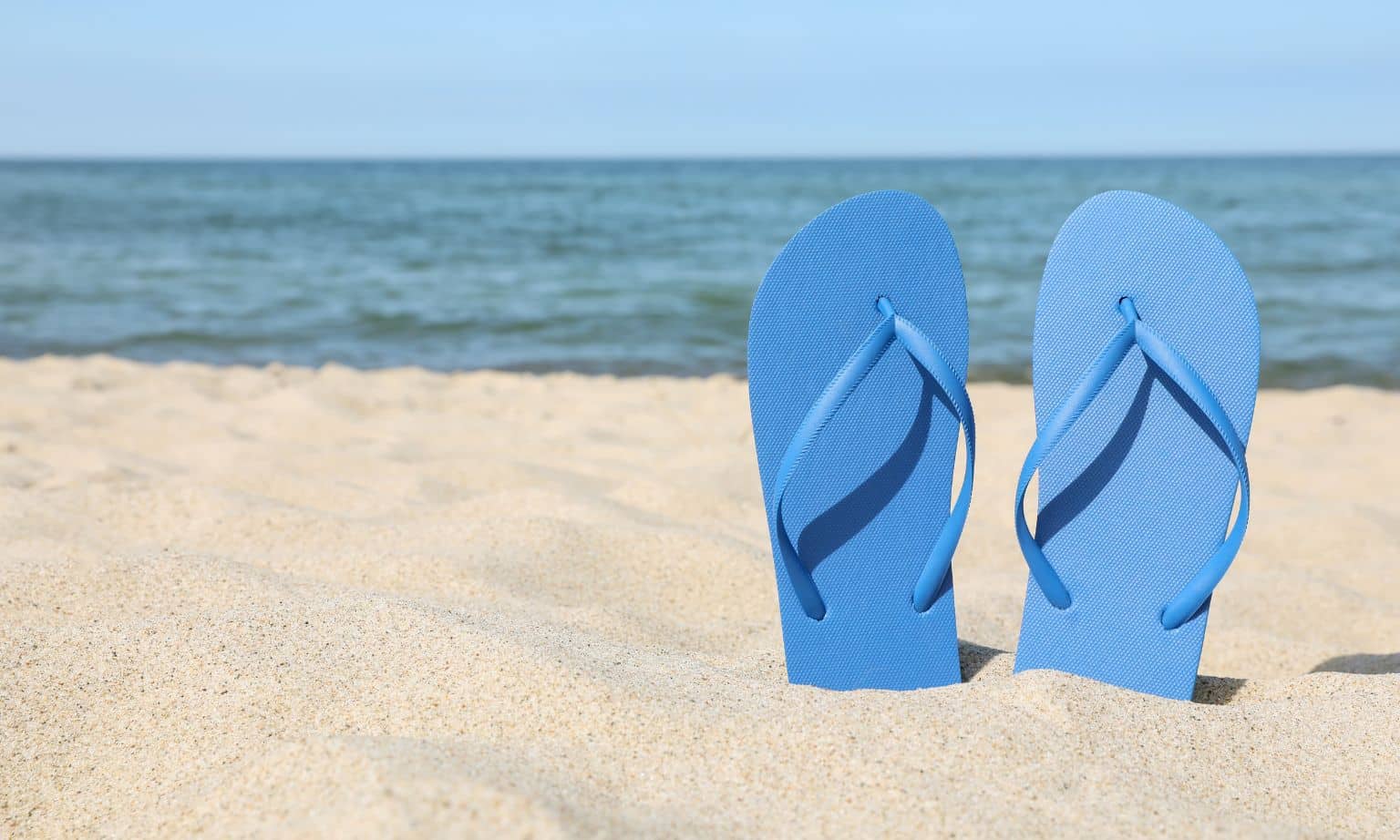
Norwegian Cruise Line has tightened some of its dress code rules for specialty restaurants. The reason this could be seen as confusing is just a few weeks ago, NCL put out a new advertising campaign encouraging the use of flip flops in the dining room.
However, it appears the cruise line and some of its guests clearly felt that passengers were being too liberal in applying these ideas of relaxed dress codes. In an attempt to strike a middle ground, NCL appears to be tightening dress restrictions for certain specialty restaurants.
This news came out after cruisers photographed signs on NCL ships that outlined certain rules relating to attire.
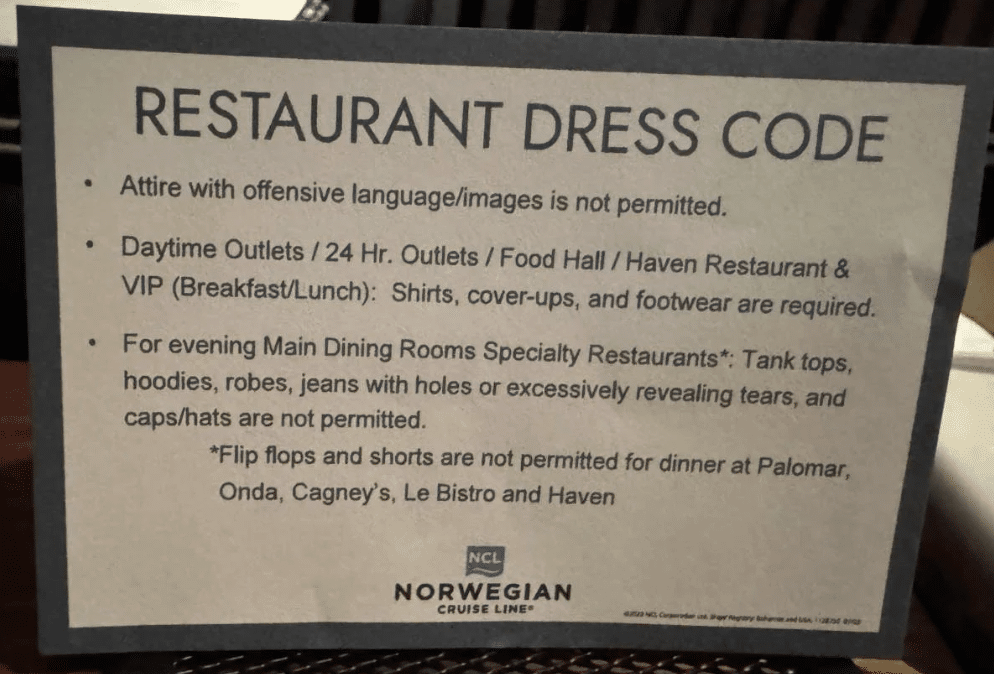
While this sign doesn’t specifically outlaw flip-flops in the dining room, it certainly shows that NCL’s dress code isn’t quite as relaxed as their previous messaging might have made one think.
It also specifically ban flip-flops and shorts from a number of specialty dining rooms.
It also lists a range of clothing exclusions that appear to apply to the main dining room and specialty restaurants, including tank tops, hoodies, robes, jeans with holes or tears and caps/hats.
NCL’s ‘flip flop’ on this issue does appear to represent a divide between cruise passengers that cruise lines are attempting to balance between. While some cruise passenger’s carry the attitude of its their vacation and they should be able to dress how they like, particularly if their outfit isn’t anything offensive, for example, a tank top and flip flops.
However, other cruisers want to see higher levels of etiquette maintained and place a stronger emphasis on the traditional image of cruising as something more elegant and sophisticated.
It’s a tricky dilemma.
Onboard a cruise ship, you can find parts of the vessel that feel like a beach or waterpark holiday, where trudging over to the dining hall in flip flops and a tank top with your towel tucked under your arm would be the logical move. However, in other parts of the ship you have cruisers sampling wines, getting luxury spa treatments and dining in five-star restaurants.
NCL appears to be coming face-to-face with the difficulties in uniting these two worlds.
What cruisers are saying
While attire is definitely a touchy and divise topic amongst cruisers, Cruise Passenger readers seem to lean towards the idea of wanting to see more strictly enforced dress codes onboard.
Reader Peter Solas wrote: “I think a reasonable dress code for the restaurants is ok. I have no problem with people not wanting to get dressed up – there’s always the buffet for thongs and singlet peeps.”
Sandra Burrows raised similar questions: “Totally believe each to their own, but seriously there is also a time and a place. The change/drop in standards pretty much since re-opening after covid is very noticeable. You would be refused entry to many eateries at home, so why would you do it just because you are on a ship?”
Cherly Wright took the position that smart/casual works for evening wear and during the day restrictions can be looser.
“We’re about to go on our 4th cruise. I would not want to see beach-type of attire in the dining rooms. I think it’s disrespectful. I have always dressed up as smart/casual for evening wear, except on formal nights, when it’s formal attire. During the day, anything goes.”
Bruce Anderson added: “Go to the buffet if you want to be super casual.”
Avrille Thompson took the same stance: “I think people have lost respect for themselves and others. You are on a cruise and not at home.
“Please be mindful.”
There were some cruisers who see it differently, for example Nicky Bertacco says he sticks to dress codes but doesn’t mind what others wear: “We always stick to dress codes, but I really don’t mind what other people wear. I’m there to enjoy my cruise and seeing others dressed more casually than myself, doesn’t affect my experience.
“With the exception of swimwear, that’s not acceptable attire for a restaurant.”
Janette Hay says she wishes she wouldn’t be judged for something like wearing flip flops to the dining room.
“Why does what someone wears on their feet infuriate some people, their feet are hidden under a table, i personally have extremely wide feet and really struggle to get shoes to fit so occasionally il buy good quality flip flops (leather) because they will fit my feet.
“I hate the fact they dont look as nice with my dresses but as i said why does this matter to anyone when once i walk the short walk inside restaurant my feet are hidden under table.”
What to know about dress codes
Cruise ship dress codes historically ranged from relaxed casual to strict formalwear, but this is evolving sharply in 2026.
Traditional luxury lines often had formal nights where guests wore tuxedos or evening gowns, and everyday dinner required “cruise elegant” outfits — slacks and collared shirts for men, dresses or skirts for women. These classic standards helped preserve a certain ambiance in main dining venues and formal lounges.
Today most mainstream lines still differentiate by venue and time of day:
- Daytime (around ship & pool): casual wear such as shorts, T-shirts, sundresses and swimwear (with cover-ups) is universally allowed.
- Evening in main dining or specialty restaurants: “smart casual” is the norm — collared shirts, chinos or dark trousers, dresses and skirts; swimwear, gym clothes, very casual sportswear, men’s tank tops, baseball caps and flip-flops are generally not permitted.
- Themed events & optional dress-up nights: Guests are encouraged to dress up (e.g., cocktail attire) but it’s not enforced.
Norwegian Cruise Line (NCL) remains one of the most relaxed in the industry with its “Freestyle Cruising” philosophy prioritising personal choice and comfort.
There are no mandatory formal nights and casual, resort-style clothing is acceptable in most venues. Its core policy still encourages flexibility and smart casual standards for dinners, while daytime attire including shorts, jeans and casual tops is generally fine.
Specialty dining rooms may have stricter guidelines (e.g., collared shirts and closed-toe shoes) and very casual beachwear or swimwear is prohibited indoors.
What do you think? Is it time to let go of cruise dress code – or should ships maintain a certain level of sophistication?

Related Posts
-

Norwegian Cruise Line's new advertising campaign recognises a very real truth in the cruising world, that the face of cruising has greatly shifted over recent years.
-
It’s a cruise debate as old as the sails on a schooner: Can denim jeans - even the coolest brands - ever be worn on a formal night?
-
Norwegian Sky Published by Jane Archer Published on 27 November 2024 AccommodationFoodActivitiesFamilies .entry-header{display:none;} Norwegian Sky was built in 1999 and refurbished in 2013. It has a length of 848 feet…
-
Norwegian Dawn Published by Jane Archer Published on 27 November 2024 AccommodationFoodActivitiesFamilies .entry-header{display:none;} Norwegian Dawn was launched in 2002 and underwent refurbishing projects in 2016. It has a length of…