
- Services have restored and key airline routes have reopened in the Middle East.
- Bookings have surged by 36 per cent as Middle East routes reopen.
- And that means cheaper fares for Australians taking advantage of 206 European cruises.
Competition on one of the world’s busiest long-haul corridors has returned, delivering Australian travellers some of the most competitive Europe airfares seen this year.
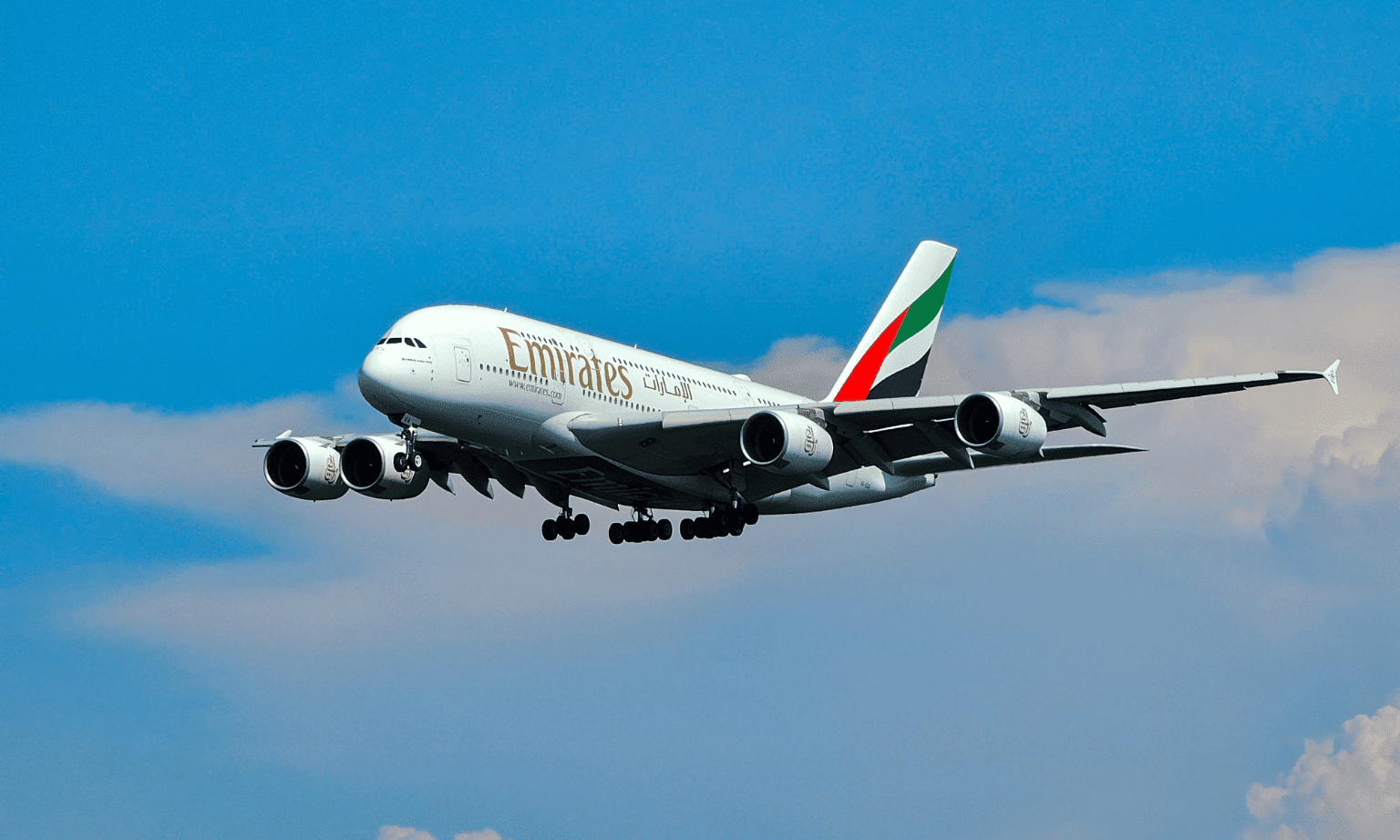
An Emirates spokesperson has told Cruise Passenger that flight schedules are fast resuming, with plans to restore full capacity in the coming months.
“Today, we operate services across five Australian gateways, with three daily flights to Sydney, two daily flights to Melbourne, and daily services to Brisbane, Perth and Adelaide.
“We’ve restored about 85 per cent of our weekly flight frequencies between Dubai and Australia, with plans to return to our original schedule and capacity in the coming months as demand across our network continues to build, reflecting the strong and growing appetite for travel to and from Australia.”
But while the immediate disruption caused by the Middle East conflict has eased, aviation experts continue to caution that operations have not completely returned to normal. Several airlines are still avoiding parts of Iranian and Iraqi airspace, meaning some flights are taking longer routes, and travellers should still expect the possibility of schedule changes or delays if security conditions shift.

The current prices?
The biggest winners are travellers flying with the Gulf carriers. Emirates, Qatar Airways and Etihad Airways have all restored the majority of their Australian schedules and are once again competing aggressively for passengers travelling to Europe.
According to Flight Centre, bookings on the three Gulf carriers surged by 36 per cent following the easing of Australia’s travel advice, prompting airlines to launch a fresh round of fare sales. Economy return fares that briefly climbed well above $2,500 during the height of the disruption have now largely settled back below the $2,000 mark, with airlines competing heavily on key European routes.
Across the market, return economy fares from Australia to Europe are now typically ranging between $1,700 and $2,400 on the major international carriers, although sale fares continue to fall well below those levels.
Flights from Sydney to London have recently been advertised from around $1,595 return, while Melbourne to London has dropped to approximately $1,587. Perth continues to offer some of Australia’s cheapest Europe fares, with return flights to London from as little as $1,313. Southern European destinations are also becoming increasingly affordable, with promotional return fares to Athens from around $1,580 and Dublin from approximately $1,740.
The renewed competition has also shifted the balance back towards the Gulf airlines. During the height of the conflict, many Australians deliberately chose to avoid transiting through the Middle East, driving stronger demand, and higher prices on carriers such as Singapore Airlines and Cathay Pacific. Now that confidence has largely returned and Gulf carriers have restored most of their schedules, those fare premiums are beginning to disappear as Emirates, Qatar Airways and Etihad once again battle for market share.
For travellers focused on value, Malaysia Airlines and Turkish Airlines continue to offer some of the most competitive fares to Europe, generally between $1,500 and $2,300 return.
Among the Gulf carriers, Emirates is typically advertising return economy fares between $1,700 and $2,500 via Dubai, while Qatar Airways is offering similar fares between $1,700 and $2,400 through Doha.
Etihad Airways is also pricing return economy fares from around $1,700 to $2,400 via Abu Dhabi.
Overall, pricing between the three Gulf carriers is now remarkably similar, with the primary difference for travellers coming down to their preferred transit hub, flight schedules and loyalty program rather than price alone.

Premium and Business airfares
The easing of tensions is also being reflected in premium cabins. Premium Economy fares from Australia to Europe are commonly available between $3,200 and $5,000 return, while Business Class sale fares have re-emerged below $7,000 on selected routes after climbing sharply during the disruption. Outside sale periods, Business Class fares generally continue to range between $8,000 and $12,000 return, although airlines are increasingly discounting seats as additional capacity returns to the market.
Capacity continues to recover
The encouraging news for travellers is that airline capacity is continuing to improve.
Emirates, Qatar Airways and Etihad Airways have now restored the vast majority of their Australian services following widespread cancellations and schedule reductions earlier this year. International airlines including Lufthansa, Air France and British Airways have also progressively resumed services into the Gulf, although some continue to operate modified routings that avoid sections of Middle Eastern airspace. A small number of carriers have delayed the full return of flights to destinations considered higher risk while they continue to monitor regional security developments.
Australian travellers have responded quickly to the improved outlook. Travel agents report strong growth in bookings through Dubai, Doha and Abu Dhabi, with the return of competition helping to drive airfares lower and increasing seat availability during the busy European summer.
The latest advice
Although the worst of the disruption now appears to be behind us, authorities continue to urge travellers to remain flexible.
Australia’s Smartraveller advisory continues to note that the security situation across parts of the Middle East can change with little warning and that military activity may still affect commercial aviation. Airlines remain prepared to reroute or cancel flights should operational conditions change, and travellers should expect that schedules may still be adjusted at short notice.
Passengers are advised to monitor their airline’s app or website before departure, allow additional time for connections through major Gulf hubs, ensure their travel insurance provides cover for disruption caused by conflict-related events where applicable, and keep airline notifications switched on in case of schedule changes.
For now, the aviation industry believes the recovery is well underway. While airlines are continuing to operate cautiously and some longer flight paths remain in place, competition has returned, fares are falling, and Europe is once again becoming significantly more affordable for Australian travellers than it was just a few weeks ago.
For the latest developments on airline schedules, travel advice and cruise news, stay tuned to Cruise Passenger.

Related Posts
-

The travel industry's peak body is mounting a campaign to persuade the government to lift its Do Not Travel ban.
-
Flights to Europe through the Middle East are resuming but the situation remains unstable, leaving travellers still looking at other routes.
-
New survey reveals that our readers are among the world's most resilient travellers, carrying on cruising despite a world in crisis
-
Australia has finally dropped its Smart Traveller warning for the UAE and Qatar.