

Words: David McGonigal.
Review: Radiance of the Seas

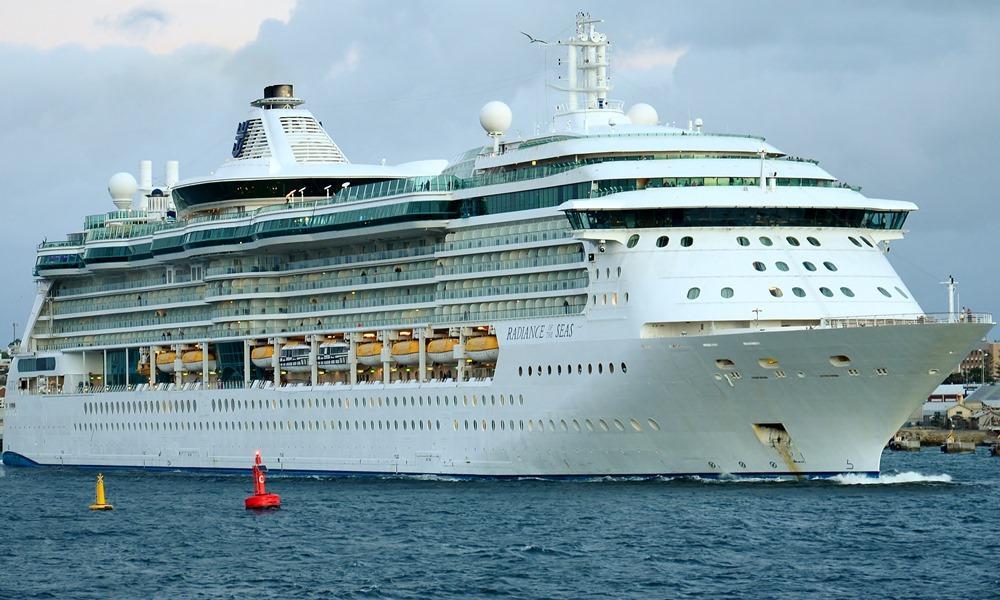
Table of Contents
My alarm went off at 8 am and I woke to complete darkness. There was a moment of fear. Had Cuban pirates boarded the ship in the night and consigned me to a barrel? I fumbled for the light and I was instantaneously back in my comfortable cabin. Since childhood I’ve never had bedroom curtains. And I’ve spent over 1000 days in Antarctica in summer where it never gets dark. I’d much prefer to sleep in the light than sleep in the dark. So I had some trepidation about taking an inside cabin. But this voyage was very popular and by the time I booked, only a handful of inside cabins were left. Panama was altogether too tempting.
Even so, when family wished me “bon voyage” I said that I’d only know when we were sailing if the captain announced it – or there was a bow cam on my cabin TV.
Just before leaving Sydney a friend Skyped from Canada to tell me he and the family had just returned from a cruise in the Caribbean. I told him I was heading that way but had an inside cabin. He replied: “So did we. The price was great and we only ever returned to the cabin to sleep.” He had the right attitude. I stopped my negative ruminations and went for a shower.
Today is a sea day. The captain cleverly managed to avoid running into Cuba so we continue towards Colombia. Sea days are meant as days to rest but there was no time for that. There were excursions to book. Yes, I know there are people who book excursions months in advance but I like to get a feeling for a ship before committing to spending days off the ship in the same company. Though, with 2200 passengers, the chance of meeting the same people on two excursions is remote.
My morning is consumed with selecting excursions. After the first reading I was sweating: the options were too vast to decide. There are six landing days: Cartegena, Colon, Costa Rica, Guatemala, Acapulco and Cabo San Lucas. But I have to finally make a selection so let’s get serious.
Cartegena – I’ll do my own thing. It was once part of one of the scariest countries on earth so I welcome the chance to see how the picturesque old city has changed to be a tourist haven. Anyway, it all worked out in “Romancing the Stone” didn’t it? Colon – still too scary though it’s better than it was. There are no traffic lights and I suspect that’s because it’s too risky to stop. Ever. I rode my motorcycle to Miraflores Lock over a decade ago so want to see Gatun Locks. So let’s go kayaking on the ecological wonderland of Gatun Lakes with a stop at the locks on the way.
Costa Rica? Here’s a challenge. There’s a page and a half covering 28 options for excursions. Zipline or coastal cruise, coffee plantation or rainforest? I elect to go for the 9.5 hr excursion to the Monteverde Cloud Forest. It’ll give me a chance to check my rain gear.
So we come to Guatemala. I’ve been here twice before. I’d like to see more of Antigua, the capital. The first time I was here all my clothes were stolen from the back of our van so all I saw of town was the police station as I filed a lengthy report. The next time I visited I wasn’t brave enough to leave my bike anywhere so I’d like to, finally, have a look around the city. There’s a cheap option of a bus to the capital for a self-guided tour so I put a tick next to that.
Acapulco. I know it was once home to the movie stars in the 40’s and Elvis was there in “Fun in Acapulco” and there are exhibition divers of a coastal cliff. So I elect for the cliff divers and a city tour with enough time to explore by myself afterwards.
Finally, we come to Cabo San Lucas. I’d like to see the famous rock arch of Los Arcos but sailing on a vessel that was a NZ Americas Cup challenger appeals, too, and so does snorkeling. It’s all too difficult and it’s weeks away so I hold off on a decision. A passenger later tells me that the ship anchors not far from Los Arcos and another confides that the dock holds local touts offering every excursion so there’s no need to pre-book. My indecision looks set to be rewarded though Visa has told me that there’s a lot of credit card fraud throughout Mexico so it may be the most costly saving I’ll ever make.
Because the excursion booking form on my cabin computer isn’t working, just before lunch I visit the excursions desk and find that all my preferences are available. I head for the Asian buffet in the Windjammer Café for a celebratory lunch.
I expect there are people who walk on to a ship for the first time with a deck plan etched into their brains. Not me – I read the reviews and get a feeling for the ship but I love the joy of discovering things for myself. It’s even better if the journey of discovery finds enough hidden nooks and crannies that it continues for a few days.
That’s certainly been the case here on Radiance. It’s Day 3 and I can get to the breakfast buffet, my dinner table and the pool deck (where the resident band seems determined to infuse the spirit of Bob Marley into inappropriate songs). Beyond that, most of the ship is a mystery to me. But that will all change as I set out with notepad and pen in hand. May I say that this state of ignorance has nothing to do with Royal Caribbean. At each lift foyer there’s a model of the ship with the main features clearly marked. They are listed above the door in each lift, too.
Besides Deck 3, where my cabin lies, Deck 11 is most important. This is where Windjammers Café is found – the source of buffet breakfasts and lunches. And they can be taken outside where tables in the stern are well protected from the warm wind. Forward lies the densely foliated jungle of the Solarium and its pool, which is populated by the same passengers every day perhaps, like Livingstone, awaiting rescue by their own Stanley. The spa further forward offers a wide range of mysterious treatments behind doors that are decorated in an Aztec theme.
Above this deck there’s a nightclub that offers great ocean views by day, the sports area featuring a climbing wall up the funnel, the gym, the Adventure Ocean kid’s area, Crown and Anchor bar, golf course and jogging track.
For the next few decks down, the public areas are around the Centrum. So on Deck 10 there’s a small, quiet lounge area and the Concierge Club for Royal Caribbean’s best passengers. Here, you are likely to find out about the joys of taking 100 – or even 200 – voyages as several of them have. Deck 9 has the small library and Deck 7 has the Internet area. All of these are open areas offering views over the Centrum with its impressive, if indecipherable, hanging sculpture.
By Deck 6 the public areas extend from bow to stern. The Aurora Theatre, where the entertainment is surprising good – from funny comedians to exceptional musicians – fills the bow on Decks 5 and 6; Cascades Restaurant fills the stern on Decks 4 and 5. The rest of Deck 6 holds the Casino and the specialty restaurants Portofino for Italian and Chops for steaks. It also has the quirky Schooners Bar (now there’s a name that will be popular in NSW) that you enter through a galleon-styled corridor decorated with old cannons and gunpowder kegs. Rather alarmingly, it always smells slightly of gunpowder (or perhaps it’s because I watched Pirates of the Caribbean on our first night at sea). The middle of Deck 5 is occupied with a range of shops where everything appears to be constantly on sale. There are even Pringles and the like available in case the 11 meals offered each day aren’t sufficient.
Of course, for readers who, like me, don’t hold ship details in their memories, the past four paragraphs are really just white space. However, you’ll probably know more than at least one of my fellow passengers. I was in the elevator today, heading for an upstairs bar. A middle-aged man got in the lift and asked me “what’s the top floor of this ship?” We both looked at the buttons where the numbers were logically set out from Decks 2 to 13 and I said, “It’s Deck 13, would you like me to press it for you?” He thanked me and added, “I’m normally with my wife and she takes care of those things.” Whether that was the onerous task of pushing buttons or ensuring that he didn’t reach the outer deck of Deck 13 and continue, absentmindedly, to climb to the heavens in a quest for Deck 14 he never elaborated.
This may seem strange coming from a cosseted cruise writer but I consider myself to be quite an adventurous traveller. I’ve hitched across Tibet, swum with whale sharks and even visited the scary, mean streets of New York before Mayor Guliani cleaned them up. But 14 years ago, on a three-year motorcycle ride around the world, I skipped Columbia. That was largely because Colombian prisoners had taken over their entire prison and the rest of the country was in control of drug cartels so the Colombian Tourist Authority took the unusual step of asking international visitors not to come. Tales abounded of backpackers on the streets clad only in cardboard boxes after all else was stolen.
Not visiting Colombia in general and Cartagena in particular is one of the regrets of my travel life. I’ve seen Romancing the Stone and remembered the dramatically beautiful scenes around the port of Cartagena.The first port of call on this Radiance of the Seas voyage is Cartagena, so one travel regret is about to be redressed.
But with an inordinate fondness for my cameras, my passport and my life I approach the day with some trepidation. However, a man I spoke to in one of the ship’s bars tells me that he’d been to Cartagena before and found it perfectly safe: “the Mexicans run the drugs into the US now and the Colombian government keep the old town of Cartagena under solid security so it’s very safe for tourists. However, if you wander into the other areas . . .”
Cartagena is an astonishing monument to mistrust. It’s World Heritage because it was a heavily-fortified city surrounded by forts and bastions. And it was eventually so impregnable that, despite numerous attempts, it wasn’t captured and destroyed and remains an excellent historical sight.
But that isn’t my first impression of the city. As we sail past a small entrance fort, the horizon is filled with gleaming white skyscrapers that mark the modern city. Oops, I thought it was merely a quaint old place where the only industry was flogging T-shirts and coffee. However, after more than an hour’s delay in disembarkation because Island Princess grabbed our dock, I directed the cab to take me to the entrance to the old city. Here there are hours of enjoyment in walking the streets of beautiful colonial terraces houses, clambering onto the battlements and watching kids playing in the central plaza. Most remarkable is the way that nice-but-nondescript doorways open to reveal beautiful verdant courtyards where fountains tinkle and flowers bloom.
Then it’s time to head into the Museum of Torture right on the main square. It begins with a list of leading questions from the XVII Century that modern politicians would find enlightening. “Why did you become a witch? What is the name of your master amongst the evil spirits? What demons and people attended your wedding?” Who could answer those questions without feeling the rack or stocks looming?
Of course, there’s an array of instruments of torture. The ingenuity to inflict pain on others is remarkable but, after seeing objects that I hope were never used, I come back into the sunshine feeling rather unclean. My purification takes place in a restaurant with wi-fi called Waffles & Crepes where I seek salvation and it’s largely delivered. The coffee is excellent, too.
After a day of walking I feel I have a good grasp on this very appealing city. Contrary to preconceptions I remain unmugged and no-one has offered me cocaine. Only one question remains. Where was the dock scene with Danny DeVito filmed? I walk into an emerald dealer cleverly named “Romance in the Stone” and ask. The answer is shattering: the film was set in Cartagena but was filmed in Mexico’s Veracruz. No wonder my walk along the top of the city walls didn’t trigger any memories.
As I caught a cab back to the ship ($20 each way) it started to rain. But not in a wimpy temperate climate sort of way – this was the deluge you’d get if you hang washing on your hotel room’s ceiling sprinkler. I have an umbrella but that just means I’m drenched from the waist down. Fortunately, a hot shower and dry clothes are just a security scan and ID check away. As we sail away the sun breaks through and the modern high rise skyline is bathed in a golden sunset. I vow to return.
For most of us, Colon is just a jumping off point to the nearby feature synonymous with the whole country of Panama – the Panama Canal. There are some human achievements that show that grand plans can come to fruition and we should be proud of what we can achieve. In an age when laying national broadband cables seems all too difficult, it’s hard to imagine looking at 77 kilometres of mountains and disease-ridden jungle and picking up pick and shovel and thinking “we can dig a ditch through this and link two oceans”. It’s even more surprising that it was first proposed in 1534 by the king of Spain.
However, things only really got underway when the French, filled with enthusiasm after digging the Suez Canal that was twice as long in just 10 years, started on the Panama Canal in 1880. Apart from running out of money, they only made two fundamental mistakes. Firstly, they wanted an all-water route. That is, they weren’t planning to have locks but simply to dig a trench deep enough for ships to sail through. Secondly, they underestimated the environment so rain caused excavations to collapse and thousands of workers died of disease from the swamps. It’s estimated that 30,000 of the 80,000 people that worked on the canal perished – and most (perhaps 22,000) died during the French attempt.
In 1903, the US took a lease over the site and set to work in 1904 with the enthusiastic support of President Theodore Roosevelt. A lot more was known about the causes of disease by then so the swamps were drained and mozzies poisoned. Ingenious techniques to move the rock and dirt were devised and a more-conservative lock-based crossing was designed. The canal was finished two years ahead of schedule and the first ship sailed through the canal’s three sets of locks on August 15, 1914.
Trivia question: in what direction does the Panama Canal run? The logical answer is west to east from the Pacific to the Atlantic but that’d be wrong. In fact the canal runs north to south, with the Pacific on the southern side. Colon is on the Caribbean or northern side.
In 1997 I rode my motorcycle the length of the canal from Panama City to Colon and back. At that time the canal was still in US hands – it was handed to Panama at midnight on December 31, 1999. As Radiance of the Seas would be transiting the canal tomorrow I decide to take an organised excursion to see the canal from a kayak around the islands of Gatun Lakes.
Minutes after we leave the small city of Colon behind, the bus stops so we can observe about a dozen howler monkeys in a tree. They are probably both the noisiest and laziest of monkeys so we soon move on. We then spend about an hour watching two cruise ships pass through Gatun Locks, a fascinating engineering insight. Finally we arrive at a lakeside resort and take a 30-minute boat trip along the canal, passing close by two cruise ships on the way. The kayaks are sit on, rather than sit in and we only see a few rather nondescript birds for the hour or so we are on the water but we do see a sloth (three-toed) and a crocodile as we disembark the transfer boat. The locks are more impressive than the paddle and the boat journey is an unexpected highlight.
Back on the ship there’s an increasing mood of anticipation as the captain announces we will be approaching the first lock at 6am tomorrow. Like many, I set my alarm and go to bed early.
For cruise traditionalists the three “must do” voyages are an Atlantic crossing and the two great canals – the Suez and Panama. I’m determined to savour every minute of the Panama Canal. But there’s a timelessness in an inside cabin so my alarm bleats in the dark. I turn on the TV and the bow cam shows we are approaching the entrance of the Panama Canal and it’s bright daylight outside. That certainly galvanizes me into action and a few minutes later I’m dressed and on the bow with a few hundred others. Looking up I see similar crowds on the open spaces facing forward on the upper decks.
A passage through the Panama Canal comes with an unexpected bonus. Our local pilot has good English and a love of the microphone. So we learn lots about the canal throughout the day.
The first, Gatun Locks are the most spectacular. It’s a set of three linked together that raises our 90,000 tons 26 metres in remarkably little time. I see why the captain was saying that our ship really pushes the Panamax dimensions for girth. It’s like trying to put a champagne cork back in the bottle but we’re reassured that the ship has been through before. Soon we are travelling through the manmade Gatun Lakes area I saw yesterday so I take to a deck chair for a nap.
After lunch we pass through the Gaillard Cut, the tough part of construction, where the canal slices through 12.6 km of the mountainous Continental Divide. It’s very impressive to see the work being undertaken to widen the canal for the new, larger locks due to open in 2014. At the end of the cut is the Centennial Bridge looming overhead looking much like Sydney’s Anzac Bridge.
It’s well after lunch when we reach the single-stage Pedro Miguel lock and drop down 9.5 metres towards the Pacific. This lock will become redundant when the two sets of new locks are finished. From here it’s not far to Miraflores Locks and we soon emerge into the Pacific Ocean. We sail past huge docks with giant cranes and pass under the old Bridge of the Americas that links North and South America. The very impressive skyline of Panama City forms a suitable backdrop.
The Panama Canal is a remarkable structure of great interest to anyone interested in engineering. But its ramifications are grand, too. If this were a voyage from New York to San Francisco we would sail 9,500 km, a considerable reduction on the 22,500 km voyage around Cape Horn between these two ports. No wonder many ships have been built to fit this canal – the so-called Panamax dimensions.
The new Panama locks will be at least 25 per cent larger in length and draft and 51 per cent in beam. Already ships are being designed for the New Panamax standard. Later, the captain confides that Radiance of the Seas has jumped the gun. A construction error resulted in the ship being 106.5 feet wide when the maximum permissible beam is 106 feet. When Radiance first passed through the canal in 2001, the President came down to watch its passage. In Pedro Miguel lock the ship scrapes both sides. And there’s a fine levied by the Panama Canal Authority for being the wrong proportions.
Our loquacious pilot told us how much Royal Caribbean International paid for Radiance passing through the canal. The toll was $300,120. And this is no “Oh, I haven’t got my credit card with me, I’ll pay you later” the payment must be wired through at least 48 hours before transit. No wonder we are seeing a lot of rounding-the-Horn cruises these days.
It’s after 4pm when we are back at sea. Most of us are exhausted and can only imagine how tired the captain and officers on the bridge must be. I make a cup of tea and settle into the Pacific part of the voyage.
Another sea day. And some of us are looking forward to it after three days of intense activity. It’s good to pick a cruise with sea days so you can enjoy the ship and on this voyage we’re covering a lot of nautical miles. But it’s also a time when you can be annoyed by details.
The shower pressure in my cabin is too low so it seems hard to fully rinse off the soap. Of course, it’s a 15-night voyage and while the ship can produce 1,650 tons of water a day from salt water there are a lot of people on board and hopefully all are taking showers. But it still feels a bit cheap. So too is only having a wall-mounted liquid soap dispenser and basic bars of soap. No shampoo or conditioner. And, apart from at breakfast, there’s no fresh milk to have with tea – just half & half (milk and cream) and non-dairy creamers in little plastic tubs. Oh, and on port days, there’s a staff member on the passage into the Windjammer buffet breakfast flogging bottles of water to take ashore. Is it only people from drought-ravaged Australia who regard shower pressure and bottles of water as a right?
On the other hand, there are many (most) features of the ship I really enjoy. The staff mix is great because it’s a complete hodgepodge of nationalities: there are lots of American staff (black and white), Spanish speakers, Turks, Filipinos, Chinese, Indians, Jamaicans, Thai Mauritians and even Australians. And, as I’ve detailed before, there are lots of places to go on a ship this size.
I avoid the International Bellyflop Competition at the main pool and skip the Hula dance class but go to the digital photography classes, which turns out to be informative.
Looking through the voyage’s sail plan in Australia, the two highlights for me were Cartagena and Costa Rica. After a lot of deliberation, I picked a tour that involved a long drive to the top of the country’s main mountain ridge to go for a walk in the Monteverde Cloud Forest.
As we packed into a minibus at the port of Puntarenas it looked like only about 12 of us had made the same decision. As we bumped our way along tar then dirt roads I think all of us had our unspoken doubts. That was until the guide outlined the day’s program and one person asked, “When is the zip-lining in that program?” and we learned that five had been sold the wrong tour.
Too far along to turn back, the group said they would make the best of it. But the guide says that the zip-lining the ship offered is in a lowland forest, for an extra fee of about $45 the group can zip up here – with much greater drops, exceeding 150 metres, to the valley floor below. They elect to do that and so only seven of us set off on the walk.
First Time Cruisers Tips


Popular Destinations

Related Posts
-

Regent, one of the world's leading luxury cruise lines, has unveiled "Iconic Explorations" offering guests a wider choice of free, multi-day land excursions on sailings in Europe and Alaska next…
-
Nowadays, experiencing Alaska by sea only is not enough. The world’s most luxurious line, Regent Seven Seas Cruises is adding a six-night, pre-cruise, land program including two days onboard the…
-
Regent Seven Sea Cruises is giving you a taste of elevated elegance with their new world cruise. Sail in in luxury for 140 nights.
-
Royal Caribbean’s Quantum of the Seas returned to Brisbane yesterday for her third season of summer sailing in Queensland capital city.



Comments are closed.