
Cruising in the Middle East

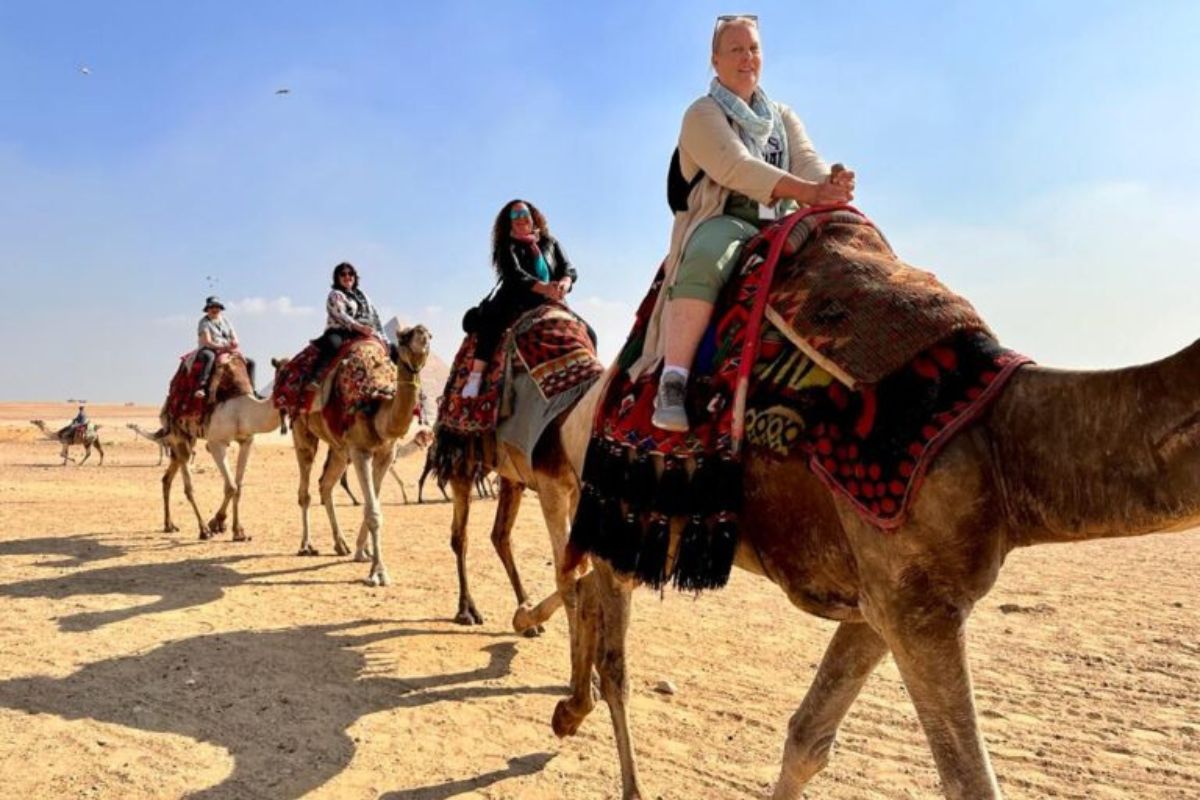
Table of Contents
The Middle East may not top everyone’s list of cruise destinations, and for those who want to loll about and sip drinks on a sandy beach, this arid region might be a poor choice. Yes, it has lots of sand and certainly, it has plenty of sun, but this is not the place for Western-style sunbathing.
Rather, the region is a culturally rich destination that amply rewards those savvy travellers who do make the trip. Chock-a-block with historic sites, the Middle East is home to the geographic starting points for Christianity, Judaism and Islam and, over the centuries, this rich region has provided a stage for some of history’s most dramatic and significant moments.
Luxury cruise lines often incorporate the Middle East into their ships’ round-world itineraries, transiting the Suez Canal to reach the Red Sea from the Mediterranean; some, such as Princess Cruises and Holland America Line, will schedule a series of round-trip cruises that include Eastern Mediterranean ports around Turkey and Greece. Beyond that, though, there’s no abundance of cruise-ship capacity to the Middle East. To help you choose the most suitable itinerary for your next voyage, we present our list of the top 10 attractions for Middle-East cruising.
Cairo, Egypt
Accessible from Port Said or Alexandria, Cairo should head up any must-see list simply because it’s the launchpad for tours to the Sphinx and the Great Pyramids of Giza, one of the world’s Seven Wonders. But the largest city in the Arab World has more to recommend it. With its many minarets, Cairo is a showcase for Islamic architecture, and the Egyptian capital, which dates from the 10th century, has long been the centre of the region’s political and cultural life.
The pyramids and the sphinx can be toured on foot, horseback or camel. Other must-see attractions include Ibn Tulun Mosque, which dates from the ninth century, and Cairo Citadel, a massive stone fortress built by Salah al-Din in the 12th century and subsequently crowned with the Mosque of Mohammed ’Ali al-Kabir: it offers amazing views of the city and, if the smog isn’t thick, the pyramids. Don’t bypass the Egyptian Museum, which houses the world’s most extensive collection of ancient Egyptian artefacts, including King Tut and many of his treasures.
For shopping, Khan Ali-Kalili is Cairo’s major open-air market, operating pretty much as it always has since the 14th century, with several vendors whose families have done business there for generations. Shoppers work through rows and rows of jewellery, spices, perfumes, Bedouin rugs and souvenirs, and haggling is expected.
Aqaba, Jordan
If you’re familiar with classic film Lawrence of Arabia, you may remember Aqaba, site of Lawrence’s first desert campaign. To today’s visitors, Aqaba is best known as a dive and beach resort with glorious coral reefs affording access to the remarkable archeological sites in Petra and the Wadi Rum desert.
In Aqaba, visit a coffee shop for true Jordanian dishes – mansaf, knafeh and baqlawa – then make a beeline for Petra and the Wadi Rum (pronounced Ramm).
Wadi Rum, a valley carved into the rock of south-west Jordan, is dramatic terrain that attracts rock-climbers and hikers. Petra’s renowned for its rock-cut architecture, 2,000-plus years old. A UNESCO World Heritage site described in the Bible as the “cleft in the rocks”, it was Lawrence’s base during WWI.
Dubai, UAE
In Dubai, showpiece of the United Arab Emirates, skyscrapers and luxury developments rise improbably from the desert. This may not be the most historically significant Middle Eastern destination but this unabashedly modern, global city is certainly a contemporary classic.
In the well-documented building boom of the past 20 years, Dubai has sprouted some of the most interesting architecture anywhere. Originally a beneficiary of a profitable local oil industry, the Dubai economy now relies primarily on real estate, banking and tourism, boasting impressive facilities in all three areas. If you’re here to shop, note that perfumes and incense are more strongly scented in the Middle East than they are in Western countries.
Be sure to visit the Gold Suq, in which hundreds of gold merchants and craftspeople ply their wares. Local artisans are renowned for altering the composition of the ore to create gold pieces in green, pink, even white.
Dubai is ripe with restaurants serving Lebanese specialties at which you can, perhaps, enjoy the sensuous gyrations of belly dancers. If you find yourself in town on a Thursday evening, make a reservation at Al Qasr for a big night of feasting.
Jeddah, Saudi Arabia
Abutting the Red Sea, Jeddah is the gateway to Mecca, birthplace of Islam and a required pilgrimage for the able-bodied faithful. The second-largest urban centre in Saudi Arabia, Jeddah gives visitors a good overview of the contrasts of life in a modern Middle Eastern country, in which society is still organised strictly according to Islamic customs. All business activities and markets cease to trade five times a day, as people close their shops for prayer. Life here, however, is more liberal and cosmopolitan than it is in most other areas of the country, partly because of the city’s dual role, as a sea port and as a destination for travelling Muslims.
The city has several museums and historical buildings worth exploring – notably, the Regional Museum of Archaeology and Ethnography, formerly a palace and now the home of Stone-Age artefacts and relics from pre-Islamic cultures. Other sights include the Jeddah fountain, the world’s tallest, where sea-water jets nearly 312 metres into the air.
A busy city with good beaches and good-value shopping along Tahlia Street, Jeddah is also a cultural hub, hosting festivals, art exhibitions and concerts.
Muscat, Oman
The Sultanate of Oman is a cruise stop that many travellers find surprisingly appealing. A pristine and picturesque city on the Arabian Sea, sitting at the base of Oman’s main mountain range, the port of Muscat, also the nation’s capital, is Omanis’ biggest and most modern city, a metropolis that manages to balance the need to maintain tradition with people’s desire to keep pace with 21st-century developments.
On arrival, you’ll spot a trio of forts, built by the Portuguese during their 16th-century occupation. Oman’s distinguishing feature, however, is its wadis: oases of palms, colourful blooms and lush green grass. Some wadis have year-round running water and deep pools in which you can swim if the currents are slow.
Attractions worth visiting include an aquarium brimming with native species, the history-heavy Omani Museum, the National Museum and the Sultan’s Armed Forces Museum. Or browse the city’s lively fish market and shop in its souk, where you’ll find woven palm fronds and a veritable glut of silver. Silversmithing has a long, proud tradition in Oman and here, you’ll find intricately handcrafted silverware, including coffee pots that double as souvenirs and heirlooms. Stick around for a night-time view of the spectacularly-lit sultan’s palace.
Tunis, Tunisia
If you’ve ever wondered what a place might look like after roughly three millennia of foreign occupation, pay a visit to the capital city of Tunisia. Among the wealthiest and most important Arab cities from the 12th to the 16th centuries, Tunis has been proudly independent – and thriving – since the French let it go in 1956. That happy date ended nearly 3,000 years of occupation by the Phoenicians, Romans, Byzantines, Turks, Spanish and, finally, the French.
Given the long list of colonial and conquering powers, it should come as little surprise that Tunis mixes cultural influences like a good stew does. Tunisia abuts the Mediterranean, but visitors will notice many African influences: traditional clothing and customs juxtaposed with garments and behaviour that’s common to European cities.
At the city’s centre, not far from the grand Avenue Habib Bourguiba – otherwise known as the Tunisian Champs Elysées – the ancient medina invites visitors to explore its dense maze of alleyways and passages: here, you can see, taste, feel, and naturally, haggle over food, produce, trinkets and treasures.
Tunis also affords visitors easy access to Carthage, where three wars with the Romans and another with the Greeks have pretty thoroughly erased the ancient city’s history, though researchers continue to strive to uncover more clues about its earlier incarnations.
Bahrain
Floating in the Persian Gulf, Bahrain is a small island nation known for its black-and-white treasures: oil and pearls.
That there are rich minerals and gems to be found here is not surprising, since archeologists have uncovered evidence of settlements that date back 10,000 years. Most intriguing are the 85,000 burial mounds that dot the Bahrain landscape. For insights into Bahrain’s unique natural environs and the history of its people, visit the Bahrain National Museum in Manama.
If archaeology is not your thing, do some after-hours exploring in Manama instead. The name means ‘sleeping place’ but Arabia’s jetset seem very much awake as they crowd the city’s bars and nightclubs and go late-night shopping.
If your travels haven’t yet included visits to mosques, Bahrain is just the spot for this rewarding pastime. There are several options, notably the contemporary Al-Fateh Mosque, with its gleaming golden dome, built to accommodate up to 7,000 worshippers; and Al-Khamis Mosque, believed to be the oldest in Bahrain, with a foundation that dates as far back as 692AD.
Related Posts
-

Celestyal, the two-ship line that usually plies the Mediterranean, is making the Middle East its home for half the year. It has agreements to sail to ports across the region…
-
The Sunshine Coast-based LifeFlight aeromedical crew has winched a man with a cardiac condition off a cruise ship yesterday. The rescue took place about 30 nautical miles north of K'gari,…
-
Greece looks to reduce cruise ship visits to two of the country’s most popular tourist destinations.
-
Viking Libra, the world’s first hydrogen-powered cruise ship, capable of operating with zero emissions, will debut in 2026.




Does your website have a contact page? I’m having problems locating it but, I’d like
to shoot you an email. I’ve got some recommendations for your blog you might be interested in hearing. Either way, great site and I look forward to seeing it improve over time.