
- Rise in younger cruisers brings on a demand for wellness offerings.
- Cruise lines are welcoming the trend with multiple offerings.
- Travel advisors report bookings for under 40s have more than tripled.
Younger cruisers are driving river cruise lines to expand their wellness offerings, both on and off the ships.
Lines like Avalon Waterways, AmaWaterways and APT have found that river cruisers under 40s are looking for more active experiences on land, while on the ship, to continue with healthy routines on the ship.
The river lines have also this has translated into dining options onboard, with alternative lighter meals options becoming more of a focus for river cruisers.
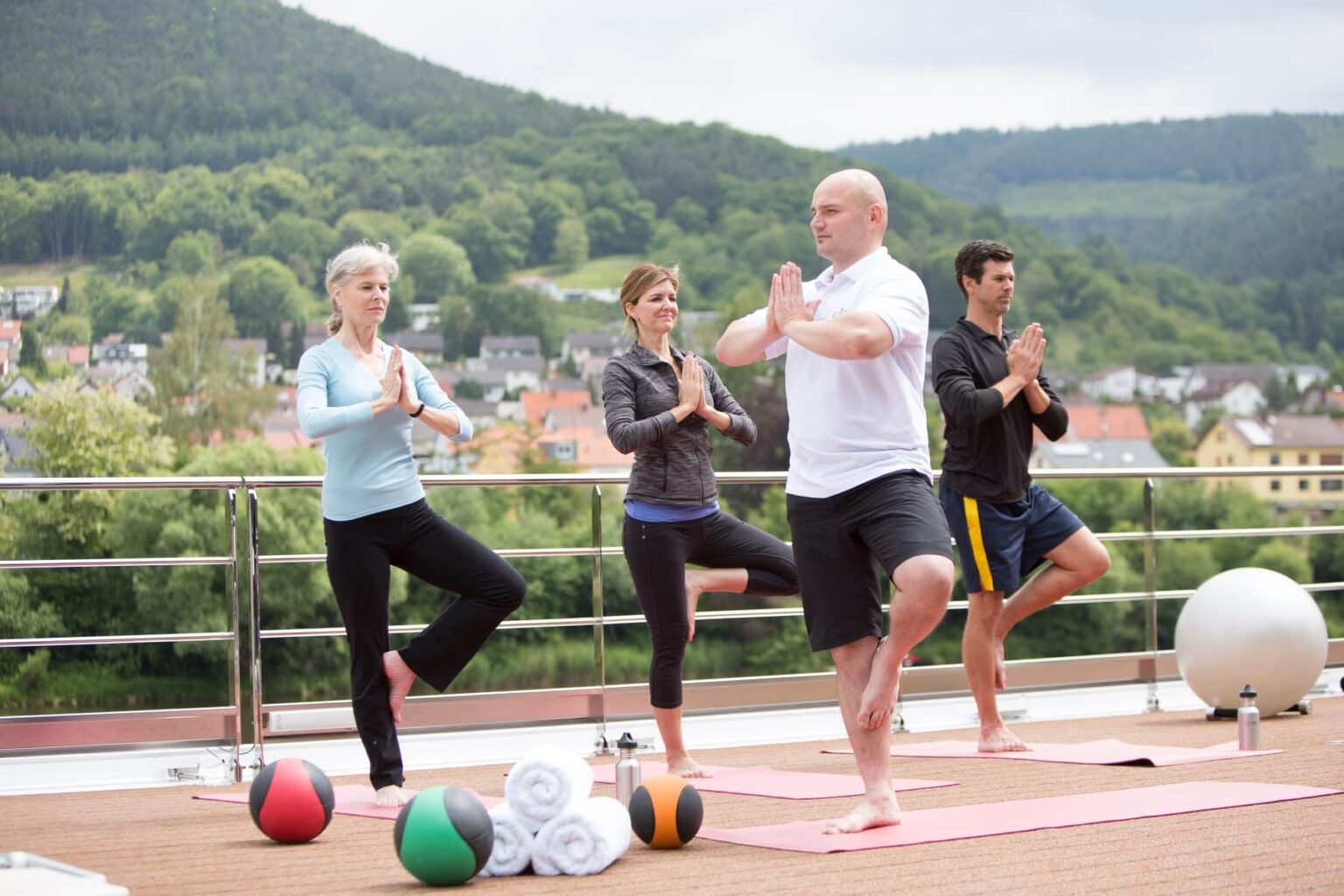
Think of gentle yoga on the sundeck, stretching sessions, luxury spa offerings, and gentle bike rides along the shoreline. In the kitchens, the chefs are preparing fresh salads, smoothies and protein bowls using local seasonal produce, and then there’s the infinity pool for a relaxing swim at the day’s end – with or without a sunset cocktail in hand.
“Yes, though not necessarily wellness-themed trips specifically, but guests who want to know wellness is part of the experience. We’re seeing guests actively seek out itineraries where they can return home feeling better than when they left, not just well travelled. They’re more discerning about how they spend their time and money, and for a growing segment of our guests, wellness inclusions have become a genuine deciding factor,” said David Cox, the CEO of the APT Travel Group.
“Guests are more intentional about how they spend their time and money. There’s less appetite for passive sightseeing and more interest in travel that has a positive impact on how you feel, physically and mentally. People want to come home having eaten well, stayed active, and genuinely switched off. River cruising suits that mindset well, and it really is an opportunity for people to improve their health both physically and mentally. It’s a style of travel that has always been about immersion and pace, and the hassle-free nature of it matters more than ever.”
Cruise Passenger asks, what’s driving this demand? And after speaking with three of the top cruise lines in the world, APT Cruises, Aval Waterways and AmaWaterways, we have discovered, is the emergence of younger cruisers that’s creating the trend; one that’s being welcomed by all.

What’s driving the wellness trend?
People are tired of returning home after a holiday, needing a break to recover from the break. Gone are the days when a vacation is about burning through the bank account, the mini-bar and the adrenalin levels. Many people are claiming it’s due to a sudden influx of young cruisers. However, river cruising’s quiet pivot toward wellness is most attributable to a drive within the cruise companies to allure the younger crowd, and they’re responding to it.
The industry’s leading premium cruise lines AmaWaterways, Avalon Waterways and APT are individually recalibrating their onboard and shore experiences to appeal to a broader, slightly younger demographic. While the river sector still skews more mature, the shift is measurable: travel advisors are reporting bookings from travellers under 40 have more than tripled in recent years. This would signal a generational broadening rather than a complete demographic overhaul.
That said, the baseline remains ‘mature’. On AmaWaterways, for example, around 50 per cent of guests are over 65, with a further 46 per cent aged between 35 and 65—meaning 96% of passengers are still over 35. The implication is not that river cruising has become “young,” but that it is becoming more intergenerational. Lines like Avalon Waterways have responded with products such as “Active & Discovery” itineraries, while APT has expanded its shore programming to include more flexible, activity-led touring. Across the board, the strategy is less about replacing older guests and more about layering in new ones without diluting the core product.
Wellness has emerged as the most effective bridge between these demographics. AmaWaterways, widely seen as a first-mover, has formalised the concept with dedicated Wellness Hosts and daily programming that includes yoga, stretching and guided fitness sessions. Avalon Waterways mirrors this with Adventure Hosts and active excursions, while APT integrates wellness more subtly through curated excursions and lighter dining options. The emphasis is not on building full-scale spa ships—river vessels typically carry just 100–200 passengers—but on embedding movement and balance into the daily rhythm of the itinerary.
Crucially, this shift aligns with broader travel behaviour among younger luxury consumers, who prioritise “active immersion” over passive sightseeing. Cycling tours, hiking excursions and small-group cultural experiences are increasingly central to the river cruise proposition, with companies like AmaWaterways even partnering with active travel specialists to deliver bike- and hike-focused sailings. What was once a largely sedentary, coach-led experience is now being reframed as physically and mentally engaging—without losing the ease and comfort that define the category.
The commercial logic is clear. Wellness programming allows river cruise lines to justify premium pricing, diversify their audience and remain competitive. Some are offering both expedition cruising and land-based wellness retreats. But the limits are equally important: with smaller ships and destination-heavy itineraries, wellness remains an enhancement rather than the core product. The result is a hybrid model—one where AmaWaterways, Avalon Waterways and APT are not transforming river cruising into a wellness category, but strategically embedding it to stay relevant in a changing luxury travel landscape.
Wellness with Avalon Waterways
Avalon Waterways approaches wellness as an embedded expectation rather than a headline product. It’s less about structured programming, and more about how the overall experience makes guests feel. The line acknowledges a clear shift in guest behaviour. Travellers are not necessarily booking explicitly “wellness-themed” cruises, but they increasingly expect wellness to be included. The goal is that guests return home “feeling better than when they left, not just well travelled” which is a subtle but important repositioning of value.
Onboard
This philosophy is reflected in how Avalon structures its onboard offering. Instead of a highly programmed wellness schedule, the ships provide the infrastructure for self-directed balance. Compact but well-equipped fitness centres, open-air deck space for yoga and stretching sessions, and indoor–outdoor environments designed to maximise light, airflow and usable space. The emphasis is on ease and accessibility, wellness is there when guests want it, without requiring commitment to a formal program or timetable.
Dining
Dining plays a more deliberate role than might be immediately visible. Menus are built around fresh, locally sourced produce with balanced options always available, while still allowing room for indulgence. This duality—eat well, move well, but enjoy yourself—is central to Avalon’s positioning. Dietary requirements are accommodated seamlessly, reinforcing the idea that wellness should feel intuitive rather than restrictive or performative.
Shore excursions
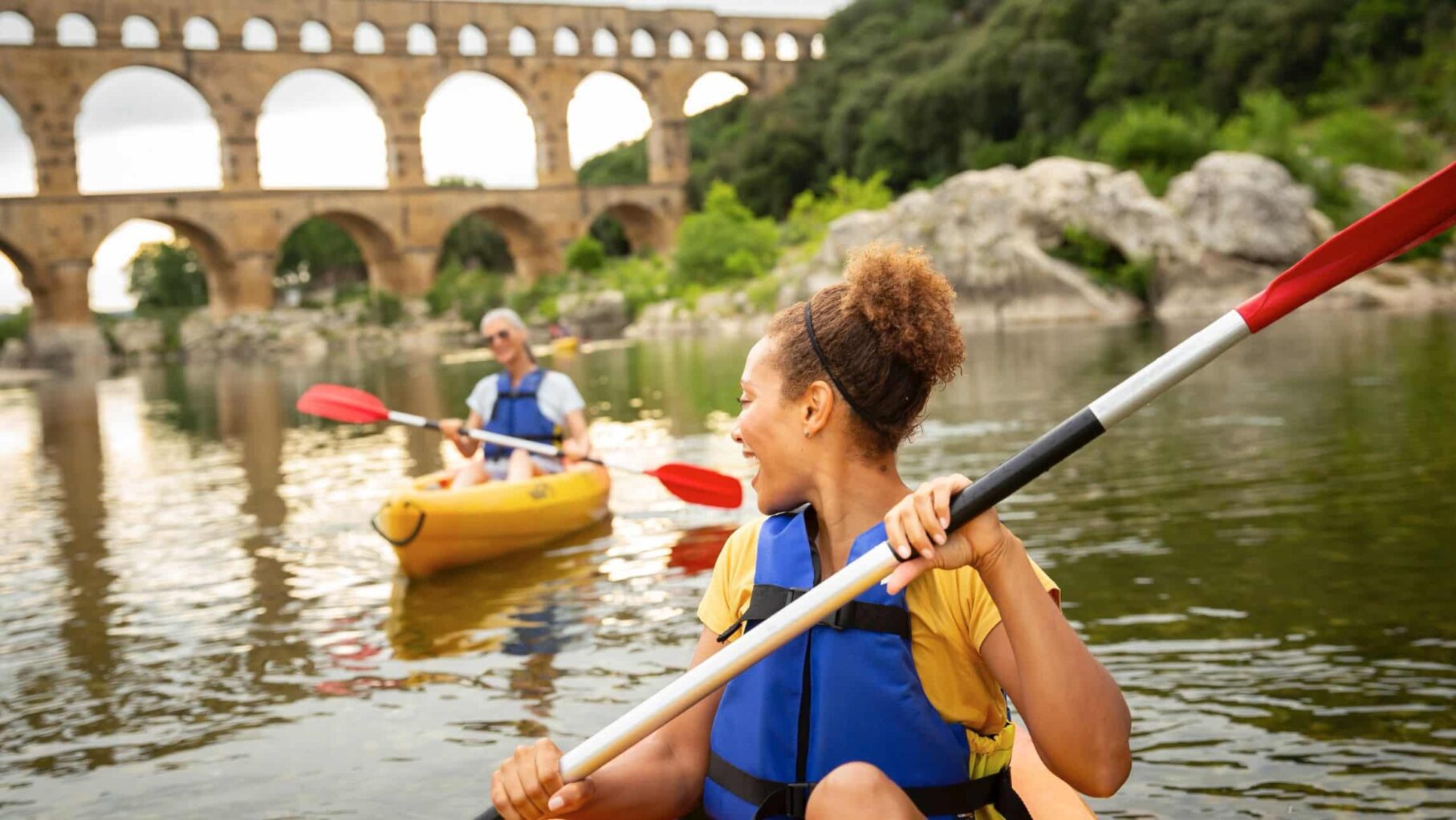
Where Avalon’s model becomes most compelling is in the transition from ship to shore. River cruising’s inherent advantage—docking in the centre of destinations—is leveraged fully. Guests have direct access to scenic running routes, countryside walks and cycling paths along Europe’s major rivers. These are not positioned as add-ons, but as a natural extension of the itinerary, allowing guests to be physically active every day without logistical friction. The line’s Active & Discovery itineraries, particularly along the Rhine, exemplify this: a single sailing can include hiking above the Rhine Gorge, cycling through vineyard regions and guided cultural exploration, all selectable day by day.
An Avalon wellness itinerary
A typical seven- to eight-night Rhine itinerary from Amsterdam to Basel sits in the range of approximately $5700 to $9500 per person, depending on season and suite category. The pricing reflects Avalon’s core proposition: not a fully programmed wellness cruise, but a highly flexible, all-encompassing travel experience where wellness is integrated into every layer… ship design, dining, and destination access. Increasingly, that integration is not just appreciated by guests; it is becoming a deciding factor in how and why they book.
Wellness with APT Luxury Cruises
APT Luxury Cruises takes a more understated but increasingly sophisticated approach to wellness, positioning it as an intrinsic part of “effortless luxury” rather than a branded program. The emphasis is on removing friction. Guests are not required to opt into wellness; instead, it is designed into the flow of the onboard experience. This aligns with a broader shift in guest expectations, where wellness is less about themed travel and more about feeling physically and mentally better at the end of a trip.
Onboard
Onboard, this philosophy is most visible on APT’s newer European ships, including APT Solara and APT Ostara. These vessels feature well-equipped fitness centres, pools and spa facilities, alongside generous indoor and outdoor spaces that prioritise natural light, airflow and room to move. Yoga and stretching sessions are offered on deck, while e-bikes are available for independent exploration in port, reinforcing the connection between onboard wellbeing and destination immersion. The design intent is clear: create an environment where activity and relaxation coexist seamlessly rather than compete.
Dining
Dining is a central component of APT’s wellness positioning. Menus are built around fresh, locally sourced produce with balanced options always available, and dietary requirements are accommodated without being treated as a separate or diminished offering. At the same time, indulgence remains part of the experience. Wellness here is framed as equilibrium rather than restriction. This balance reflects APT’s core demographic while still appealing to a more wellness-aware traveller.
Shore excursions
Onshore, APT leverages one of river cruising’s inherent advantages: direct access to destinations. Guests can step off the ship into established walking paths, countryside trails and iconic cycling routes along Europe’s major rivers. These are curated as part of the itinerary rather than positioned as optional extras, allowing for consistent daily activity without logistical complexity. The experience is designed to feel considered and seamless, an important distinction in a market where ease increasingly defines luxury.
An APT wellness itinerary
A typical APT Danube itinerary through Central Europe, covering Budapest, Vienna, Linz and Passau. It ranges from approximately $6,000 to $10,000 per person for seven to eight nights, with premium suites and peak departures exceeding this. The all-inclusive structure is central to the wellness proposition: with excursions, dining and experiences prepaid, guests can focus on how they feel rather than what they are spending. In that sense, APT’s differentiation is not in overt wellness programming, but in how comprehensively it removes the barriers to living well while travelling.
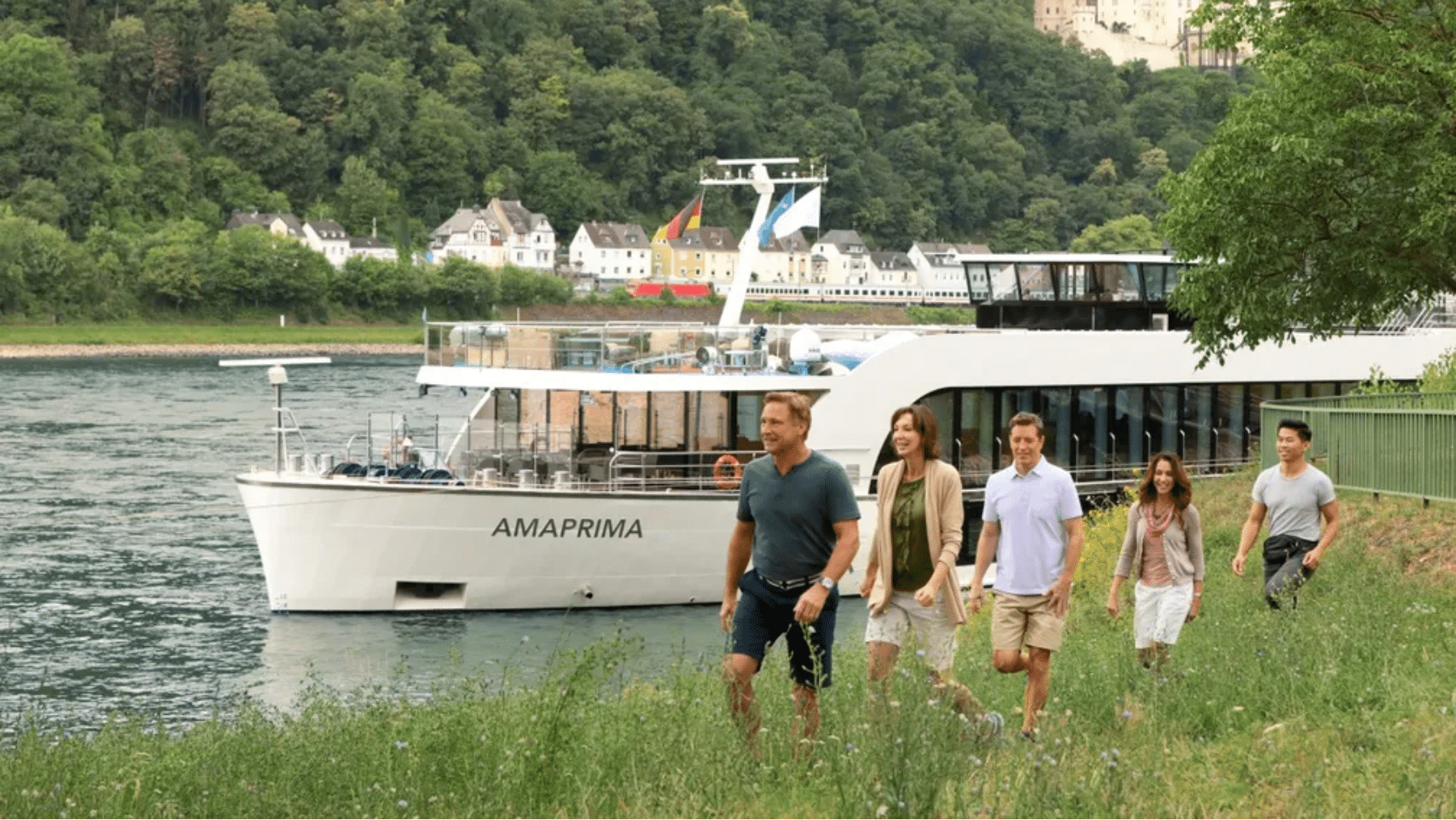
Wellness with AmaWaterways
AmaWaterways has built the most fully realised wellness ecosystem in river cruising, with a model that is both structured and deeply embedded into the onboard experience. As Angela Smith, Head of Marketing AUNZ, explains, “we’ve definitely seen growing interest from guests who want more out of their holiday than just sightseeing… people are looking to come home feeling better than when they left.” That shift is particularly evident among a younger, more active traveller who expects movement, mindfulness and balance to sit alongside cultural immersion—not outside it.
At the centre of AmaWaterways’ approach is its dedicated Wellness Host program—specialists who travel with guests for the entire journey and lead daily small-group classes including yoga, stretching, Pilates and circuit training. As Ms Smith notes, “wellness is part of the everyday onboard experience rather than something separate.” This consistency is critical: rather than sporadic sessions, wellness becomes part of the daily rhythm, allowing guests to maintain routines in a way that feels natural rather than performative.
Onboard
The physical design of the fleet supports this integration. Ships include fitness centres, walking tracks, pools and spa treatment rooms, while AmaMagna—the line’s flagship on the Danube—pushes the concept further with its expansive Zen Wellness Studio, spin classes and dedicated treatment spaces. But the softer details are just as important. “Guests often comment on the daily changing smoothies and all-day snacks we provide, which are as delicious as they are nourishing,” Ms Smith adds, highlighting how wellness extends into everyday onboard habits rather than being confined to scheduled activities.
Dining
Wellness on AmaWaterways is deliberately multi-layered rather than purely physical. Dining is structured to support this, with menus consistently offering health-conscious options made from fresh, locally sourced ingredients, alongside the flexibility to accommodate dietary requirements such as vegetarian, gluten-free or low-sodium. Hydration stations, light cuisine and vegetable-forward dining venues, particularly on AmaMagna, extend the wellness narrative into everyday onboard habits rather than isolating it within scheduled activities.
Shore excursions
Onshore, the model shifts seamlessly into active exploration. Guests can choose from guided hikes, cycling tours and walking excursions at varying pace levels, or explore independently using the ship’s complimentary bikes. “Wellness is about staying active while connecting more deeply with each destination,” Ms Smith says, reinforcing the idea that movement is a pathway to more meaningful travel, not just a physical add-on. This alignment between ship and shore is where AmaWaterways’ program feels most cohesive.
An AmaWaterways wellness itinerary
A representative example is the Romantic Danube or Magna on the Danube itinerary, typically a seven-night journey between Vilshofen and Budapest, calling at Passau, Linz, Vienna and Bratislava. Pricing generally ranges from approximately $7,400 to $11,400 per person, depending on ship and suite category, with excursions, wellness programming and most dining included. It’s a fully integrated proposition, and as Ms Smith summarises, “wellness has been part of AmaWaterways’ DNA from the beginning… today, that’s evolved into a program where it’s included as standard.” The result is not a cruise with wellness added on, but one where it is structurally built into the experience end to end.