
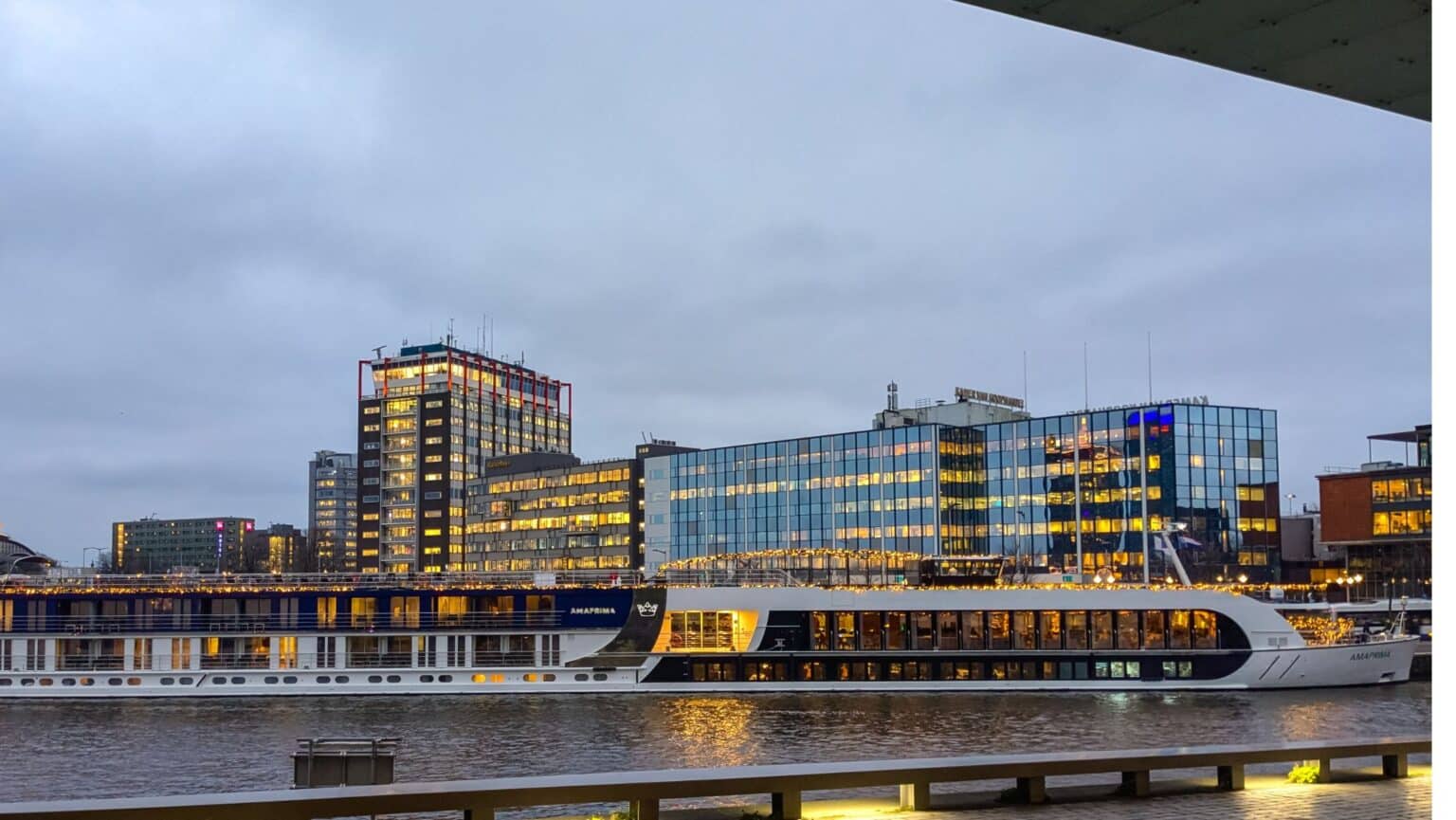
- While Amsterdam’s pushback on ocean cruising has been well publicised, what isn’t as well known is its decision to cap river cruise arrivals as well.
- River cruise calls will be cut by almost 50%.
- Here’s where river ships might go instead.
River cruise has been rapidly growing across Europe, with more and more cruise lines joining the party and those that already sail the waterways have been adding more ships. However, river cruise’s growth has run into an expected hurdle.
The City of Amsterdam is aiming to slash its cruise calls by around 50%, setting a tight cap on how many river cruise ships can visit each year. This move comes as somewhat of a surprise. While many destinations around Europe and the world have implemented new regulations to limit ocean cruising, Amsterdam may be the first city to crack down on river cruising.
This is particularly worrisome as Amsterdam is a crucial port in the European river cruise ecosystem. Most Rhine cruises either start or end in Amsterdam, and as a larger city, it has the infrastructure to handle a high volume of river cruises coming in and out.
On paper, river cruising should be an attractive form of tourism for a city like Amsterdam, as it generally brings in weather tourists who spend more money per day. However, for whatever reason, Amsterdam has decided that it wants to cut back on river cruise tourism.
In 2024, 1950 river ships visited Amsterdam, while exact figures aren’t publicly available, estimating 160 tourists per ship, this comes out to 312,000 tourists in total. Compared to a total of 9.5 million visitors who passed through the city, river cruise passengers only account for about 3% of overall visitors.
The new rules
Amsterdam’s new rules will mean that only 1150 river cruise ships can visit each year from 2028, meaning about 800 ships a year and 128,000 passengers will have to seek other arrangements. This will be phased in, with a 10% reduction in calls each year starting from 2026.
The most significant change is a hard cap on the number of river cruise ship “calls” (dockings) allowed per year. Starting in 2026, the city will begin issuing an annual reduction quota. Operators will be required to cut their total dockings by about 10% initially, with further cuts each year until the 2028 target is met.
To dock in the city center, ships must now prove their environmental credentials. Vessels must hold a “Green Award” (specifically Silver or Gold level) to qualify for central berths.
To reduce nitrogen and particulate matter emissions in the historic city center, Amsterdam is eliminating the use of onboard diesel generators. All cruise ships (river and ocean) must use shore power while docked by 2027.
The financial cost of visiting Amsterdam has risen sharply to discourage “budget” mass tourism. Passengers on cruise ships that do not stay in a local hotel but visit the city for the day are subject to a specific “Day Tourist Tax.”
The tax is set at approximately €14.50 to €15.00 per passenger per day. This is often billed directly to the passenger’s onboard account.
Because of the 1,150-call cap, many river cruise lines are already changing their business models
The 128,000 passengers of reduced traffic would barely make a dent in Amsterdam’s overall tourism visitation, particularly as it keeps growing.
River cruise lines have already been adjusting itineraries and instead visiting smaller Dutch towns as they adapt to the new regulations.
For example, AmaWaterways has been looking to Zaandam, which is only about 20 minutes driving from Amsterdam. Rotterdam is another option for an alternative port but is about an hour of travel from Amsterdam.
It would appear likely that CLIA and the European River Cruise Association will contest this decision from Amsterdam, however, if the city stays firm, European river cruise will have to adapt.
Given the reduced number of people per ship, and that there is higher value tourists onboard, river cruise is generally an attractive proposal to European towns, and shouldn’t struggle to find alternatives, but Amsterdam’s regulations definitely throw a spanner in the works for river cruise lines and passengers.