
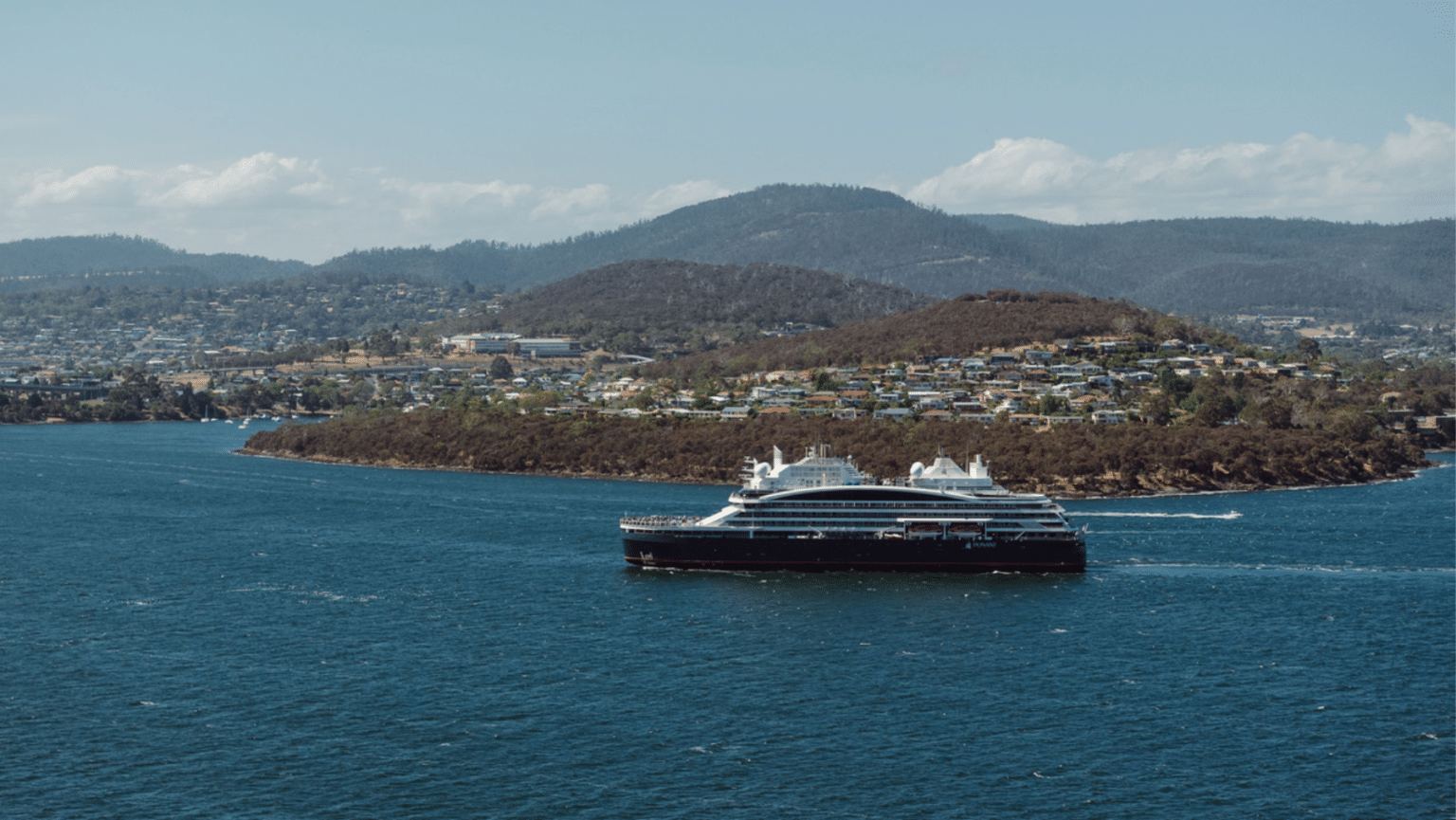
- Ponant’s Le Commandant Charcot arrived in Hobart this week, and we took a look onboard.
- In January 2028, Le Commandant Charcot will undertake her first full circumnavigation of Antarctica.
- The 62-day voyage will sail nearly 23,000 kilometres around the frozen continent at the height of the austral summer.
There are still places on Earth that can resist us. Not because we lack the desire to reach them, but because they remain logistically and physically punishing, and inaccessible.
Eastern Antarctica is one of them: a vast, ice-locked region of the world so remote that even seasoned polar travellers often speak of it with a kind of reverence and awe.
And yet, here it is – suddenly, astonishingly – within reach.
Ponant Expeditions brought Le Commandant Charcot to Hobart this week, using her arrival to announce a new era of Southern Hemisphere expedition travel: a 30-night eastbound journey from Tasmania through Eastern Antarctica and onward to Cape Town, taking in the Ross Sea and the French Southern and Antarctic Lands.
For Australians seeking true expedition at the farthest edge of the globe, it is more than a new itinerary. It is a statement of what mankind is capable of.
Antarctica has long been sold to travellers through the familiar lens of the Peninsula, typically reached via Argentina or Chile, and almost always requiring the Drake Passage: a stretch of ocean whose reputation has been earned, not exaggerated.
Ponant’s new route changes the geography of aspiration.
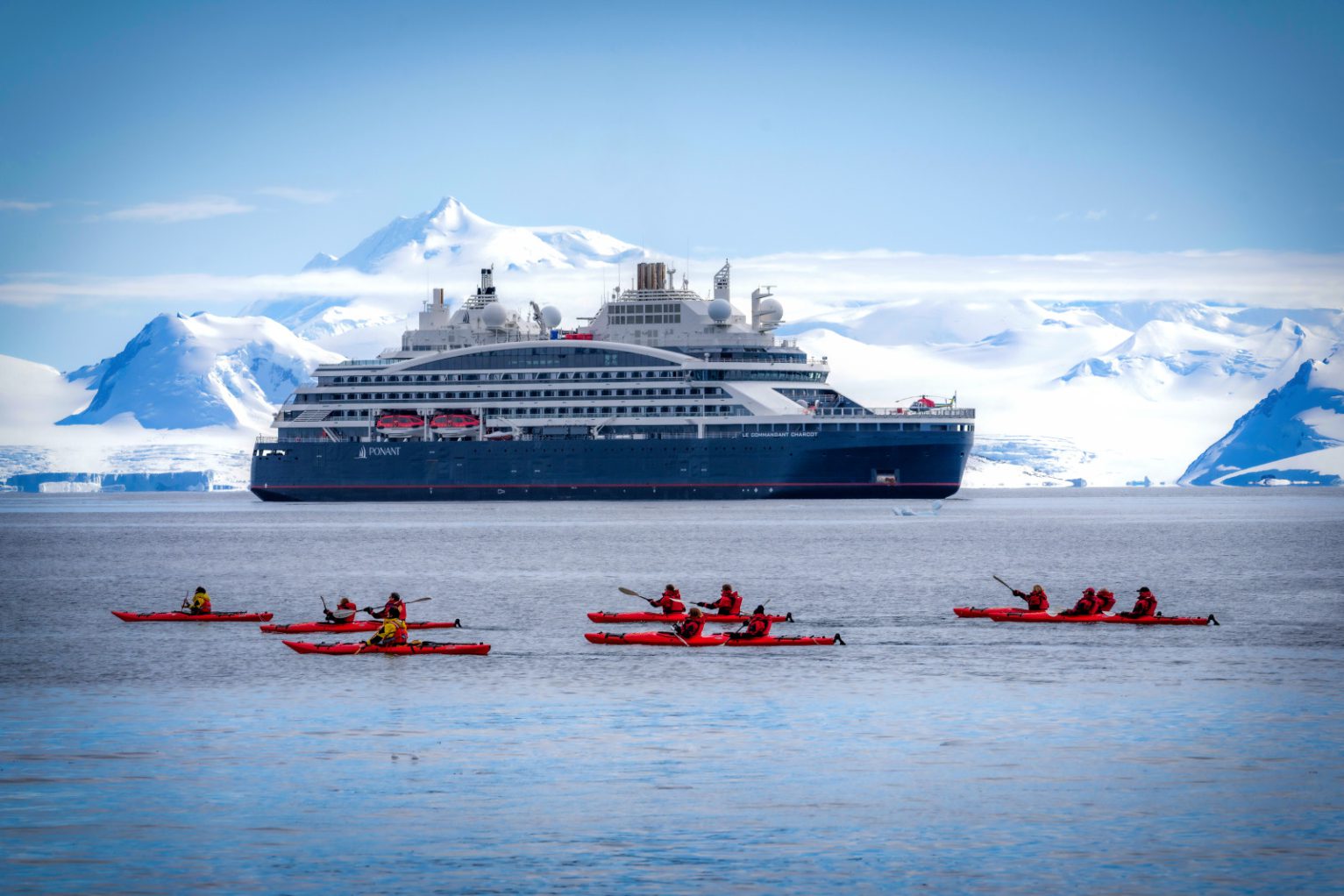
Departing from Hobart, Le Commandant Charcot sails eastward into far less visited waters, navigating regions such as Wilkes Land and the Shackleton Ice Shelf.
This is not the Antarctica of crowded landings and predictable horizons. It is the Antarctica of ice shelves, vast silence, and the kind of wildlife encounters that feel almost cinematic: emperor penguins, leopard seals, whales cutting through dark water.
The ship continues north into the French Southern and Antarctic Lands – remote volcanic islands in the southern Indian Ocean, including Crozet and Kerguelen, home to sprawling colonies of king penguins and elephant seals, before concluding in Cape Town.
It is an itinerary designed not for those who want to say they’ve been to Antarctica, but for those who want to go where most ships cannot.
A collision of two worlds: luxury and expedition
It is impossible to understand the significance of this voyage without understanding the ship.
Le Commandant Charcot is not simply expedition capable. She is a true polar icebreaker with a PC2 classification, the only passenger vessel in the world with this rating. She is designed to navigate multi-year ice up to 2.5 metres thick.
She debuted in 2021 and remains a singular presence in polar cruising: a ship that can push into the most extreme environments on Earth while maintaining the kind of onboard refinement more commonly associated with private yachts and boutique hotels.
Powered by hybrid electric propulsion using liquefied natural gas (LNG), she also represents a quieter, more considered approach to polar travel – a rare and important distinction for a ship operating in the most fragile ecosystems on the planet.
Luxury, in the polar regions, is not marble and chandeliers. Luxury is the sensation of returning from a zodiac landing into a ship where the air is perfectly tempered, the lighting is soft, and the service feels effortless.
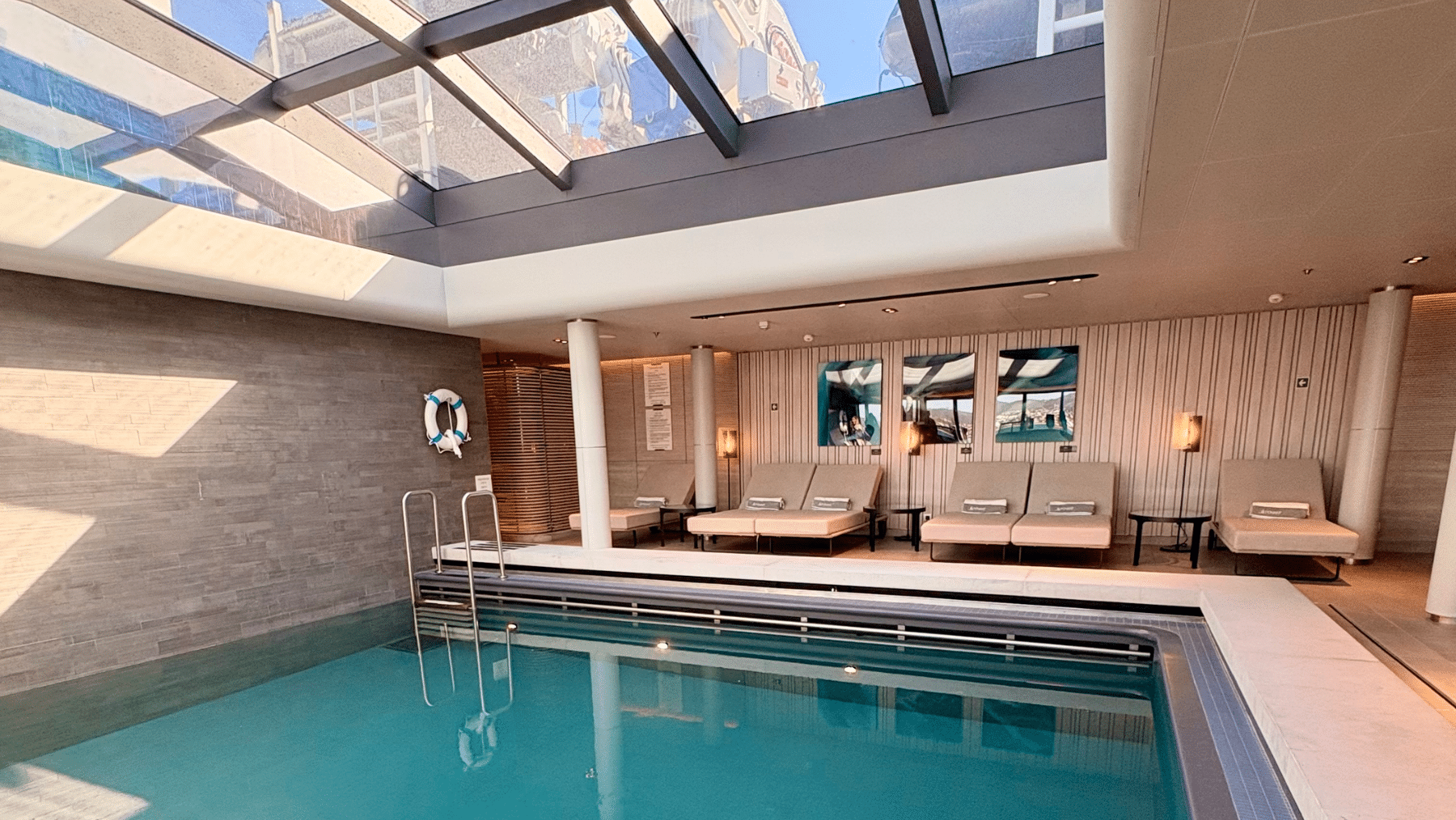
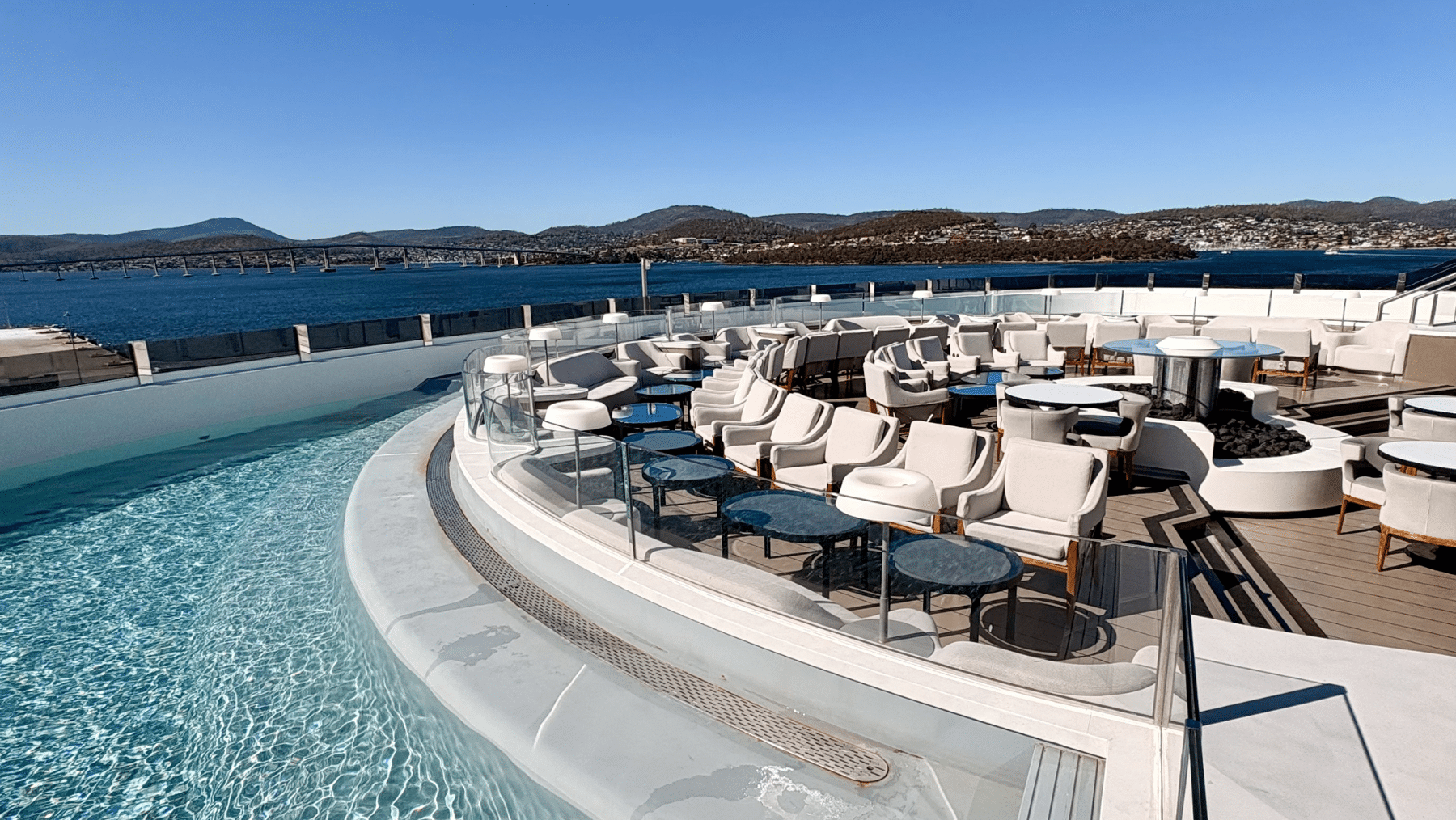
Onboard Le Commandant Charcot, there are two swimming pools – one indoor, one outdoor – and a deck space that defies logic: outdoor lounges with heated seating, including solar-powered under-seat warming, allowing guests to remain outside longer than the conditions should reasonably allow.
Then there is the spa complex: elegant, understated, and unusually complete for a ship of this size. It includes a sauna and, perhaps most memorably, a snow room, a detail that feels both indulgent and strangely fitting given the landscapes beyond the glass.
There is also a cigar lounge, designed for those who appreciate ritual as much as relaxation, and a private upper echelon of suites that are among the most coveted addresses in expedition cruising.
At the pinnacle sits the Owner’s Suite: a wraparound sanctuary with a private deck where icebergs and wildlife can be observed from deck chairs or a hot tub, as though the Southern Ocean were a private theatre.
With just 245 guests onboard, the ship’s scale is intimate, and that intimacy is crucial. In polar regions, the ability to operate smoothly, land efficiently, and create a sense of calm is not a luxury add-on; it is the defining feature of a premium expedition.
The 1:1 guest-to-crew ratio is not merely a statistic. It is the reason the ship feels so composed, so quietly attentive, so immune to the chaos that can occasionally creep into expedition cruising.
Everything is designed to feel unforced: from the way guests move between expedition briefings and cocktail service, to the way the ship transitions from adventure to elegance without missing a beat.
Ponant has always carried its French identity with pride, but on Le Commandant Charcot that identity becomes the ship’s signature.
The restaurant was created in partnership with legendary chef Alain Ducasse, bringing a culinary sensibility that feels almost absurdly refined for a vessel operating in multi-year ice.
And yet, it works.
Meals become part of the experience, not simply a reward for a day outside. There is French cheese, wine, and champagne, yes — but also the kind of ingredient-led approach that suits the ship’s philosophy: luxury as a form of intelligent comfort, rather than display.
What makes this new itinerary especially compelling is the story it chooses to honour.
Eastern Antarctica is not merely remote — it is steeped in the mythology of the heroic age of exploration, the era of men like Ernest Shackleton, whose name still carries a particular weight among those drawn to the polar world.
Remarkably, Ponant has forged a close relationship with Shackleton’s family, and his grandson, Jonathan Shackleton, was onboard during the ship’s arrival into Hobart after completing a one-way expedition from Ushuaia.
During that voyage – a 31-day crossing through the Bellingshausen and Amundsen Seas, across the Ross Sea, and through seldom-visited waters – guests were treated to lectures that connected the modern expedition experience to the explorers who first tried, and often failed, to conquer these regions.
It is one thing to see Antarctica. It is another to understand it.
Only specific ice breaker ships can navigate the waters of the Eastern Antarctic route, in fact only a rare selection of commercial ships operate there. Le Commandant Charcot not only matches the capacity to cut through the ice-locked regions, but she is the first ship on earth to do so, while offering a luxurious experience as a true polar icebreaker with PC2 rating.
The Captain’s point of difference
Le Commandant Charcot Captain Stanislas Devorsine addressed guests onboard on the eve of departure for the new itinerary. Captain Devorsine has been a key figure behind the ship’s polar operations since inception and has a personal passion for Hobart as a port, since he resided in Tasmania as Captain of L’Astrolabe, a French icebreaker that operated for over ten years between Hobart and Antarctica, supporting scientific and logistical missions.
Trained as an ice-pilot, and pioneering the Hobart itinerary for Antarctic expeditions, Captain Devorsine said “I am very proud. And happy. I am a very happy captain!” Captain Devorsine went on the explain that while this route would “normally take science ice breakers weeks to navigate. For Ponant, it only takes us days.” Not only is the new itinerary set to carve a new direction for passenger vessels in the region, Captain Devorsine also emphasised the revolution in the luxury market for expedition cruising with this new itinerary and the introduction of Le Commandant Charcot.
“I’m so proud to be part of the concept. What a vision, in 2015 to take this challenge. And then to watch the testing, the trial runs, it is mind blowing! I am still amazed. Sailings in this region are not normally comfortable! There’s usually shaking, rattling, no sleep. In fact, you need to be exhausted in order to sleep on these scientific expeditions. And safety, this alone is a big challenge.”
Captain Devorsine is also passionate about the fact this new Ponant itinerary is creating history. He said “it was only in 1976 that we saw a ship venture into the North Pole. Technically, this means that we made it to the moon with a space ship before we made it to the North Pole with a ship.”
And while Captain Devorsine is excited to be witnessing the ship venture into these waters, marking history as a passenger vessel, he is also excited to declare the level of luxury that is offered. “The comfort among the conditions is remarkable. There are heated lounge chairs among the outdoor pool deck. And we have Australian vegetables, French cheese and wine and champagne. We have everything we need.”

Full Circumnavigation of Antarctica
While this month’s new itinerary marks a ground breaking development in arctic passenger pioneering, Ponant expeditions has announced greater plans ahead.
In January 2028, Le Commandant Charcot will undertake her first full circumnavigation of Antarctica. From January to March 2028, the itinerary will include Hobart in this world-first itinerary.
Hobart is a pivotal hub on this itinerary as it offers a double benefit. Hobart provides the ship with an opportunity to refuel, replenish supplies and also welcome guests from Australian soil, a move that will undoubtedly be a hit with Australian and New Zealand cruisers who have aspired to sail to Antarctica, without the need to cruise across the rough and time consuming Drake Passage.
Le Commandant Charcot with Depart Ushuaia (Argentina) in early January 2028 and sail westward along the Antarctic coastline for about 30 days to Hobart. After a short stopover, the ship will continue eastward along the Antarctic coast on a return leg to Ushuaia. The entire voyage will span about 62 days and can be booked as a whole or as two separate legs (Ushuaia → Hobart or Hobart → Ushuaia). This circumnavigation is uniquely designed to take guests into those regions rarely visited by commercial ships, retracing historic exploration routes by the likes of Ernest Shackleton and offering extensive wildlife viewing and polar geography immersion.
Hobart will serve as both a boarding and departure point for guests, further emphasising its emerging role as a key Antarctic expedition gateway. This itinerary in 2028 will mark an unprecedented 62-day voyage that will see Le Commandant Charcot sail nearly 23,000 kilometres around the frozen continent at the height of the austral summer.
For more information about Le Commandant Charcot and the new itineraries, click here.
Related Posts
-

The Comorant at 55 South is designed for guests who want to fly over the Drake Passage.
-
You can actually cruise to Antarctica from Australia and New Zealand, and you'll actually visit an even more remote part of the region.
-
Uniworld Boutique River Cruises has unveiled a wave of new developments that promise to reshape the way Australians experience luxury travel.
-
Ponant launches new 2028 circumnavigation voyage of Antarctica following in the footstpes of Captain Jean-Baptiste Charcot.