
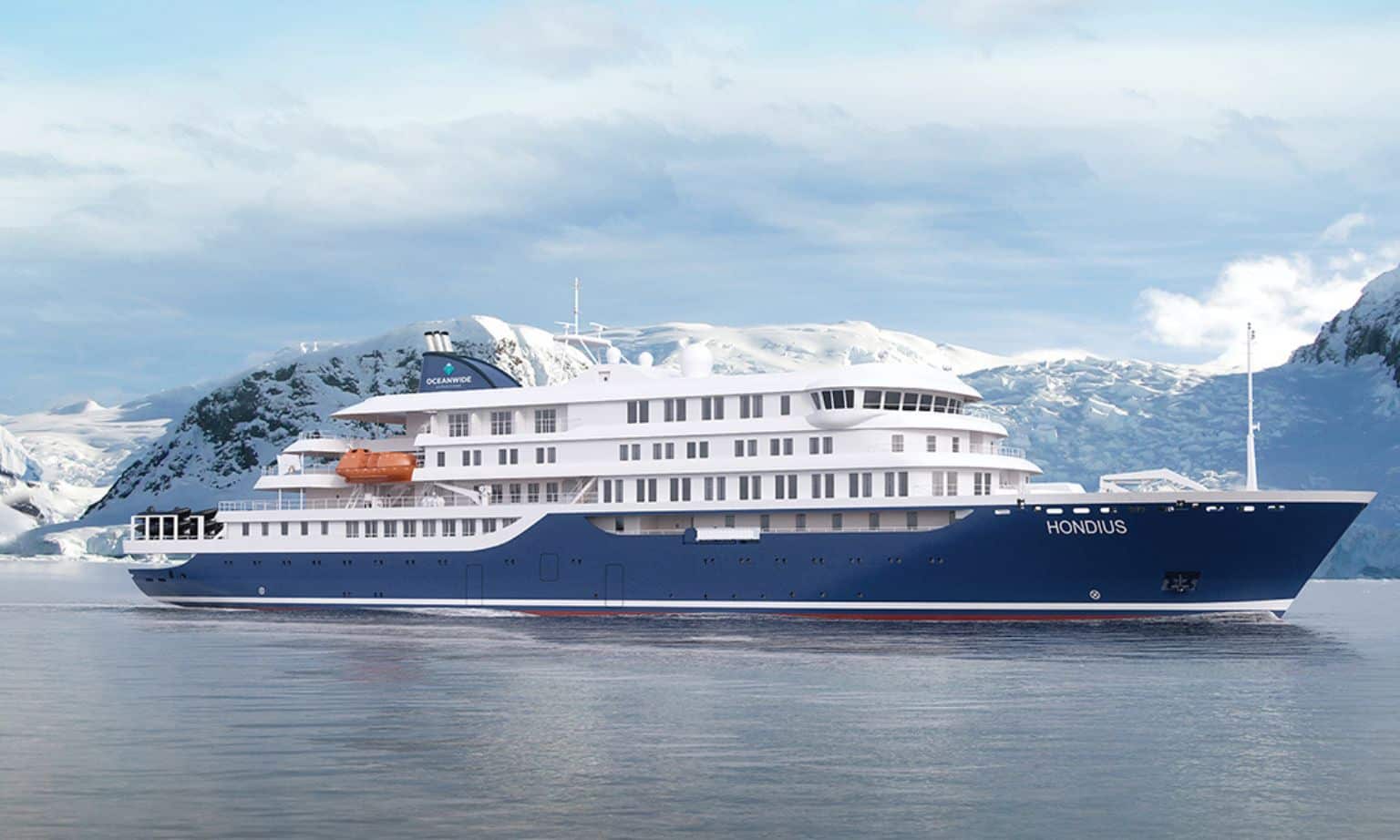
- Four Australians remain trapped on board an adventure ship along with a deadly virus.
- Three people have died and another is in critical condition after the outbreak of a rare respiratory virus on MV Hondius, a 170-person cruise vessel that was sailing from Argentina to Cape Verde.
- Last night, passengers sent out video pleas to be rescued as the Cape Verde authorities continued to refuse to allow the vessel to land for fear of the virus.
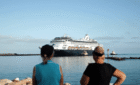
Passengers aboard the adventure ship MV Hondius sent out a video plea last night to be rescued as they were trapped aboard the stricken vessel with a deadly virus.
Four Australians are among the some 150 people on board the luxury adventure ship.
The World Health Organisation has confirmed that three people on a cruise ship have died from what is suspected to be hantavirus, a rare respiratory virus spread by rodent droppings. A fourth person, a British national, is currently in intensive care.
Currently, Health Authorities are rapidly contact tracing, with the cruise line suggesting that up to 29 passengers could have come into contact with the disease. The ship will arrive in Spain on Sunday morning, where passengers and crew will board isolated, guarded vehicles and be escorted to the necessary health or quarantine facilities.
The rest of the passengers and crew are still on the ship riding at anchor off Cape Verde.
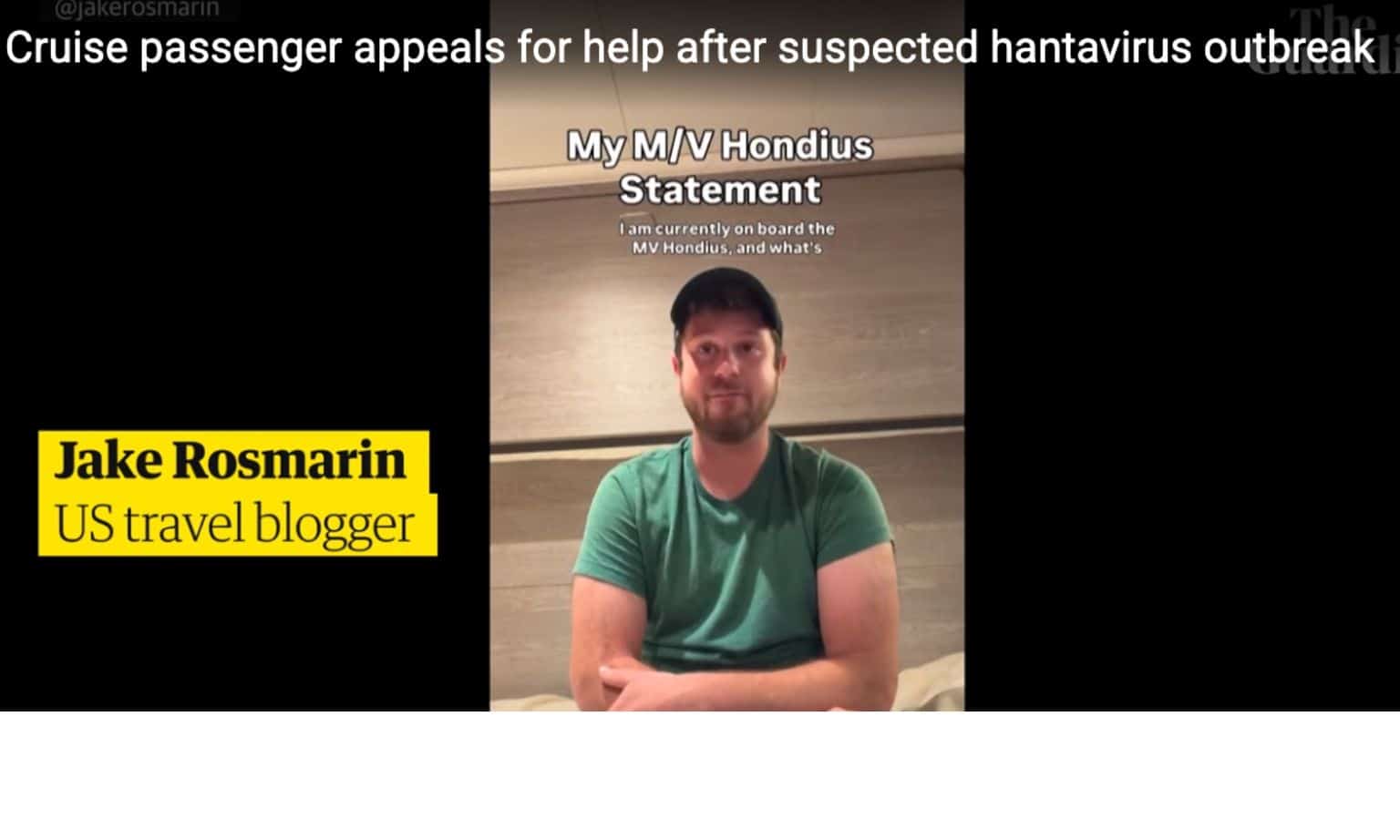
“We’re not just headlines. We’re people. People, families, with lives, with people waiting for us at home,” said an American male passenger on video.
A British man, Dutch crew member and German national have been evacuated from the ship, and sent to The Netherlands for treatment.
The UK”s Health Security Agency has also revealed that two British people are self isolating at home in the UK, due to having potential exposure to the virus but having already exited the cruise earlier.
Another passenger has accused the cruise line of not taking the matter “seriously enough”.
Rudi Cenet, a Turkish travel vlogger who boarded the ship in Ushaia, Argentina, said that “they didn’t even consider the possibility of having such a contagious disease.
“They didn’t take the problem seriously enough.”
This statement comes as footage emerges of the captain informing passengers about the first death, and stating that it did not appear to be due to an infectious disease.
Cenet feels there should have been more care after this announcement. He himself chose to self-isolate.
“We again kept eating all together… and we didn’t wear any masks.
“We didn’t know there was a virus, but we just took precautions.”
Cenet also mentioned concern for the port that the cruise ship visited, already after the announcement of the first death.
“I wish we did not land there after the first casualty, because along with us, there were a hundred more passengers, and they were interacting with the islanders.
“This is one of my regrets, because the island is the most remote one, and they don’t have enough medical centres, enough doctors.”
Where is the ship now?
Currently, the passengers are off the coast of Cape Verde and will arrive in the Canary Islands in three to four days, where they’ll be awaiting instructions from the World Health Organisation and Spanish authorities. Spain has agreed to receive the ship, but health authorities still need to inspect the ship and its 150 passengers before people are allowed to disembark.
From there, passengers will be transferred to their home countries.
A British crew member will be medically evacuated before then due to the urgency of the situation. Another crew member who is also ill will likely be evacuated as well.
The Spanish health ministry said: “The World Health Organization has explained that Cape Verde is unable to carry out this operation.
“The Canary Islands are the closest location with the necessary capabilities. Spain has a moral and legal obligation to assist these people, among whom are also several Spanish citizens.”
How do health authorities think the disease got onto the ship?
Hantavirus generally doesn’t spread from human-to-human, however, some extremely rare strains of the disease can. These strains are known to exist in Argentina, where the cruise began. The WHO has suggested that they believe some human-to-human transmission is occurring, which would suggest that it is one of the rare strains of the virus that has been contracted.
Maria Van Kerkhove, the World Health Organization’s epidemic and pandemic preparedness and prevention director said to BBC: “We do believe that there may be some human-to-human transmission that is happening among the really close contacts.
“Our working hypothesis is that there’s probably a couple of different types of transmission that might be happening.”
This hypothesis is also backed by the fact that no rats were found onboard, and that the WHO believes the first passenger to get sick contracted the virus before boarding the ship.
Argentinian officials believe that a Dutch couple onboard could have contracted the virus in Argentina, while bird-watching in Ushuaia. Argentina has seen a rise in Hantavirus cases over the past year, but never in that particular region of the country.
The background
The outbreak happened on board the vessel operated by Dutch company Oceanwide Expeditions, which was sailing from Argentina to Cape Verde. The ship has capacity for 170 guests and 57 crew members, and it’s reported that 88 passengers and 68 crew were onboard.
It is understood that two of the infected people are crew members, who until now have not been allowed to disembark by authorities in Cape Verde where the ship is.
The first passenger, a 70-year-old Dutch national, died onboard on April 11. His body was taken off the ship and his wife, 69, died a few days later in South Africa. The third person who died was a German national, while a British man who fell ill and was taken off the ship, is in critical condition in intensive care in a South African hospital.
Hantavirus refers to a family of viruses that generally are spread by mice and rats, and can be contracted by humans through breathing in virus particles in the air from rodent urine, droppings or saliva. If contracted, the virus is severe, with the mortality rate as high as 40 per cent.
Symptoms generally start with fatigue, fever, abdominal pain and muscle aches, and then can progress into serious respiratory problems, with shortness of breath and tightness in the chest.
The WHO said in a statement: “WHO is aware of and supporting a public health event involving a cruise vessel sailing in the Atlantic Ocean. To date, one case of hantavirus infection has been laboratory confirmed, and there are five additional suspected cases. Of the six affected individuals, three have died and one is currently in intensive care in South Africa.
“Detailed investigations are ongoing, including further laboratory testing, and epidemiological investigations. Medical care and support are being provided to passengers and crew. Sequencing of the virus is also ongoing.
“Hantavirus infections are typically linked to environmental exposure (exposure to infected rodents’ urine or faeces). While rare, hantavirus may spread between people, and can lead to severe respiratory illness and requires careful patient monitoring, support and response.
“WHO is facilitating coordination between Member States and the Ship’s operators for medical evacuation of two symptomatic passengers, as well as full public health risk assessment and support to the remaining passengers on board. WHO is grateful for the rapid actions and coordination.”

Related Posts
-

While Western Australia was celebrating the success of its 2023/24 cruise season, where 290 cruise ship visits were recorded and more than $385 million was injected into the economy, there…
-
Norwegian Aura, NCL's biggest and newest ship, is officially open for bookings. The ship will begin sailing homeporting out of Miami in June 2027.
-
The protest was staged by protest group The Extinction Rebellion, and around 30 protesters took to kayaks, smaller boats and inflatables to crowd the dock and prevent the large ship…
-
The launch of the environmentally friendly hydrogen cruise ship, which can host almost 1000 guests, is a major step forward in sustainable cruising.