
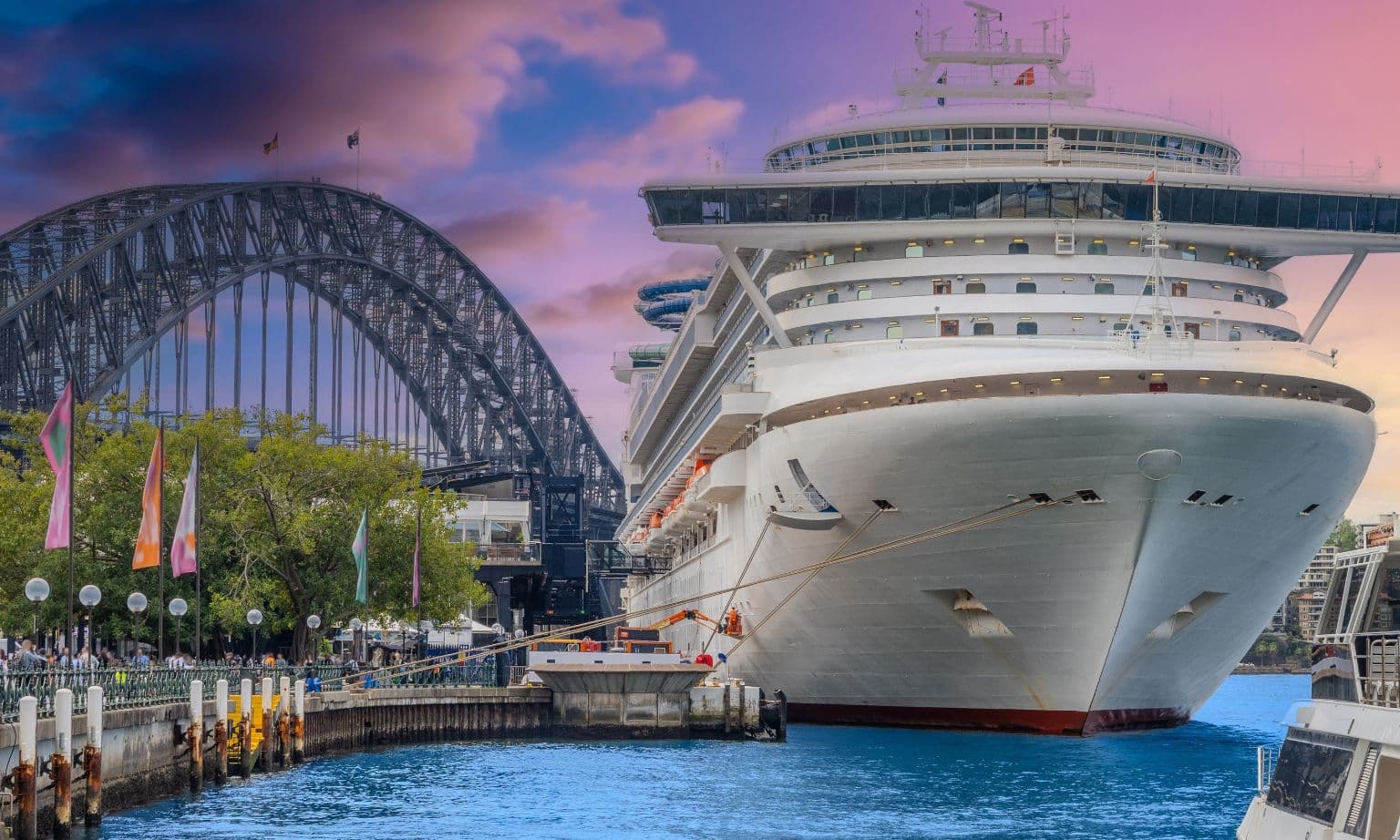
- The Australia Cruise Association has released its strategic action plan.
- It outlines steps towards strengthening Australia’s cruise industry.
- As the report itself acknowledges, carrying out the report will require
The Australian Cruise Association (ACA) has launched a national strategic plan which aims to set out a clear path to strengthen cruise tourism in Australia.
The plan marks out a set of steps that aim to engage with Federal and State governments with the goal of policy reform that can make Australia a more attractive destination for cruise lines to invest in, as well as making the local industry more coordinated, efficient and sustainable.
Australian Cruise Association Chair Brendan Connell said: “Our ports, destinations and industry partners are committed to sustainable cruise growth, but they require policy certainty and coordinated planning to
invest with confidence.
“This plan represents a unified position and a constructive pathway forward to ensure cruise continues to deliver economic and social benefits across Australia.”
So, what is the plan for transforming Australia’s cruise industry? It revolves around five key priority areas.
These are
- Policy and regulatory reform, including coastal trading certainty, border
- processing efficiency and regulatory harmonisation
- Port and terminal infrastructure, addressing capacity constraints at major
gateways and enabling growth at regional ports - Destination development, supporting sustainable cruise growth aligned
with state and regional tourism strategies - Sustainability and social licence, including shore power, emissions
reduction and innovation in clean fuels - Regional economic development, ensuring cruise continues to deliver
tangible benefits to communities across Australia
The missing piece – government collaboration
Perhaps the most important element of the plan is the same thing that Cruise Passenger and other industry voices have been calling for, which is the development of a National Cruise Tourism Strategy, formed in coordination between the government and cruise industry.
The report makes the point that while the ACA has outlined national priorities, the actual achieving of these goals will come down to governments, ports, operators and other stakeholders.
Until now, Federal Tourism Minister Don Farrell has given no indication that he is willing to work towards a national strategy on cruise. The key bottleneck appears not to be an industry that doesn’t know what needs to be done, but rather a government who can’t find the time to prioritise cruise and see the importance of formulating a national strategy.
Some of the key action points from the ACA plan include
- Creating a permanent exisiting exemption under the Coastal Trading Act, which is the act that allows cruise lines to operate in Australia.
- Securing funding for the development of an industry-led national cruise tourism strategy.
- Including cruise data in domestic tourism statistics and international visitor surveys, to ensure more accurate measurement of cruise’s economic contribution.
- Promoting investment to key ports across Australia, including regional ports.
- The offering of incentives for cruise lines to include emerging regional ports in their itineraries.
- Sustainability initiatives like shore power investments and other green technologies.
We’ve recently seen New Zealand develop a similar national cruise strategy, and provide a quick turnaround in achieving results. However, the key to New Zealand’s success was collaboration and coordination with the government, which continues to be the main barrier for the Australian industry.
The ACA plan outlines a way forward for a cruise, but as they themselves admit, this will only be achieved if the cruise industry can successfully rally to get the government on their side, and start making clear and coordinated policy changes.
Related Posts
-

Alarm bells went ringing through the cruise industry when it was revealed that the New Zealand tourism minister was considering a proposal for tourism in the Milford Sound region that…
-
New Zealand’s unified cruise strategy has delivered fast results, lifting confidence, cutting barriers and attracting more ships. Australia, now down 35 percent in cruise capacity, risks falling behind unless it…
-
The CLIA President has backed calls for the Australian Government to convene a summit to tackle obstacles holding back the cruise industry.
-
New Zealand has confirmed that it will not ban cruise ships from Milford Sound after the government put forward a proposal in 2021.