

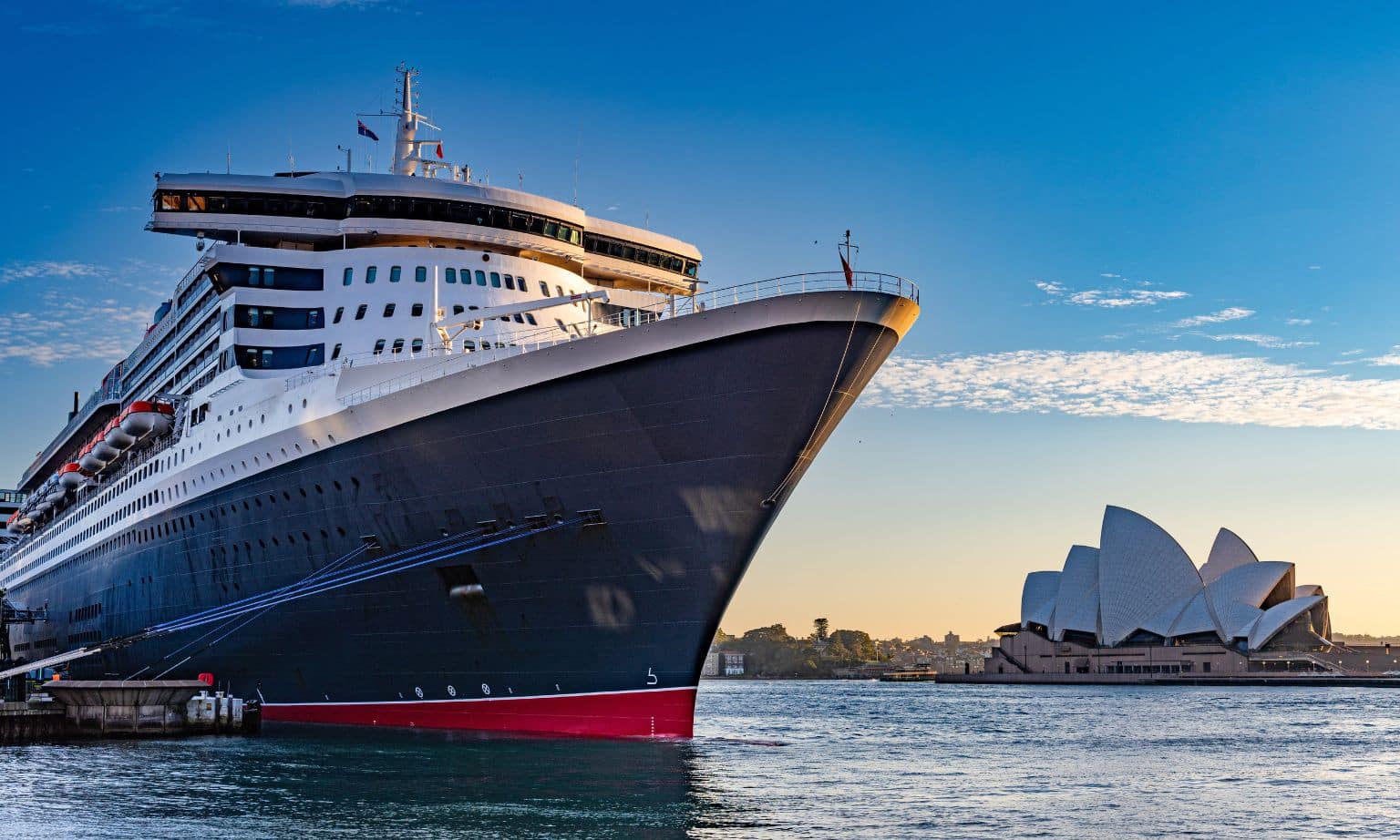
- Australia’s cruise industry is experiencing a harsh decline, and little is being done to prevent it.
- More than $1 billion has already been lost, and more could go if action isn’t taken soon.
- The cruise industry is promising more vessels in return for certainty, but has so far failed to get the attention of the minister responsible.
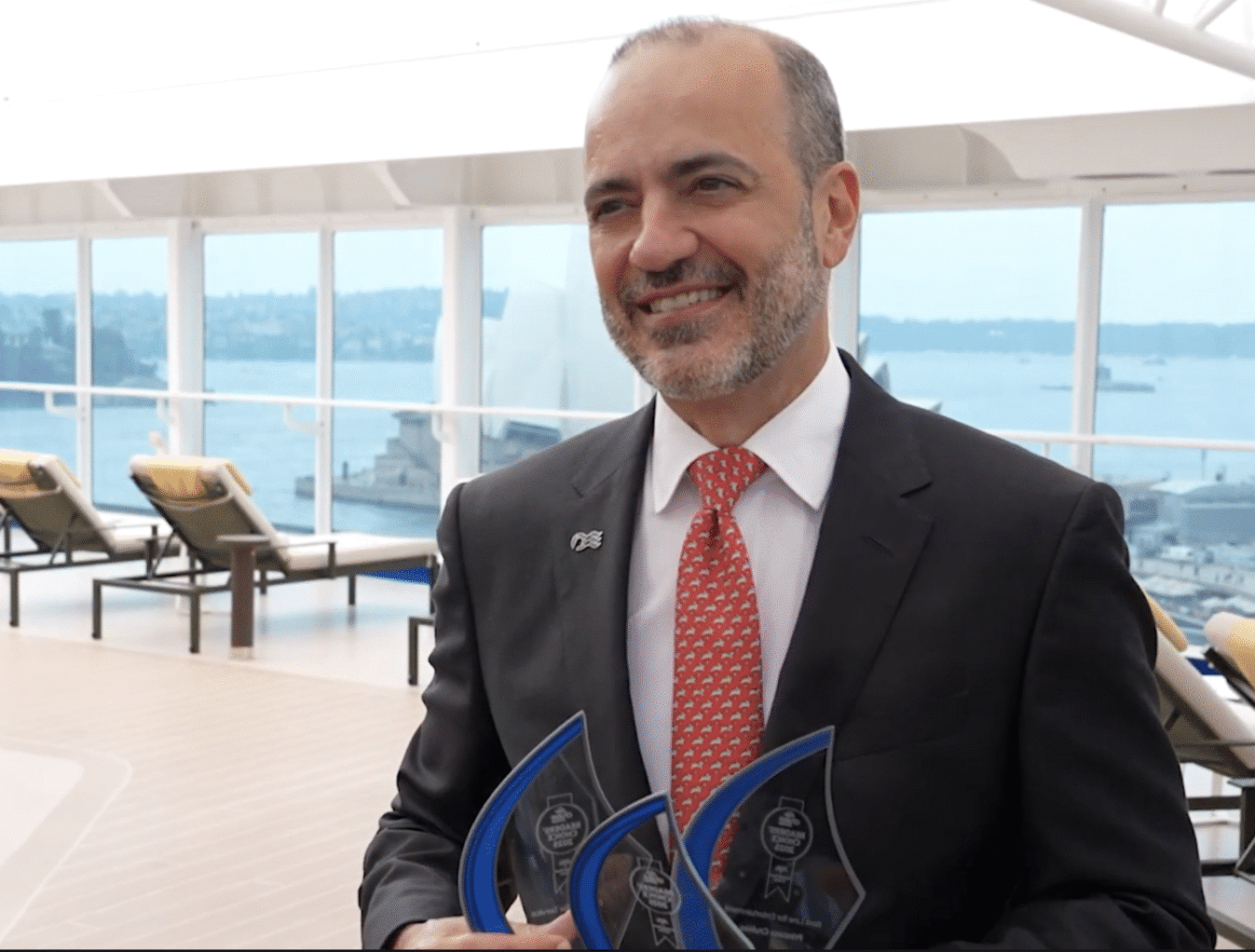
Princess President Gus Antorcha, a quietly spoken executive from Venezuela, is one of the cruise industry’s most senior figures. He flew into Sydney from Miami to show how much the line was committed to sailing from Australia.
Presiding over the line’s 50th anniversary celebrations on board the biggest and newest ship Princess has put into Australia, Discovery Princess, Antorcha was keen to underscore just how much Princess values the Australian cruise enthusiast.
But he was clear as to why our cruise industry has fewer ships, less capacity and lost $1 billion this last year despite record demand from cruisers clamouring for more ships.
The uncertainty of government regulation and high costs were costing Australia ships. With more certainty, he said, more ships would come.
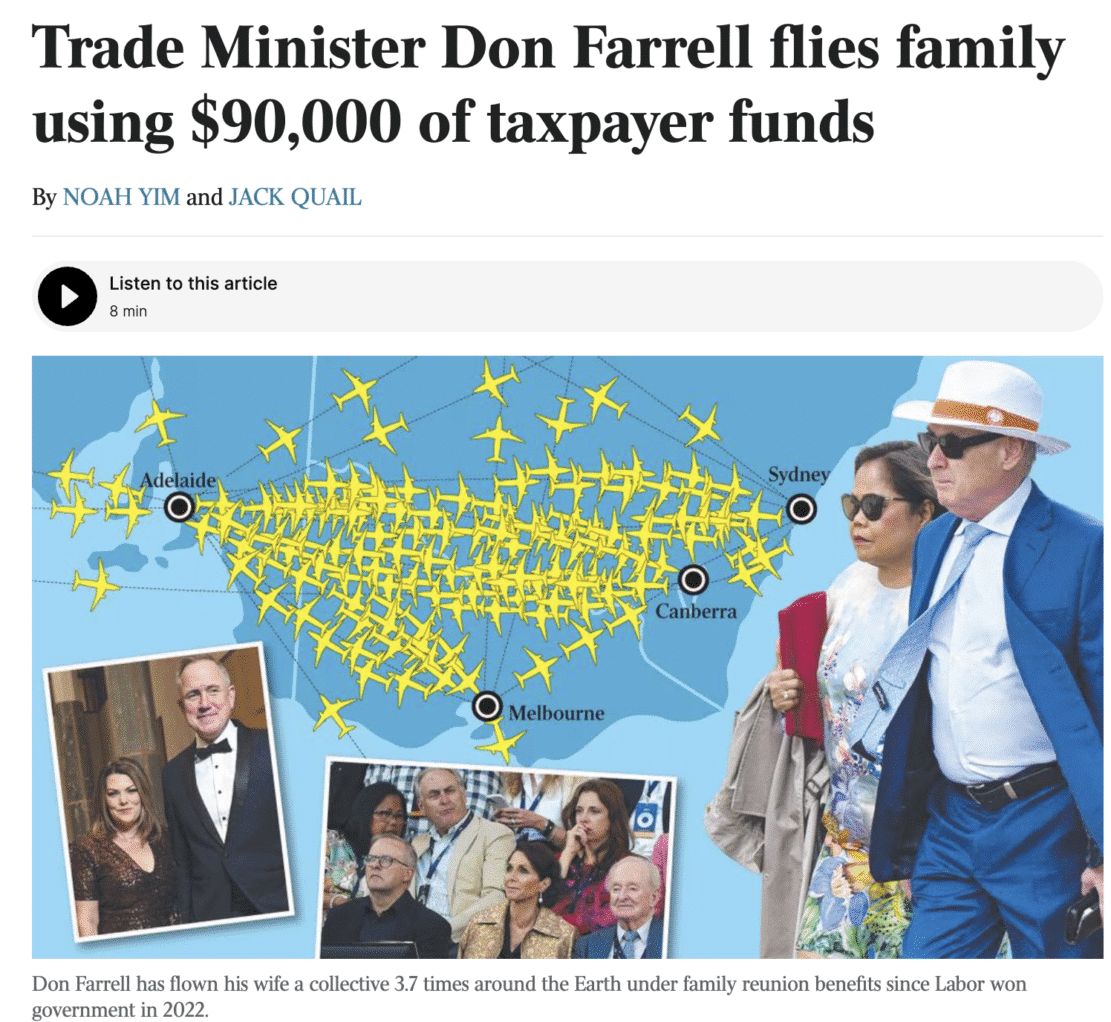
Sadly, Canberra isn’t listening. The minister concerned, Tourism Minister Don Farrell, pictured below in The Australian newspaper over an expenses scandal, has consistently refused to engage with us and others on the subject.
Cruise Passenger has been reporting for months on the cruise crisis in Australia, with fewer cruise ships arriving to our shores and therefore less economic benefit to Aussie suppliers, coastal communities, hospitality workers and more.
The Australian Cruise Association (ACA) and Cruise Lines International Association have both been trying to arrange meetings, but have nothing in the diary.
But the reports of the economic consequences of Canberra’s silence are becoming moore acute. Australia and New Zealand’s cruise industries have both reported significant drops in revenue.
New exclusive Cruise Passenger projections show that this drop could be even worse for the current season, with declines to continue into next season. Cruise capacity already took a 17% hit last season in Australia, and will drop a further 19% next season.
The 2026/27 season will see numbers stabilise, but definitely won’t bring any sort of rebound or recovery, as capacity will drop another 1.5%.
Since the 2023/24 cruise season, which was a success and showed great signs of post-pandemic recovery, things have gone downhill. Cunard Cruise Line, Disney Cruises and Virgin Voyages have all stopped scheduling sailings in Australia. Carnival Cruises, Royal Caribbean and Princess Cruises have withdrawn at least one ship each, and other cruise lines such as Norwegian Cruise Line have reduced sailings.
The economic impact of these ships withdrawn from the region is already hitting, Australia’s cruise industry recorded a $1.11 billion drop in expenditure from the 2023/24 season to the 2025/26 season.
The same happened across the Tasman in New Zealand, where the country just recorded an $120 million drop in cruise revenue over the same period, equating to about a 10% decline year-on-year.
What were previously projections are now real job losses and decreased economic benefits for Australians and New Zealanders.
These losses happened between the 2023/24 and 2024/25 cruise seasons, in which time, Australia and New Zealand lost three ships, Resilient Lady, Majestic Princess and Brilliance of the Seas. In between the previous 2024/25 season and the current 2025/26 season, another three ships have left, Queen Elizabeth, Pacific Adventure and Diamond Princess, meaning more losses are on their way. Then for the 2026/27 season, Disney Wonder will leave as well.
This drop between 2023/24 and 2024/25 season equated to 17% drop in capacity amongst large ships in Australia and New Zealand and led to the aforementioned $1.2 billion drop in cruise expenditure across Australia and New Zealand. Cruise capacity then dropped a further 19% between the 2024/25 and 2025/26 seasons, meaning more losses in the billions are to be expected.
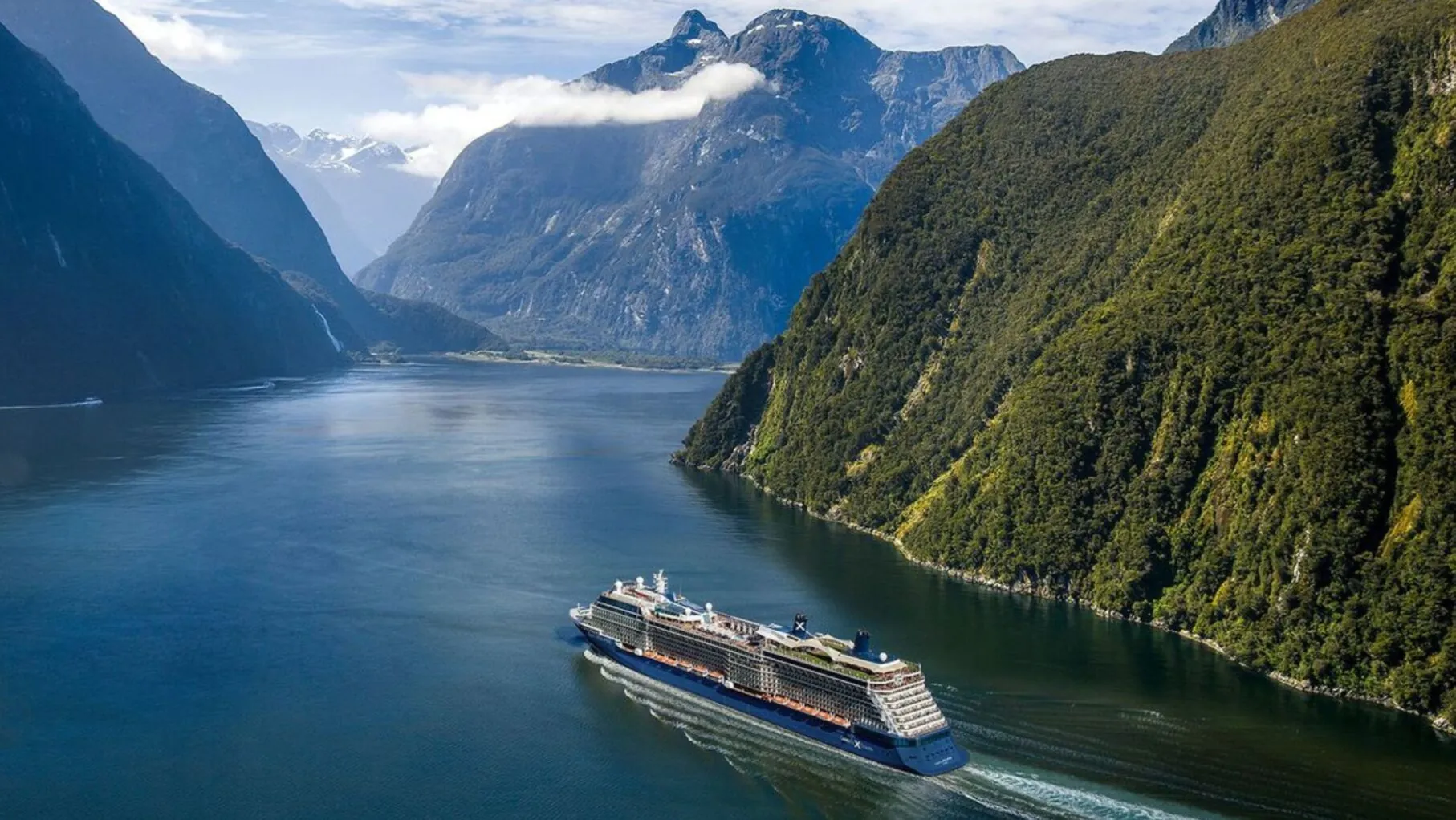
Australia’s cruise fleet over four seasons
| 23/24 | 24/25 | 25/26 | 26/27 | |
| Royal Caribbean | Brilliance of the Seas (2543), Ovation of the Seas (4905), Quantum of the Seas (4905) | Ovation of the Seas (4905), Quantum of the Seas (4905) | Anthem of the Seas (4905), Voyager of the Seas (3602) | Anthem of the Seas (4905), Quantum of the Seas (4905) |
| Carnival Cruises + P&O Cruises | Carnival Splendor (3012), Carnival Luminosa (2826), Pacific Adventure (2636), Pacific Explorer (2000), Pacific Encounter (2600) | Carnival Splendor (3012), Carnival Luminosa (2826), Pacific Adventure (2636), Pacific Explorer (2000), Pacific Encounter (2600) | Carnival Splendor (3012), Carnival Luminosa (2826), Carnival Encounter (2600), Carnival Adventure (2636) | Carnival Splendor (3012), Carnival Luminosa (2826), Carnival Encounter (2600), Carnival Adventure (2636) |
| Celebrity Cruises | Celebrity Edge (2908) | Celebrity Edge (2908) | Celebrity Edge (2908) | Celebrity Edge (2908) |
| Princess Cruises | Majestic Princess (3560), Royal Princess (3600), Grand Princess (2610), Coral Princess (2000) | Royal Princess: 3600 Diamond Princess: 2670 Crown Princess: 2000 | Discovery Princess: 3600 Crown Princess: 2000 | Grand Princess (2610) Royal Princess (3600) |
| Norwegian Cruise Lines | Norwegian Spirit (2002) | Norwegian Spirit (2002) | Norwegian Spirit (2002) | Norwegian Spirit (2002) |
| Cunard Cruise Line | Queen Elizabeth II (2081) | Queen Elizabeth II (2081) | No ship | No ship |
| Disney Cruise Lines | Disney Wonder (2400) | Disney Wonder (2400) | Disney Wonder (2400) | No ship |
| Holland America | Westerdam (1964) | Westerdam (1964) | Noordam (1972) | Noordam (1972) |
| Virgin Voyages | Resilient Lady (2770) | No ship | No ship | No ship |
| Total: | 18 ships Total capacity: 51322 | 15 ships Total capacity: 42509 | 12 ships Total capacity: 34463 | 11 ships Total capacity: 33976 |
So, why is this happening?
The most basic explanation as to why cruise ships have been pulling out of Australia was told to Cruise Passenger by Antorcha: Australia is failing to provide the regulatory certainty that cruise ships need to plan their sailings years ahead of time.
He told Cruise Passenger: “Any time we work together – industry and government – we’re able to accomplish the objectives the government has, and it allows us to adapt. What’s very difficult for us is when things change suddenly, or when there’s uncertainty, because you can’t plan around uncertainty.”
Antorcha was quick to get behind the same proposal that Cruise Passenger has been calling for, a national cruise summit and strategy.
“I think that would be wonderful. I absolutely will support that.”
Cruise lines plan their sailings at least three years ahead of time, and are relying on regulatory conditions to remain stable over that period.
This can perhaps best be demonstrated through the situation with Melbourne’s rise in port fees, which led to a range of cruise lines, including Princess, pulling ships out of Melbourne.
It’s not about just simply the cost, as Melbourne is still much cheaper than Sydney to port a ship, but it’s about the fact that such a sudden and unforecasted rise means that cruise lines worry it could happen again, and prefer to redirect their ships to regions or ports with more stability.
Over recent years, Australia and New Zealand have seen a range of new customs and fees popping up, as well as regulatory doubt over the renewal of the Coastal Trading Act which makes cruising possible in Australia, changing customs laws for ships entering Australia from the north of Western Australia, fast changing environmental standards and more.
In a vacuum, new cruise taxes or fees aren’t necessarily disastrous for the industry, but introducing them with clear communication and warning to the industry is.
There are also many industry opportunities such as finding a new Sydney cruise terminal, offering infrastructure upgrades to regional ports, sorting customs regulations in Western Australia and more. However, these all seem to be getting lost in bureaucracy, with few results to show.
Where does that leave the industry?
The current situation is fairly simple. Cruise lines are calling for more certainty and clearer channels of communication with the Australian government, and the government has been unable or unwilling to provide this.
The government either not wanting to place cruise as a priority or being unable to coordinate a strategy together with the cruise industry is resulting in billions of dollars in damage to the industry, which was previously fast growing.
Any folder regarding cruise is likely buried deep in the desk of Tourism Minister Don Farrel, who carries several portfolios and is unlikely to have the time or motivation to personally view cruise as a priority. A special taskforce or shift in responsibilities could allow others to prioritise the issue and reverse the industry’s losses.
CLIA, as well as other key industry figures have long been calling for this new line of coordination to create a national cruise strategy and improve regulatory conditions and stability for cruise lines.
If this new strategy and approach could be achieved, there are great opportunities for cruise to grow in Australia. Royal Caribbean and Celebrity will surely be open to sending new ships when their private destination opens at Lelepa, as mentioned Princess Cruises will send new ships with more regulatory certainty, NCL has previously hinted they would sail more if there was more space at the Sydney Overseas Passenger Terminal and Australia could attract back other ships and cruise lines that its lost in recent years.
While any situation has its complexities, the simple solution is organisation and coordination between the government and cruise industry, and right now it looks like it’s the government who aren’t holding up their end.
Related Posts
-

Princess' president was quick to support calls for certainty around regulation in the region, saying CLIA's campaign for a whole-of-government approach could mean more ships.
-
Star Princess has been delivered to Princess Cruises ahead of her inaugural Mediterranean sailing from Barcelona on October 4.
-
Crown Princess is one of Princess Cruises’ most revered Grand Class ships, seamlessly blending maritime charm with modern innovation.
-
In an exclusive interview, the boss of Cruise Lines International Association has praised some states for proactively welcoming the cruise industry.


It’s brainless idiots like himself that stuff things for everyone else. And now the idiot wants to sue, try taking responsibility for your own actions.