- The cruise industry, like so many areas of travel, is recovering from three months of turmoil thanks to the Middle East crisis.
- But there are other problems being faced by cruise.
- Recent Australian redundancies at the local offices of one line have brought them into focus.
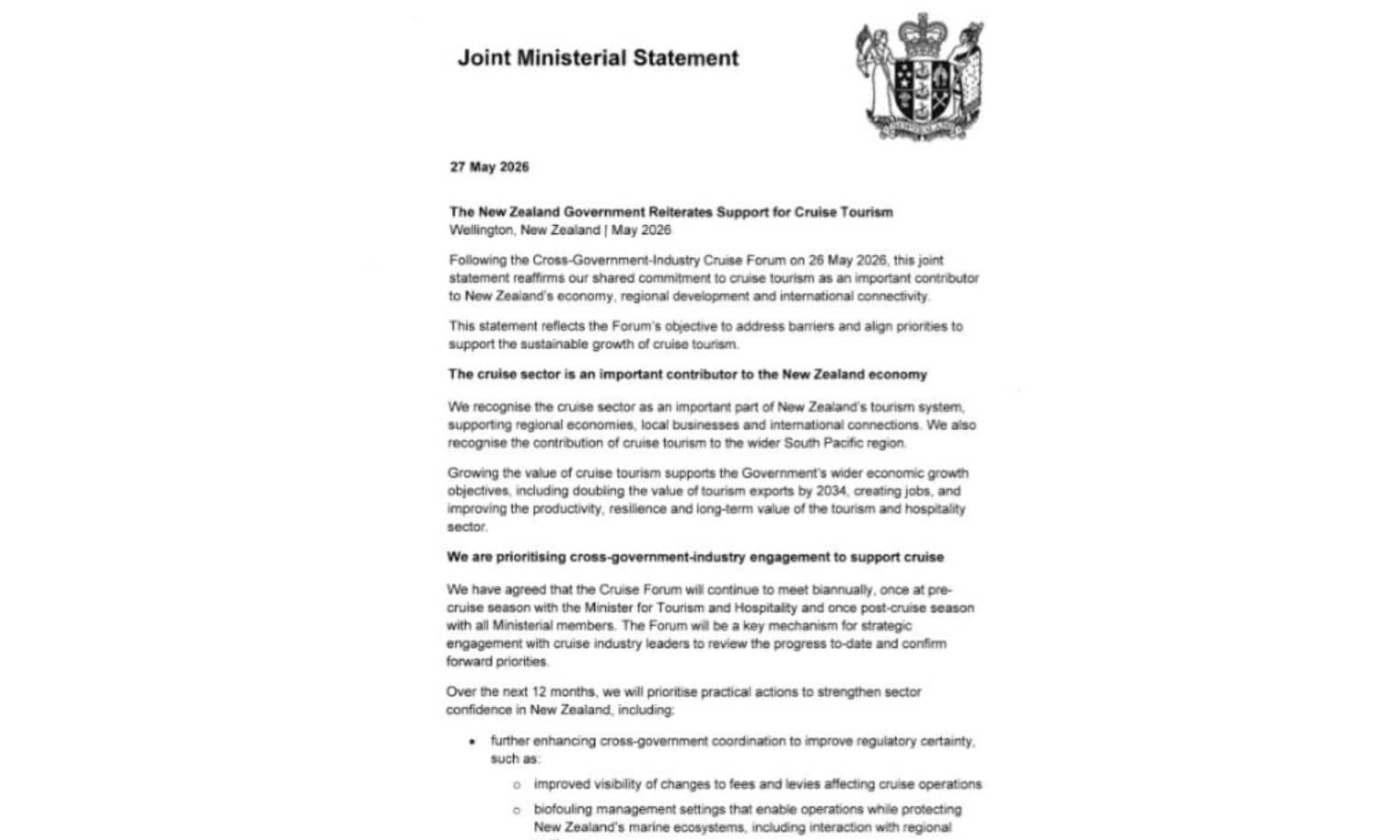
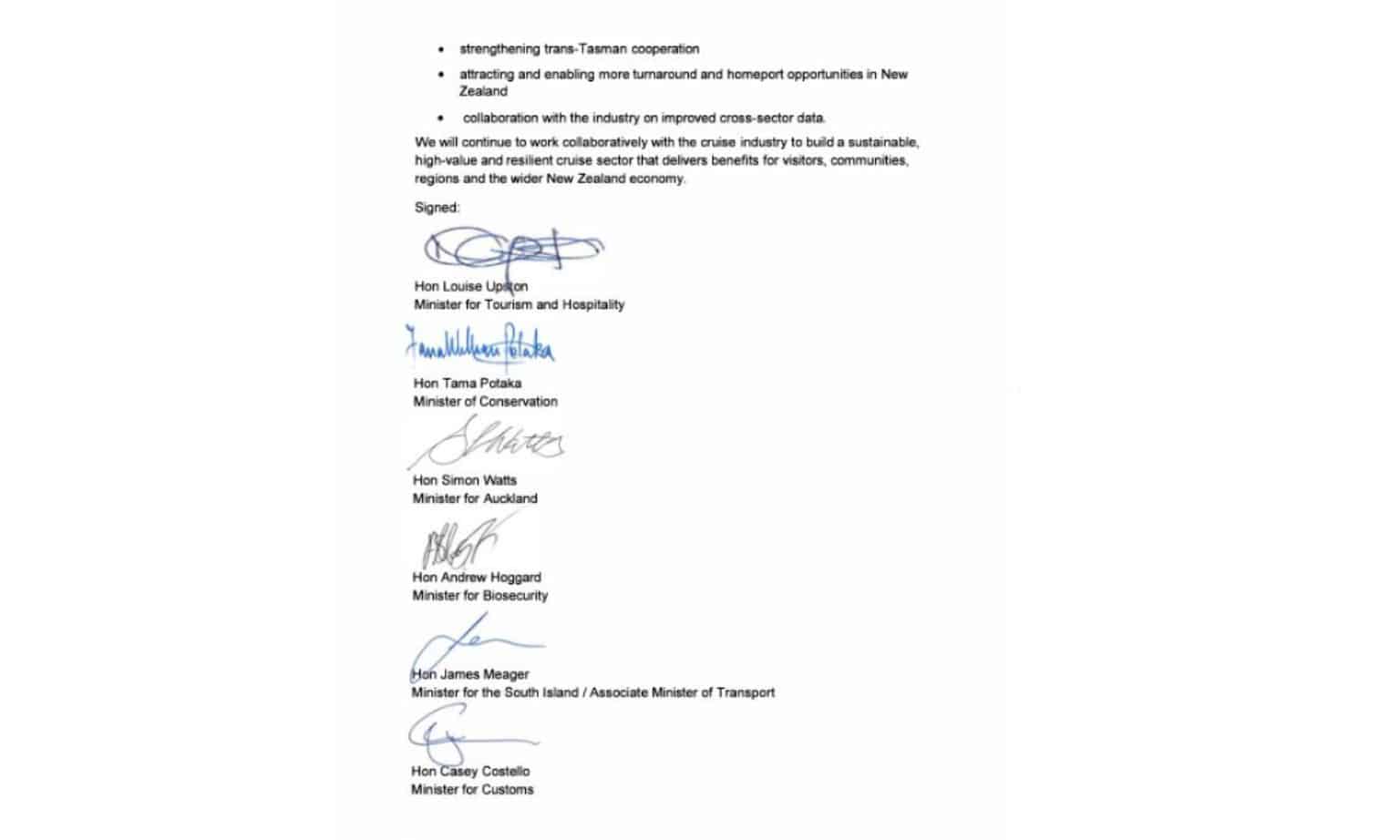
Last month, the New Zealand Cruise Association proudly published a joint communication about the importance of the cruise industry to the country’s economy.
It mentioned the hard work of those involved and pledged joint work to help foster a sustainable cruise industry into the future.
What really stood out about this piece of work were the signatures at the end. There were six government ministers from almost every part of the administration involved in cruise.
In Australia, however, the industry is still waiting to have a constructive conversation with the federal government about a similar whole-of-government response.
Why is this important? Because the way we regard the industry at home is vitally important to the investment Miami-based cruise lines make in bringing ships to this region.
Last week, one international line announced redundancies at their Australian office. Ordinarily, workforce reductions inside a global cruise company would be viewed primarily as a corporate story. Cruise lines, like all large international businesses, periodically restructure in response to changing market conditions, investor expectations and strategic priorities.
But this time, the discussion has broadened beyond the fate of individual executives.
Travel Weekly, a trade journal for travel agents, recently posed a question that would once have been considered unusually frank: is Australia being deprioritised?
It’s a question many in the cruise sector have quietly been asking for some time.
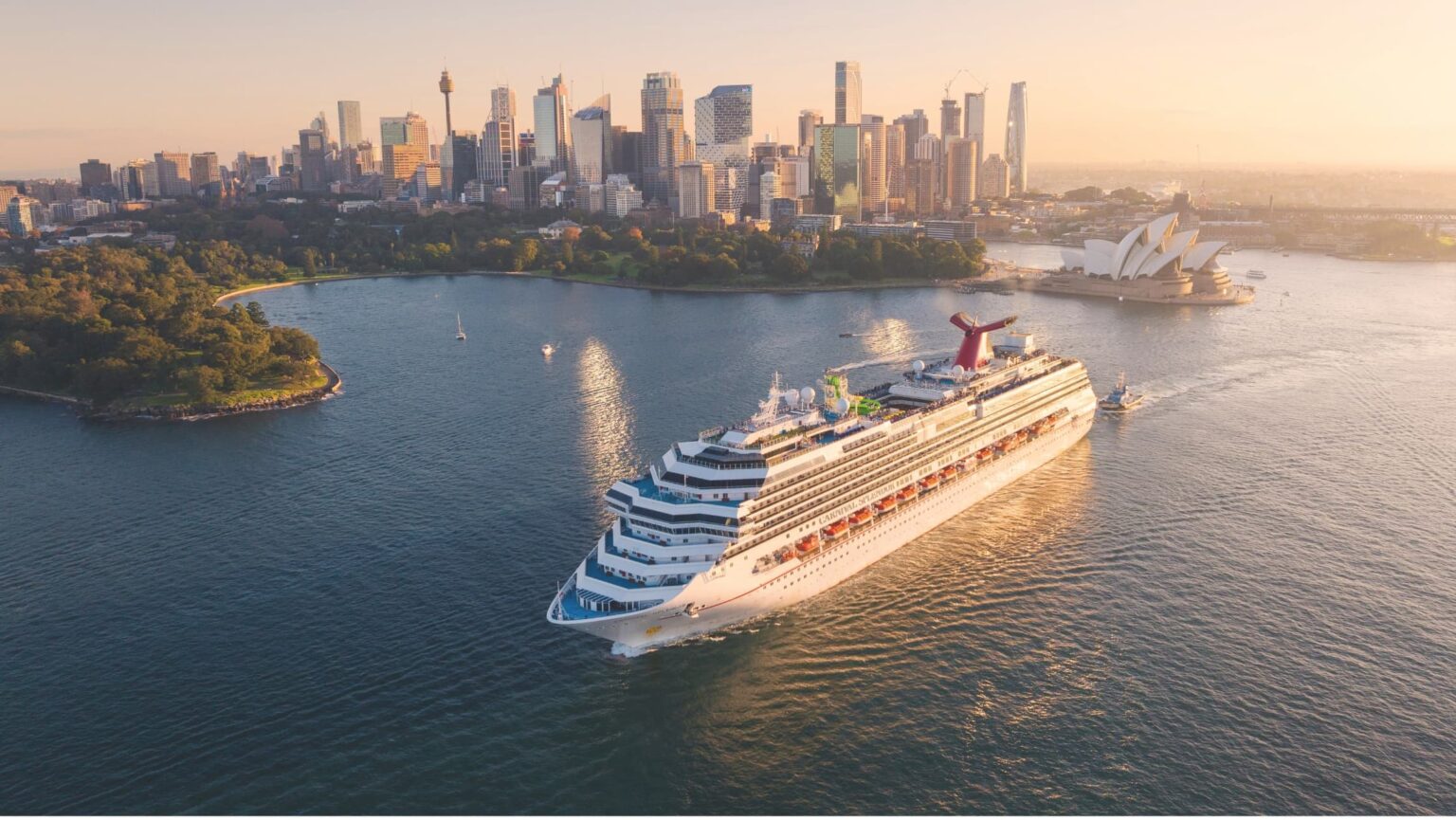
Australia remains one of the world’s most enthusiastic cruise markets. We consistently rank among the top cruise nations globally on a per-capita basis. According to Cruise Lines International Association (CLIA), around 1.4 million Australians cruise annually, while the sector contributes more than $7 billion to the economy.
Every major cruise executive who visits Australia speaks warmly about the market. We are repeatedly told how important Australia is to Miami-based cruise lines. There is little reason to doubt the sincerity of those comments.
Australians genuinely love cruising. Yet there is an uncomfortable contradiction at the heart of the industry.
Demand has recovered strongly since the pandemic, but cruise capacity in Australia has not. In fact, Australians have fewer ships available today than they did before COVID-19.
The question is why.
Cruise Passenger has examined this issue for several years and there is no single explanation. Global deployment decisions are enormously complex. Cruise lines allocate ships where they believe they can achieve the strongest returns, balancing fuel costs, operating expenses, regulatory requirements, seasonality and emerging opportunities in other markets.
But that does not mean Australia should ignore the warning signs. Or the question: why is Australia being deprioritised?
When cruise executives explain why ships are being deployed elsewhere, two themes emerge repeatedly: high operating costs and regulatory complexity.
Those concerns have been raised consistently across the industry, not just by Norwegian Cruise Line Holdings but by operators throughout the cruise sector.
And if Australia wants more ships, more investment and more tourism dollars, those concerns deserve serious attention.
New Zealand offers an instructive example.
Just a few years ago, the country’s cruise industry faced a crisis. New environmental regulations and operational challenges led to a dramatic reduction in cruise visits. Some estimates suggested ship calls would decline by as much as 40 per cent. There were even concerns about access to iconic destinations such as Milford Sound, one of the primary reasons international cruise lines include New Zealand in their itineraries.
The result was immediate. Cruise lines began looking elsewhere.
But rather than accepting decline as inevitable, New Zealand’s government reassessed its approach.
Officials engaged directly with the industry. They explored ways to help operators meet environmental requirements while maintaining economic activity. Perhaps most significantly, government representatives travelled to Miami to meet cruise executives and demonstrate that New Zealand wanted to remain an attractive cruise destination.
The message was simple: we value this industry and we want to work with you.
Australia has yet to send the same signal.
For years, cruise operators have sought deeper engagement with federal policymakers. CLIA Australasia Managing Director Joel Katz has been among the industry’s most measured and persistent advocates.
His message has remained remarkably consistent: cruise is not simply about holidaymakers boarding ships.
It supports thousands of Australian jobs.
In a recent column, Katz warned that more than 22,000 Australian jobs are connected to the sector.
“The cruise industry creates benefits for an even wider supply chain – farmers, winemakers, produce wholesalers and others,” he wrote.
“Then there are the maritime service providers, port workers, waste management services, security officers, and more.”
Importantly, those jobs are not confined to Sydney or Brisbane.
Cruise spending supports regional communities, remote destinations and Indigenous tourism enterprises throughout Australia. Every cruise call creates economic activity that extends well beyond the wharf.
That is why this debate matters.
This is not about providing special treatment for cruise lines. Nor is it about lowering environmental standards.
The cruise industry itself understands that sustainability is non-negotiable. Cruise lines are investing billions of dollars in cleaner technologies, alternative fuels, shore power capabilities and next-generation vessels.
Rather, the issue is whether Australia is willing to engage constructively with an industry that delivers substantial economic benefits.
At present, too many decisions affecting cruise appear fragmented across different levels of government and regulatory bodies. The result is uncertainty, rising costs and a perception among international operators that Australia is becoming a more difficult place to do business.
In a fiercely competitive global tourism market, perception matters. Every ship deployed to Asia, Europe or North America is a ship that cannot simultaneously be deployed to Australia.
The world is not standing still. Other destinations are actively competing for cruise investment. Governments are meeting with cruise executives, promoting their ports and demonstrating their commitment to the sector. Australia should be doing the same.
Australia remains one of the world’s great cruise markets. The demand is here. The passengers are here. The economic benefits are well documented.
What is less clear is whether government support matches the industry’s importance.
The solution begins with dialogue.
Canberra should sit down with CLIA and industry leaders to understand their concerns and identify practical ways to improve Australia’s competitiveness while maintaining environmental and community standards.
Because if Australia genuinely wants to remain a leading cruise destination, it cannot simply assume the ships will keep coming.
In today’s global cruise market, every destination must earn its place on the itinerary.
The cruise industry is now recovering for the Middle East crisis. It’s a great opportunity for Canberra to open the doors and listen.

Related Posts
-

Steve Odell was the first to lead Norwegian Cruise Lines, Regent and Oceania in Australia. He built the business to 170 staff members before being transferred to a major role…
-
Figures from CLIA, the cruise lines international association reveal that Australia lost $1.11 billion in total economic impact from cruising in 2024/25 season when compared to the 2023/24 season.
-
While Western Australia was celebrating the success of its 2023/24 cruise season, where 290 cruise ship visits were recorded and more than $385 million was injected into the economy, there…
-
The Australian Government this week released its grand tourism blueprint, THRIVE 2030. It talks about growth. It talks about sustainability. But it doesn't talk about cruise, a $7 billion industry…