


The Ultimate Guide to Hong Kong

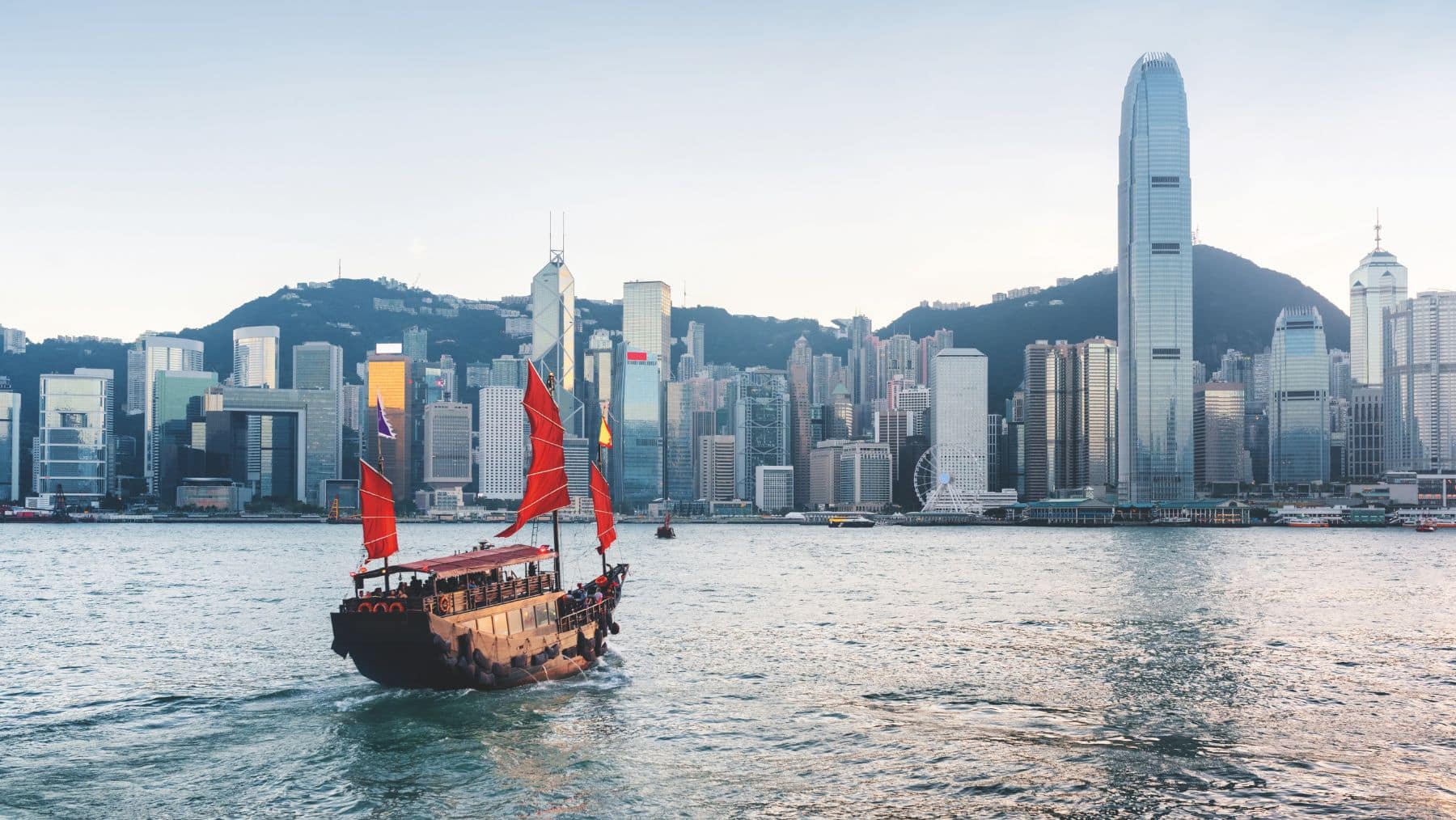
Table Of Contents
Hong Kong’s intrinsic East-meets-West aesthetic has inspired travellers for generations. It’s a city that moves fast; restless, creative, endlessly curious, yet quiet and contemplative when it matters the most. Between skyline cocktails and street food alleys, there’s always a quiet temple courtyard or mountain trail waiting to stoke the soul.
It’s this balance, between momentum and mindfulness, that makes Hong Kong so magnetic for travellers of all kinds.
The city’s diversity is its strength. Winter bursts with marathons, parades and festive lights before spring blooms into art fairs and cultural celebrations. Summer brings dragon boat races, while autumn fills the air with lanterns, dance and food festivals. All the while, Hong Kong keeps reinventing itself, finding new ways to surprise and
delight visitors.
Among those drawn in is Below Deck star Aesha Scott, who’s developed a deep affection for the destination. What keeps her coming back is the seamless blend of cultures: the food, the people, the sense that everyone here shares the same pulse. She finds joy in the city’s markets, the smell of crispy egg waffles, and the easy warmth of locals who fill every encounter with heart.
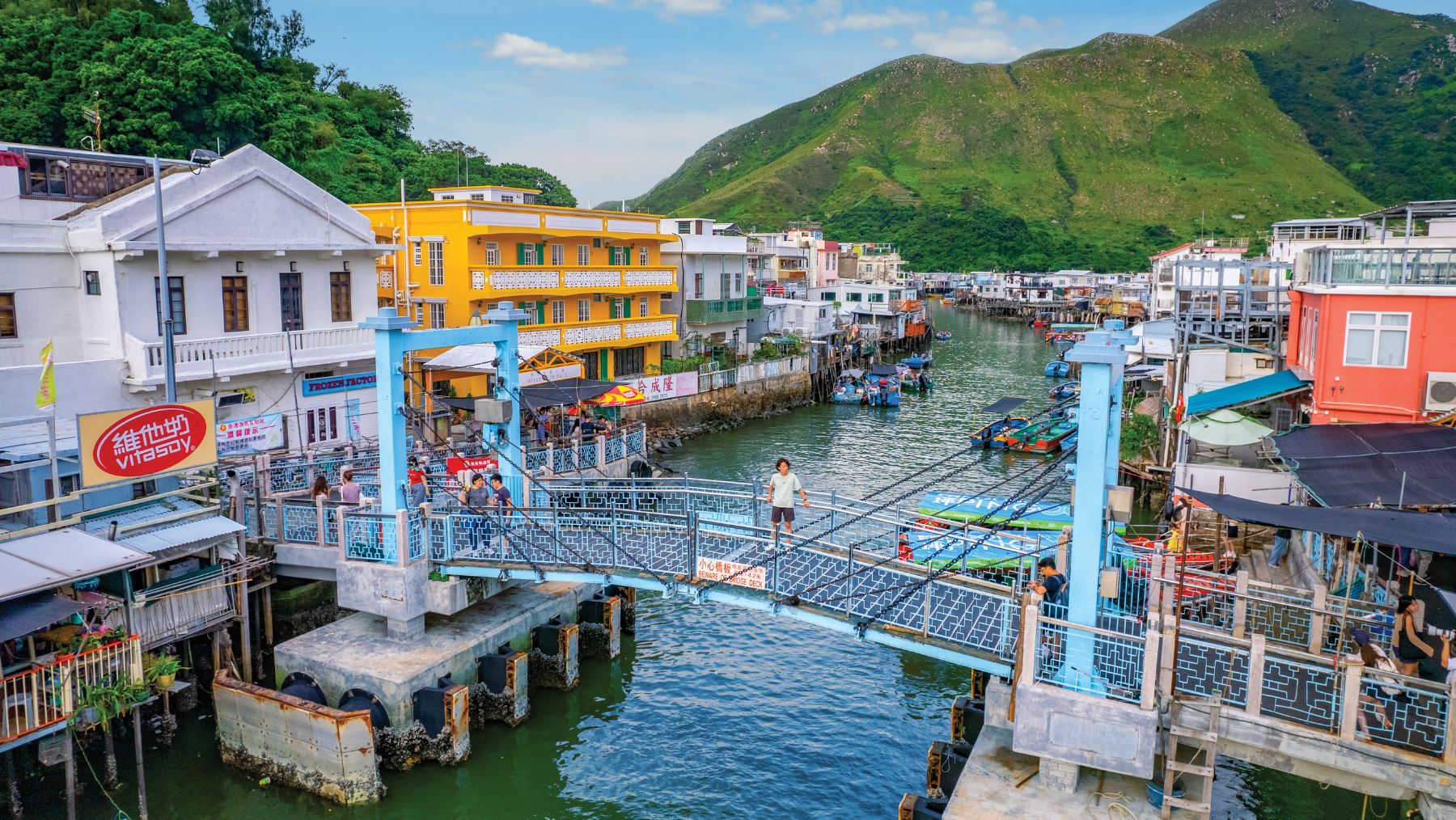
Aesha’s favourite escape is Tai O, a fishing village on Lantau Island where stilt houses and sea breezes soften the city’s pace. She also loves Cheung Chau, an island where time seems to drift, while temples like Pak Tai tell stories older than the skyline. With more than 260 outlying islands offering gorgeous hiking opportunities, thrilling water sports and hidden beaches, there are plenty of ways to slow the big-city rhythm.
Back on the mainland, the energy shifts again. Think bottomless eats in Central, street art in historic Sham Shui Po and vibrant energy in Yau Tsim Mong. Trees rise as tall as towers. Old meets new. Hong Kong just feels alive, offering a city that never stops moving, but always makes room for your story.
What to do in Hong Kong
Arts & culture
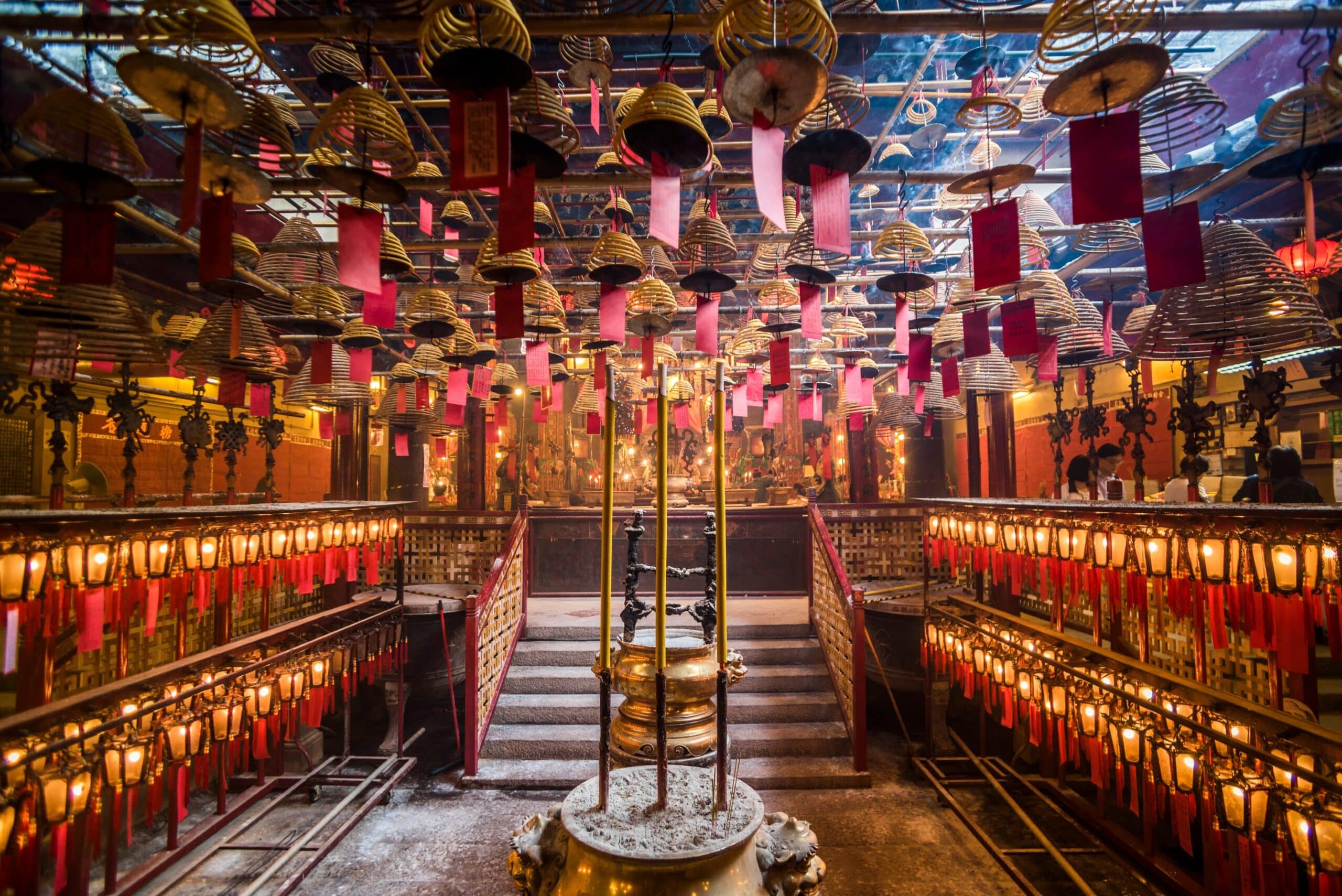
Hong Kong’s proud sense of identity fuels an impassioned arts scene. Year-round festivals keep creativity in motion, from springtime highlights like the Hong Kong Arts Festival and Art Basel, to celebrations of pop culture, digital art and music, like the world-renowned Clockenflap. Anchoring the city’s artistic pulse is the West Kowloon Cultural District, where the striking M+ Museum showcases contemporary art and design, and the Hong Kong Palace Museum displays imperial treasures in sleek modern galleries. Across Victoria Harbour, Tai Kwun revives a historic police compound with exhibitions and live performances, while the Man Mo Temple in Sheung Wan envelops visitors in incense-filled halls that celebrate centuries of literary and martial devotion.
The great outdoors
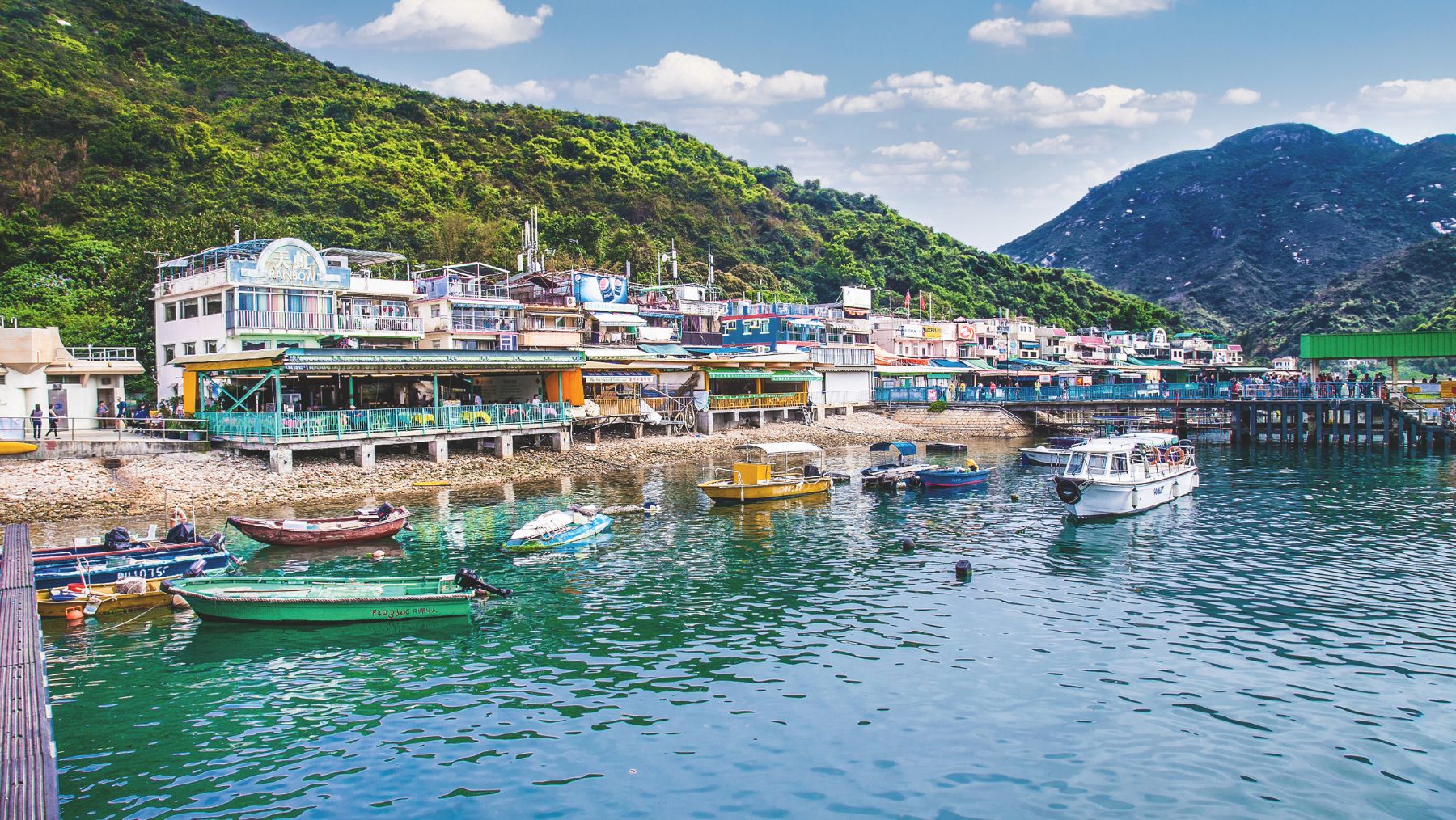
Beyond the skyline lies Hong Kong’s wild outdoors, where misty peaks, quiet beaches and subtropical forests surprise even seasoned travellers. Easily reached from Hong Kong Island, the Dragon’s Back hike traces rolling ridges above Shek O before descending to Big Wave Bay, where sunbathers and surfers share a picture-perfect coastline. For something closer to the city, head to Victoria Peak via a scenic 45-minute hike from Central or the historic Peak Tram, where panoramic trails showcase Victoria Harbour at its best. The city’s smaller islands offer a slower pace: Lamma Island’s breezy coastal paths link fishing villages and hidden coves, while Cheung Chau charms with seaside trails and Kwun Yam Wan Beach, popular for kayaking and windsurfing. Out west, Tai O’s mangroves and stilt houses reveal a quieter, traditional side of the city.
The culinary culture of Hong Kong
Hong Kong is defined by its global palate, offering a remarkable mix of cuisines and fusions that have inspired the culinary world for decades. Michelin-starred dining spans showstoppers like Ta Vie, where modern French precision meets poetic plating, and T’ang Court, a cornerstone of Cantonese fine dining celebrated for its authentic dishes. Classics such as Yat Lok’s roast goose and Sushi Shikon’s impeccable omakase reveal just a glimpse of this gourmet gateway into Asia’s many flavours. The city’s cocktail scene is equally exceptional, with six bars on Asia’s 50 Best Bars list, including Bar Leone, named the World and Asia’s No. 1 in 2025, alongside Argo, Coa, Penicillin, The Savory Project and Gokan. Each brings bold, boundary-pushing drinks that confirm the city’s status as a world-class destination for cocktail connoisseurs. Retro cha chaan tengs, cafés serving milk tea and pineapple buns, and dai pai dongs (food stalls) dishing out stir-fried noodles and curry fish balls capture Hong Kong’s authentic, everyday flavour.

Shopping in Hong Kong
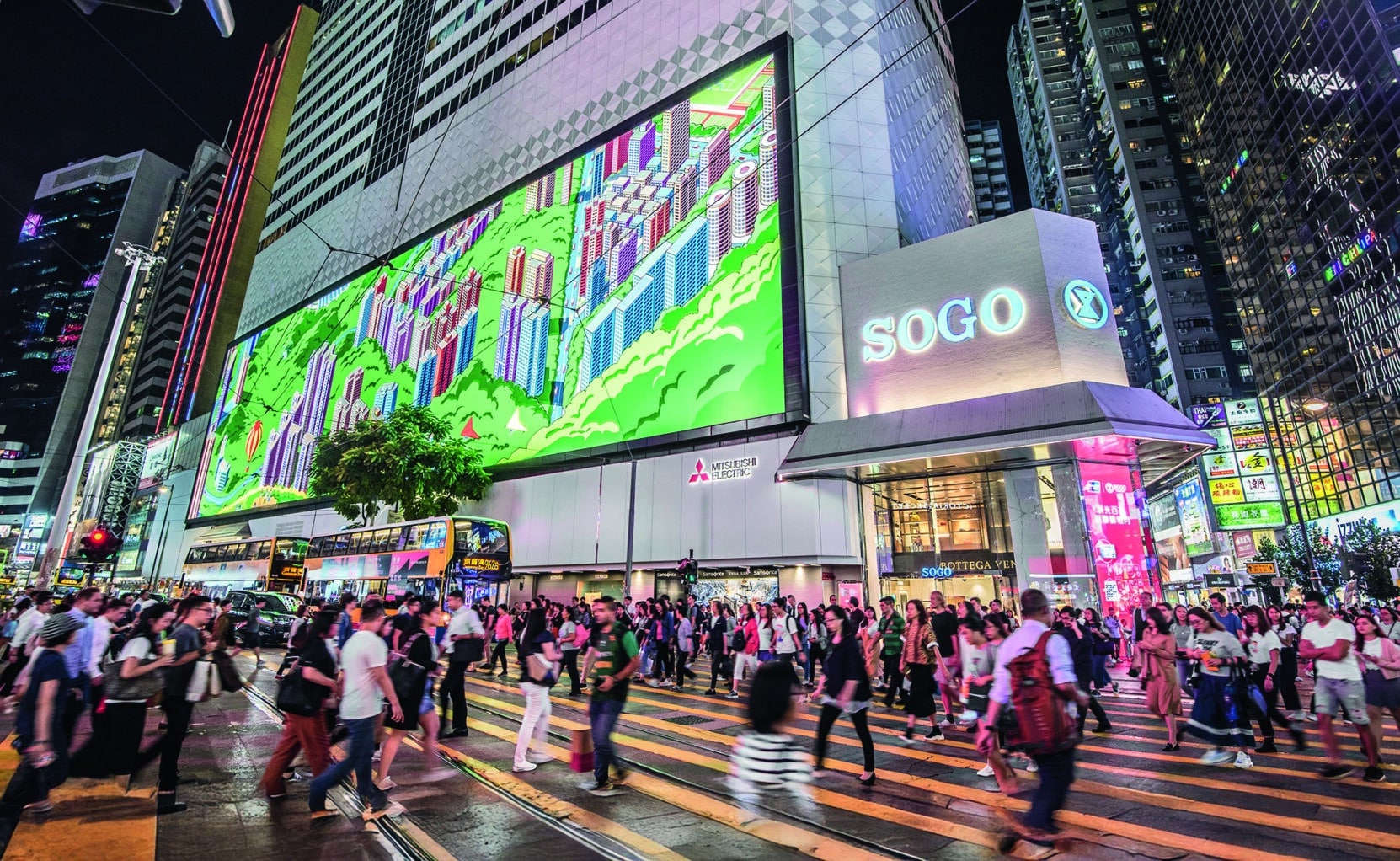
Hong Kong’s shopping scene is as dynamic as the city itself, mixing international luxury with local character. At K11 MUSEA on Victoria Dockside, designer boutiques like Alexander McQueen, Balenciaga and Bottega Veneta share space with immersive art installations, blending gallery and retail for a one-of-a-kind experience. Harbour City, stretching along Tsim Sha Tsui’s waterfront, has hundreds of stores, from flagship fashion houses to independent labels, making it one of Asia’s most iconic retail destinations. Across the water, Central’s LANDMARK Hong Kong combines high-end brands, fine dining and lifestyle boutiques under one roof. SOGO in Causeway Bay is a local favourite, its Japanese-style department store experience drawing visitors and residents alike. For a change of pace, the bustling Ladies’ Market in Mong Kok bursts with souvenirs, street fashion and vintage treasures, while nearby Sham Shui Po has evolved into a hub for edgy designers and second-hand gems.
Family friendly activities
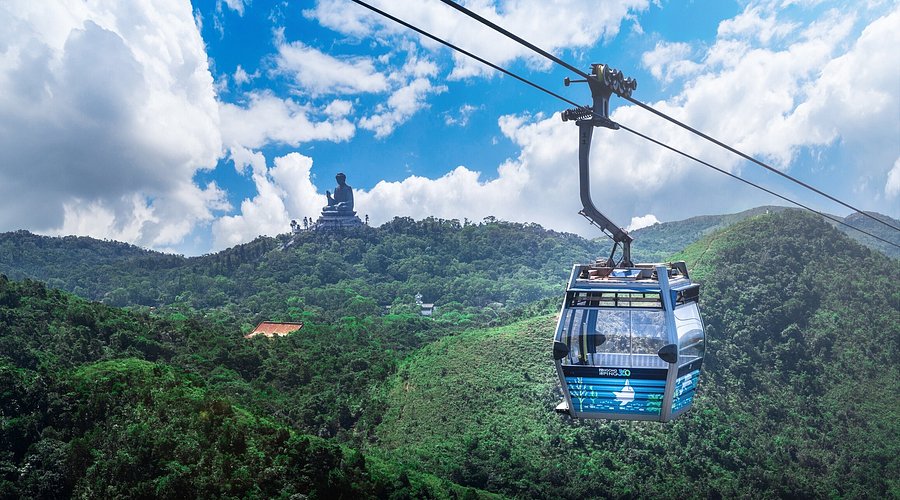
Hong Kong is packed with experiences to spark the imagination of all ages. On Lantau Island, Hong Kong Disneyland blends familiar magic with local charm, from character parades and fireworks to the new World of Frozen, where kids can step inside Elsa’s kingdom. Ocean Park pairs rollercoasters with sea life encounters and gentler rides for younger visitors. The Ngong Ping 360 cable car turns transit into adventure, gliding high above the island’s hills toward the Big Buddha, who sits patiently at the top of a grand staircase. Across the harbour, the Hong Kong Science Museum invites curiosity with hands-on experiments and interactive exhibits.
Where to eat in Hong Kong
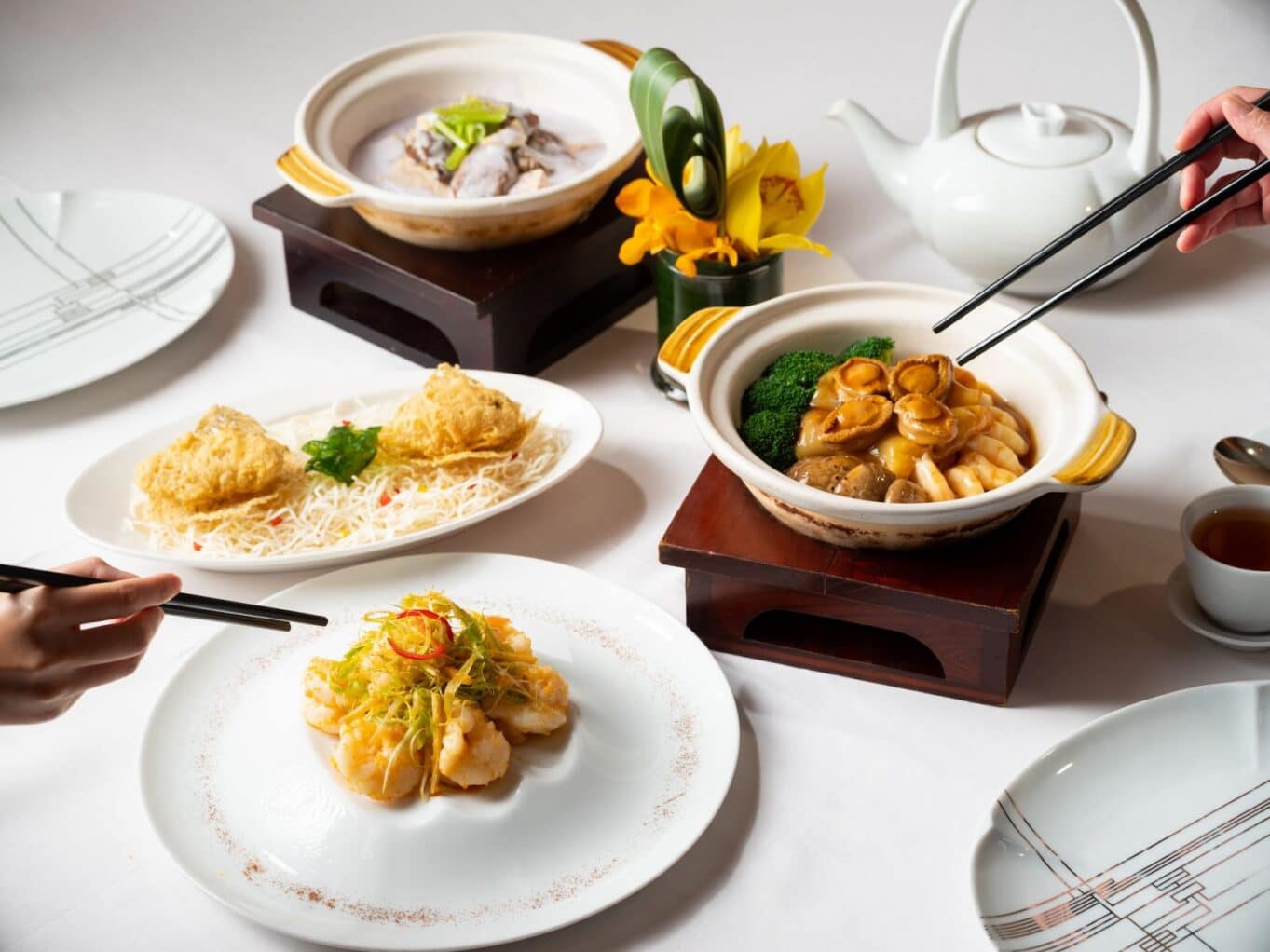
Hong Kong’s dining scene is precise and prolific, with seemingly endless Michelin stars scattered across its skyline. At the summit stands Lung King Heen, which shines under Chef Chan Yan Tak, whose artistry turns dim sum into poetry. It shoulders the award-winning dining options at Four Seasons along with Caprice, where French indulgence is measured with local finesse. The Chairman, a one-star favourite which is also on the list of the World’s 50 Best Restaurants, elevates traditional Cantonese with sharp, local flavours. Innovation thrives in these streets. You’ll find it at Roganic, where British farm-to-table meets Hong Kong precision, and Amber, offering contemporary French haute cuisine. You’re gifted even more culinary creativity at Rùn, with its refined Cantonese gastronomy. Man Wah delivers cinematic skyline views with dishes rooted in heritage, and Duddell’s pairs art and Cantonese flair with utter confidence. Hong Kong’s Michelin-ordained spread reflects a dynamic and ever-evolving global palate.
Bib Gourmand delights
Hong Kong’s Bib Gourmand selection celebrates restaurants where flavour, value and authenticity matter more than formality. Across more than 60 spots, these kitchens chart the city’s appetite for quality and diversity. At Sing Kee, wok-fried clams and typhoon-shelter crab capture the heart of Cantonese cooking, while Tsim Chai Kee’s towering noodle bowls deliver comfort in its purest form. Samsen channels Thailand’s street energy into Wan Chai, its boat noodles rich and layered. Sister Wah keeps brisket devotees returning for slow-simmered perfection, and Tim Ho Wan’s dim sum remains a crowd favourite. Tai Woo continues to impress with classic seafood dishes, while Takeya brings Tokyo’s izakaya warmth to Hong Kong. Across neighbourhoods and streets, Bib Gourmand spots offer everything from casual noodles and seafood to international flavours, showing how Hong Kong’s appetite embraces both the familiar and the new. Together with many others, they demonstrate that exceptional food thrives everywhere in the city, from lively street corners to hotel dining rooms.
Local dining favourites
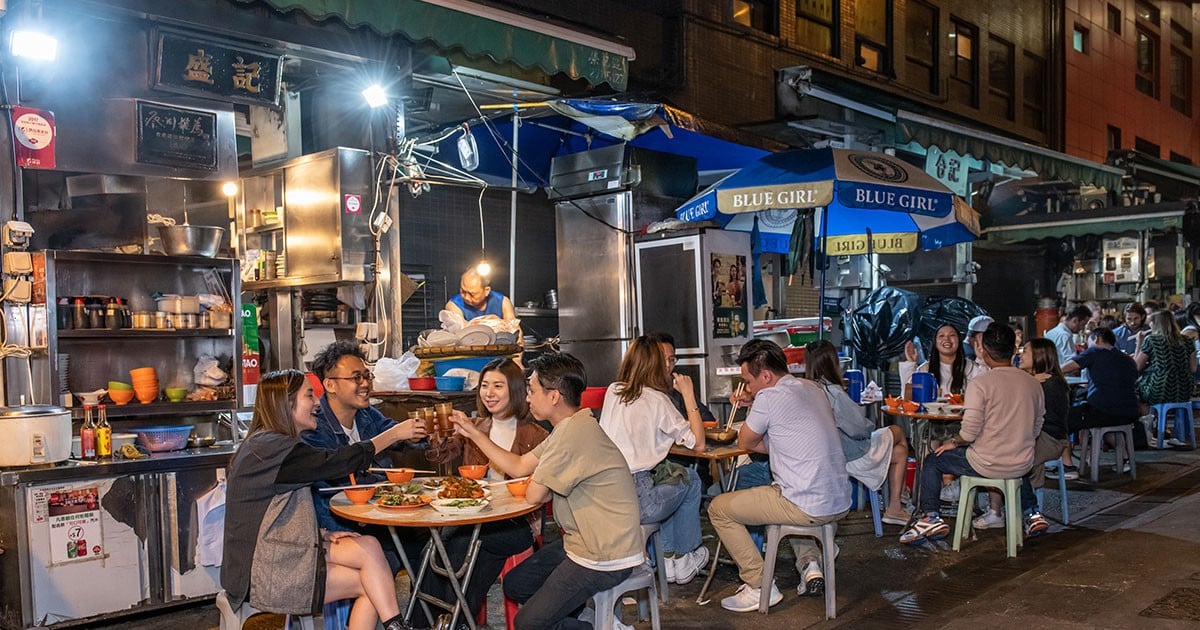
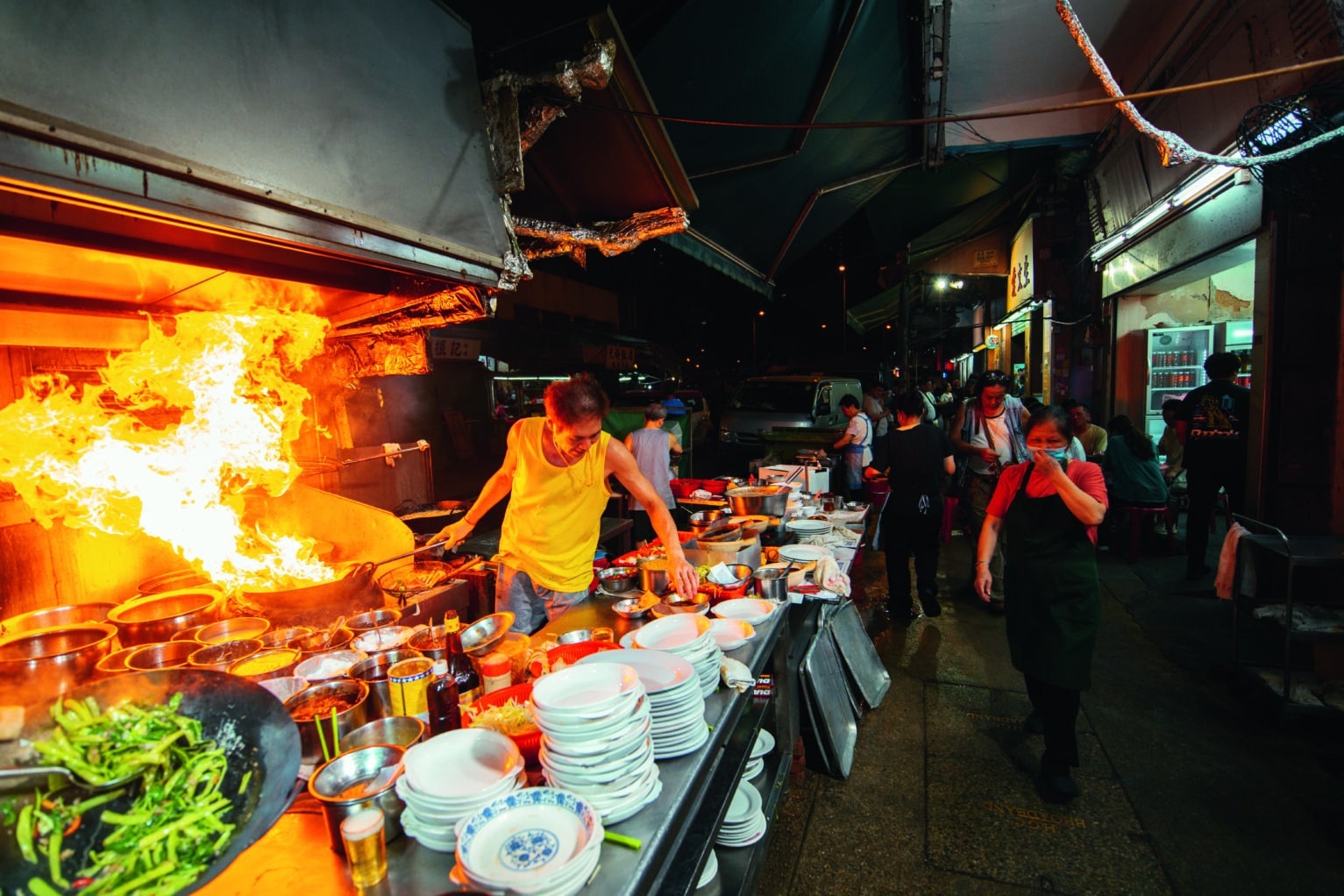
Hong Kong tastes best on the move, at a crowded counter or under a flickering sign. Hop Yik Tai fills bowls with rice rolls dressed in soy and sesame, delicate in texture but packed with taste. Bakehouse draws lines for buttery egg tarts still warm from the oven, while Hing Kee fills Temple Street with the scent of claypot rice and clinking beer bottles. Fei Jie keeps the night alive with skewers of pig offal and other favourites that vanish almost as soon as they hit the grill. Mammy Pancake turns egg waffles into crisp-edged comfort, while street food stalls sell curry fish balls and skewered squid, quick bites that capture the city’s vibrant energy. Oi Man Sang preserves the dai pai dong spirit, the open-air street stalls where locals gather over wok-fired noodles and lively conversation. Kam Wah Café, a classic cha chaan teng, serves pineapple buns hot, sweet and dripping in butter. Markets like the Ladies’ Market and Temple Street are more than shopping destinations. They are stages for everyday culinary theatre, where locals and visitors taste the city in bite-sized form and soak up the energy that makes Hong Kong feel alive.
The icons of Hong Kong
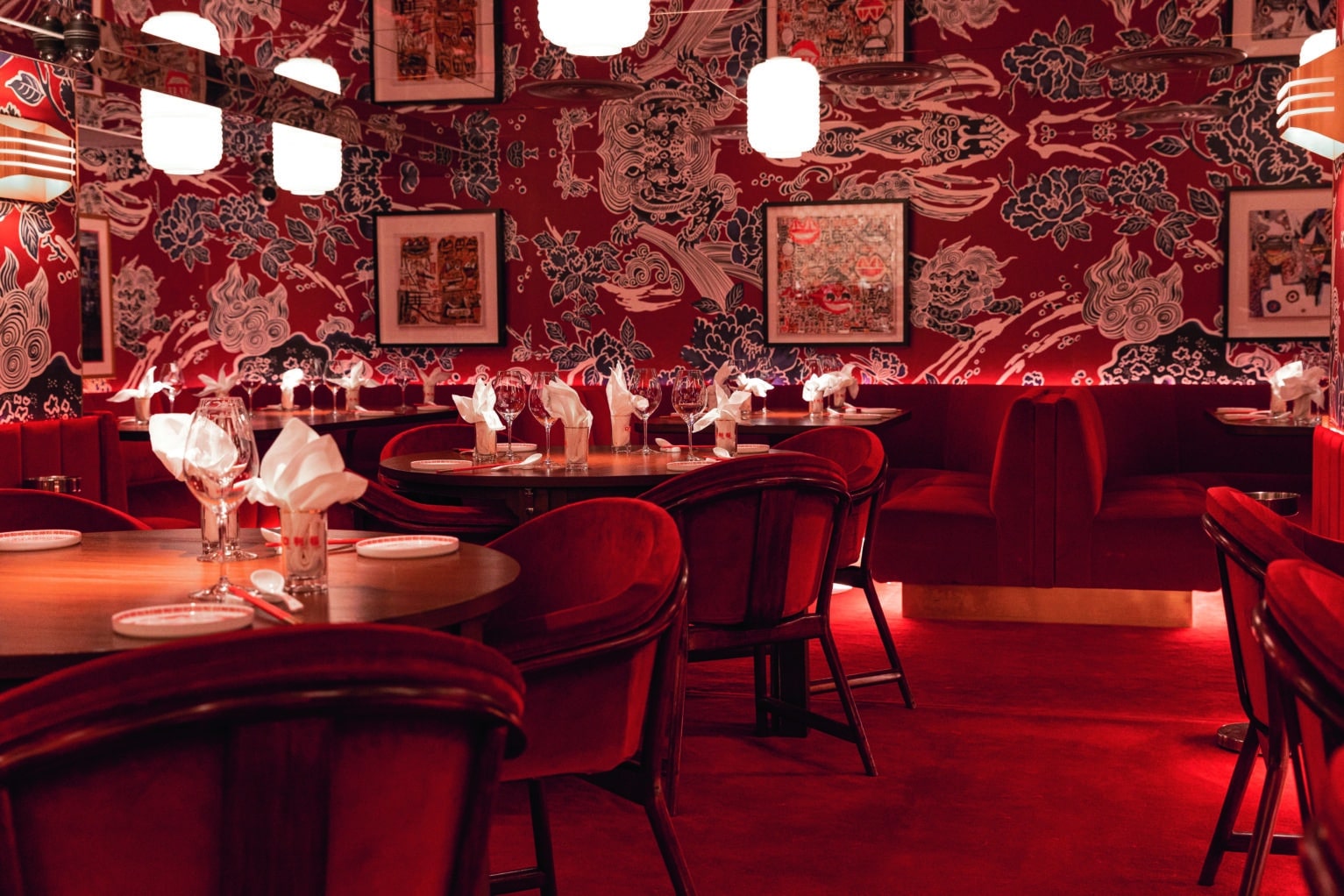
Some restaurants have become part of the city itself, shaping how Hong Kong eats while reflecting its distinctive blend of cinematic nostalgia and pioneering modernity. Ho Lee Fook, opened in 2014, has quickly earned recognition for inventive Cantonese dishes that feel unmistakably of the city. Mak’s Noodle proves that perfection can fit in a porcelain bowl – fine egg noodles, fresh shrimp wontons and a broth generations in the making. Lin Heung Tea House, open since 1926, offers dim sum from steaming trolleys in a transportive dining room little changed over the past century. Australia Dairy Company, a legendary cha chaan teng, has been serving scrambled eggs, milk tea and simple comfort since 1970, a daily ritual for countless Hongkongers. Meanwhile, at Yee Shun Milk Company, locals swear by the hot ginger milk custard and cold double-skin milk puddings that seem to arrive in seconds. These icons show that Hong Kong’s culinary identity is built both on enduring traditions and on bold new creative voices.
What you should fly-cruise to Hong Kong
Sailing in and out of Hong Kong offers the chance to experience an extraordinary blend of modern convenience, cultural richness and regional exploration.
You can spend a day or two indulging in vibrant street markets, skyscraper views and exceptional Cantonese cuisine before boarding your ship at the stunning Kai Tak Cruise Terminal.
Located at the former airport in Kowloon, Kai Tak is one of Asia’s most modern cruise terminals – built to handle large vessels, with streamlined check-in, dedicated baggage and transport facilities, and a rooftop park offering sweeping harbour views. Just 10 kilometres from the city, there is ample public transport for passengers to come and go when ships are in town.
From Hong Kong, you can easily sail to Vietnam, Thailand, Singapore, Japan and beyond – the city serves as both a gateway to Mainland China and wider Asia, making it an ideal embarkation point for east Asia and Southeast Asia sailings.
Hong Kong is a pre- and post-cruise’s delight. You might explore the luxury malls of Tsim Sha Tsui, savour dim-sum brunches and local street food, wander around ancient temples or visit art galleries. On returning you might extend your stay to roam night markets, shop Hong Kong designer labels,
sip rooftop cocktails overlooking Victoria Harbour, and soak in the city’s dazzling skyline and light show.
For smaller boutique ships (those of Viking, for example), it’s possible to moor right in the heart of the ‘Fragrant Harbour’ (Victoria Harbour) and witness the city’s incredible nightly light show from the deck – it’s a very special way to begin or end your cruise.

Highlights of the Hong Kong cruise experience:
- Embarkation at Kai Tak, benefiting from modern facilities and ease of access
- Shopping, dining and cultural immersion before departure and after arrival
- A wide range of itineraries across Asia, making the city an ideal cruise homeport
- Smaller ships get spectacular harbourfront moorings directly in Hong Kong waters.
- Hong Kong has homeported cruise lines and hosts many as a turnaround port picking up passengers:
- Royal Caribbean International Spectrum of the Seas: expanded homeport season with multiple roundtrip sailings from Hong Kong in 2025.
- Costa Cruises Costa Serena: repeated Hong Kong itineraries
- Holland America Line Westerdam: includes Hong Kong roundtrip ‘Collector’ cruises
- Star Cruises Star Voyager
- Astro Ocean Cruises Piano Land.
The cruise lines that visit Hong Kong:
- Azamara
- Carnival Cruise Line
- Celebrity Cruises
- Crystal
- Cunard
- Dream Cruises
- Explora Journeys
- Hapag-Lloyd
- Holland America Line
- MSC Cruises
- Oceania Cruises
- Ponant
- Princess
- Regent Seven Seas
- Ritz-Carlton Yacht Collection
- Royal Caribbean
- Viking
- Seabourn
- Silversea
- Windstar
Related Posts
-

It pays to be decisive on this dynamic island. Here’s how to pack all the action into just two days.
-
StarCruises is about to start sailings out of Vietnam.
-
If you’re looking for all the bells and whistles, large cruise ships have all the latest and greatest rides and attractions.
-
The ship’s goal is about getting off the beaten track, exploring remote coastlines, meeting local communities, and soaking up nature in all its unfiltered glory.



Have been to HongKong before and fell in love with the culture and food, we’ll be back one day.
OMG I would love to go on a cruise for my 60th birthday in 2026, how amazing would that be.