

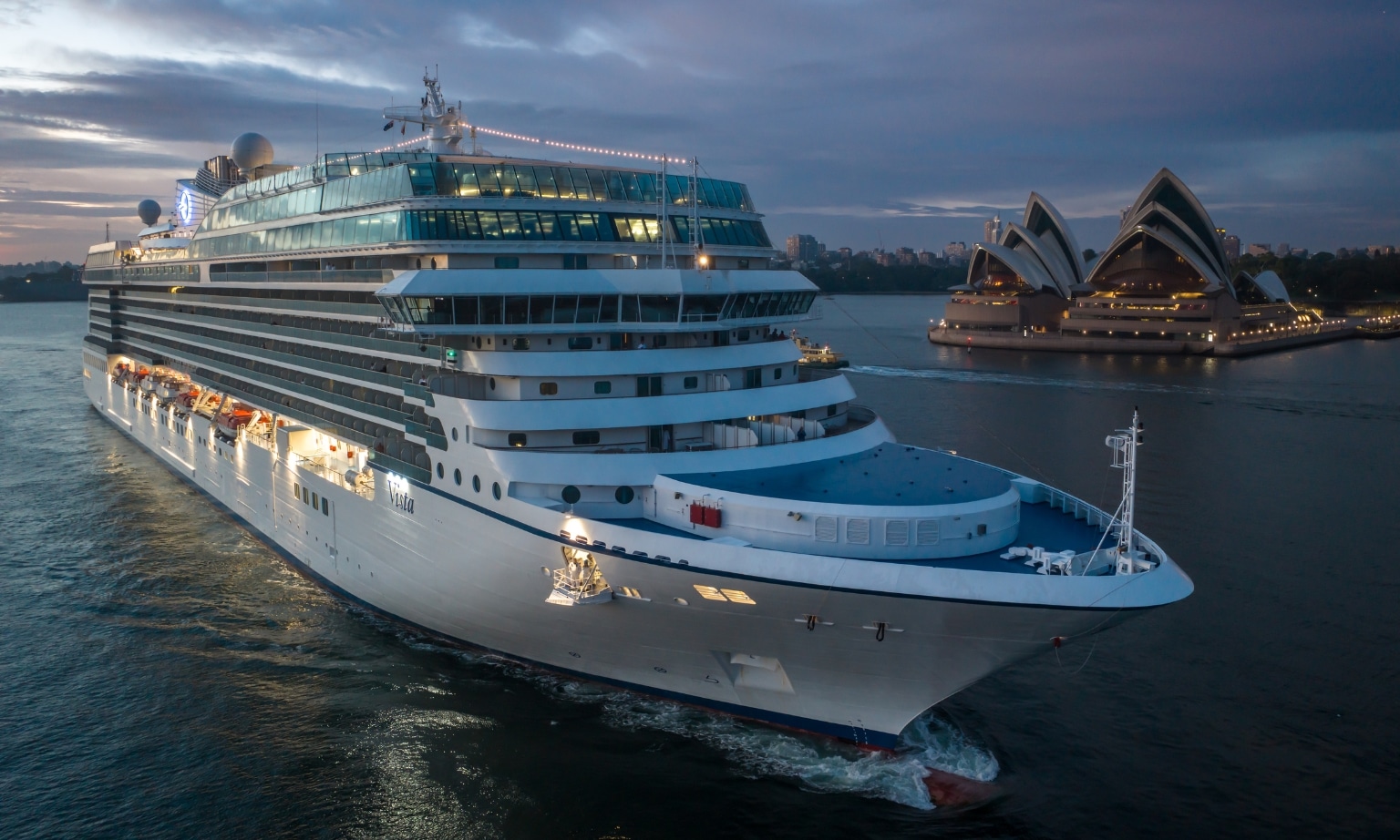
- Cruise lines are disappointed at the Treasurer Jim Chalmers’ budget increase of the Passenger Movement Charge.
- CLIA points out the it won’t help Australia’s attempts to persuade cruise lines to send more ships to the region.
- The $10 increase in the charge applies to cruise passengers and outbound holidaymakers.
Australia’s tourism industry has reacted with disappointment at the Federal Government’s decision to increase the Passenger Movement Charge (PMC), warning the higher tax will further damage the nation’s competitiveness and accelerate the loss of cruise capacity from Australian waters.
Treasurer Jim Chalmers’ 2026-27 Federal Budget, handed down on Tuesday night, confirmed the departure tax would rise from $70 to $80 from January 1, 2027. The increase will apply to all international passengers leaving Australia, including outbound holidaymakers, business travellers and cruise passengers.
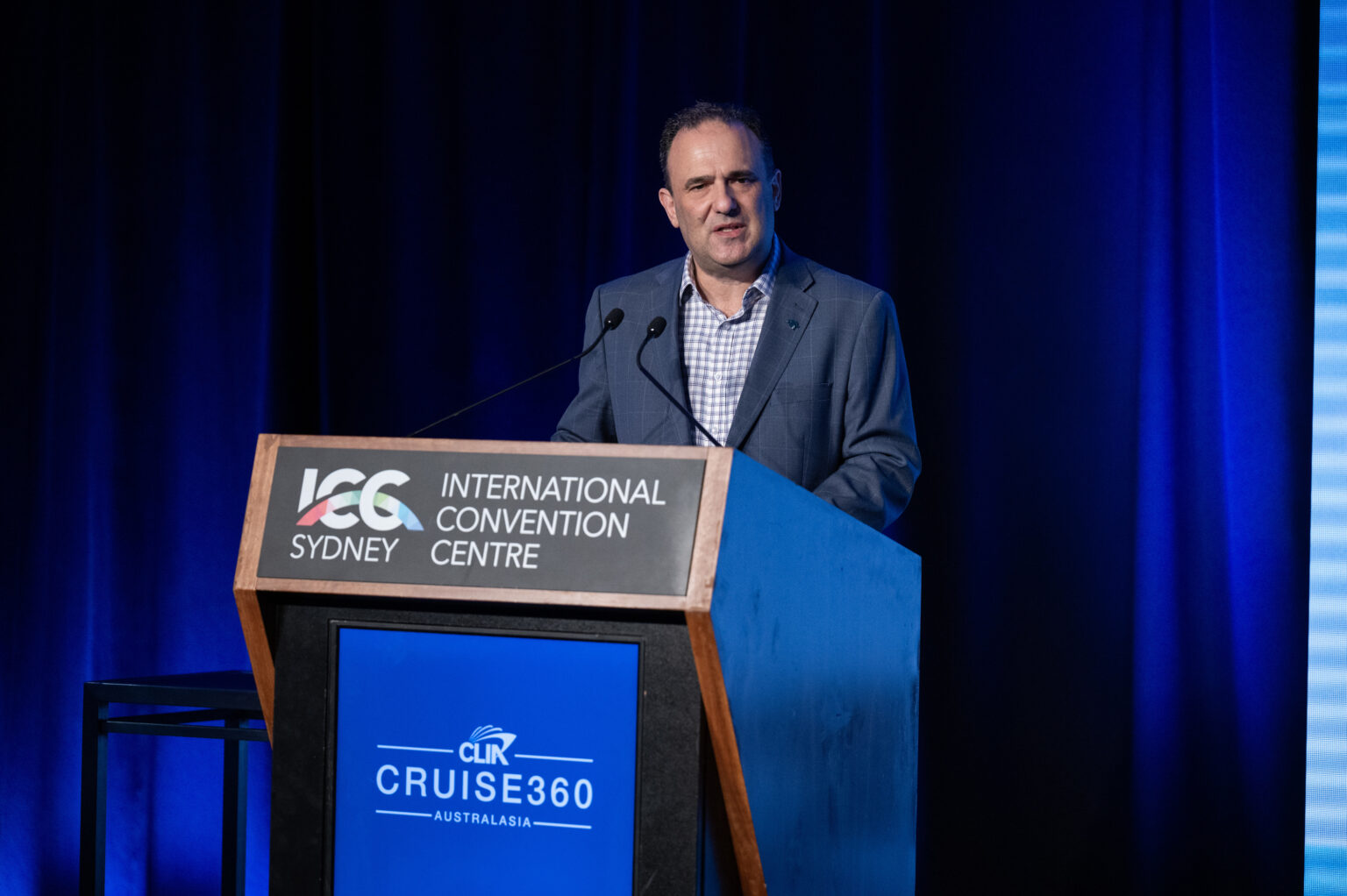
Cruise Lines International Association (CLIA) Australasia said the increase came at the worst possible time for a tourism sector still rebuilding from the pandemic and grappling with rising operating costs.
“Increasing the Passenger Movement Charge places yet another burden on travellers at a time when the tourism community is working hard to overcome challenges at home and overseas,” CLIA said in a statement.
“Australia already charges travellers some of the highest fees in the world, increasing the cost of international travel and creating a disincentive for overseas visitors.”
The organisation said the decision was especially disappointing given repeated warnings that Australia was becoming less attractive to international cruise operators.
“This increase is particularly disappointing at a time when the cruise community has been highlighting Australia’s loss of cruise tourism to other regions, and it is a further blow to the country’s competitiveness,” CLIA said.
Why Australia’s capacity is down
Cruise Passenger has been reporting for more than two years on the steady redeployment of cruise ships away from Australia toward Asia, Europe and North America, where governments have aggressively supported tourism growth through infrastructure investment and coordinated policy settings.
Major cruise lines including Carnival Cruise Line, Royal Caribbean and Princess Cruises have all reduced local capacity in recent seasons. P&O Australia was absorbed into Carnival Cruise Line, ending one of the country’s most recognisable local cruise brands.
Industry leaders have consistently argued that Australia lacks a whole-of-government tourism strategy capable of competing with Singapore, Japan and emerging Asian cruise hubs that offer lower taxes, streamlined regulation and significant port investment.
Cruise executives have also pointed to mounting operational costs in Australia, including pilotage fees, biosecurity charges, customs processing expenses and state-based port charges, all of which add to the cost of deploying ships locally.
The PMC increase now adds another layer of expense.
The tourism industry view
CLIA reiterated its long-standing call for PMC revenue to be reinvested directly into modernising Australia’s border and passenger processing systems for both aviation and cruise.
“CLIA continues to support calls for PMC revenue to be reinvested in the modernisation of Australia’s border processes for aviation and cruise,” the organisation said.
Tourism and Transport Forum chief executive Margy Osmond also criticised the tax increase, describing it as “outrageous” and warning it risked undermining Australia’s fragile tourism recovery.
The Federal Government has not earmarked the additional revenue for tourism or border infrastructure improvements, prompting renewed criticism from the sector that travellers are being used as a general revenue source.
Australia’s PMC is already among the highest departure taxes globally.
Combined with the country’s long-haul geography and rising airfare costs, tourism operators fear the latest increase could discourage inbound visitation at a time when international arrivals remain below pre-pandemic levels from several key markets.
The increase also arrives amid a broader global trend of tourism-related taxes.
Victorian travellers are already paying the state’s 7.5 per cent short-stay accommodation levy introduced in January 2025 on platforms such as Airbnb and Stayz.
Overseas, European destinations including Spain and Italy are increasing city tourism taxes, while Thailand plans to introduce a ฿300 entry fee for international visitors later this year.
But cruise industry leaders argue Australia’s challenge is fundamentally different because of the intense international competition for cruise ship deployment.
Unlike airlines, cruise lines can reposition ships relatively quickly to more profitable regions with lower operating costs and stronger government support.
Cruise Passenger has repeatedly called for a national cruise strategy bringing together federal and state governments, tourism agencies, ports and industry stakeholders to reverse the decline in Australian capacity.
Industry advocates warn that without urgent action, Australia risks losing not only ships, but also the billions of dollars in economic activity cruise tourism generates for local businesses, regional ports, hotels, restaurants and tour operators.
With another tax increase now locked in, cruise executives fear Australia may become an even harder sell in global deployment discussions already heavily tilted toward Asia and Europe.

Related Posts
-

Until now, Broome has been a tide-dependent port, due to its unusually large tidal ranges, where low tide and high tide can change water depth by up to 10 metres
-
While it’s no big secret that cruise lines have been boosting their inventories in the Caribbean, as well as sailing more itineraries out of California, another region where cruise lines…
-
Several cruise lines are investing heavily in refurbishing older vessels in their fleet to attract cruisers to try new offerings on familiar favourites.
-
While Western Australia was celebrating the success of its 2023/24 cruise season, where 290 cruise ship visits were recorded and more than $385 million was injected into the economy, there…





Cruise lines increase fares by hundreds of dollars to boost their own revenue and there’s barely a word from CLIA.
The Government increases a travel charge by $10 and suddenly it’s outrage, with CLIA warning of the “death” of the sector.
As I’ve said before, we could heavily subsidise the cruise industry and remove every charge entirely, and the cruise lines would still reposition ships elsewhere while offering the same itineraries here. In reality, fares would probably stay just as high, with cruise companies pocketing the difference rather than passing savings onto passengers.