
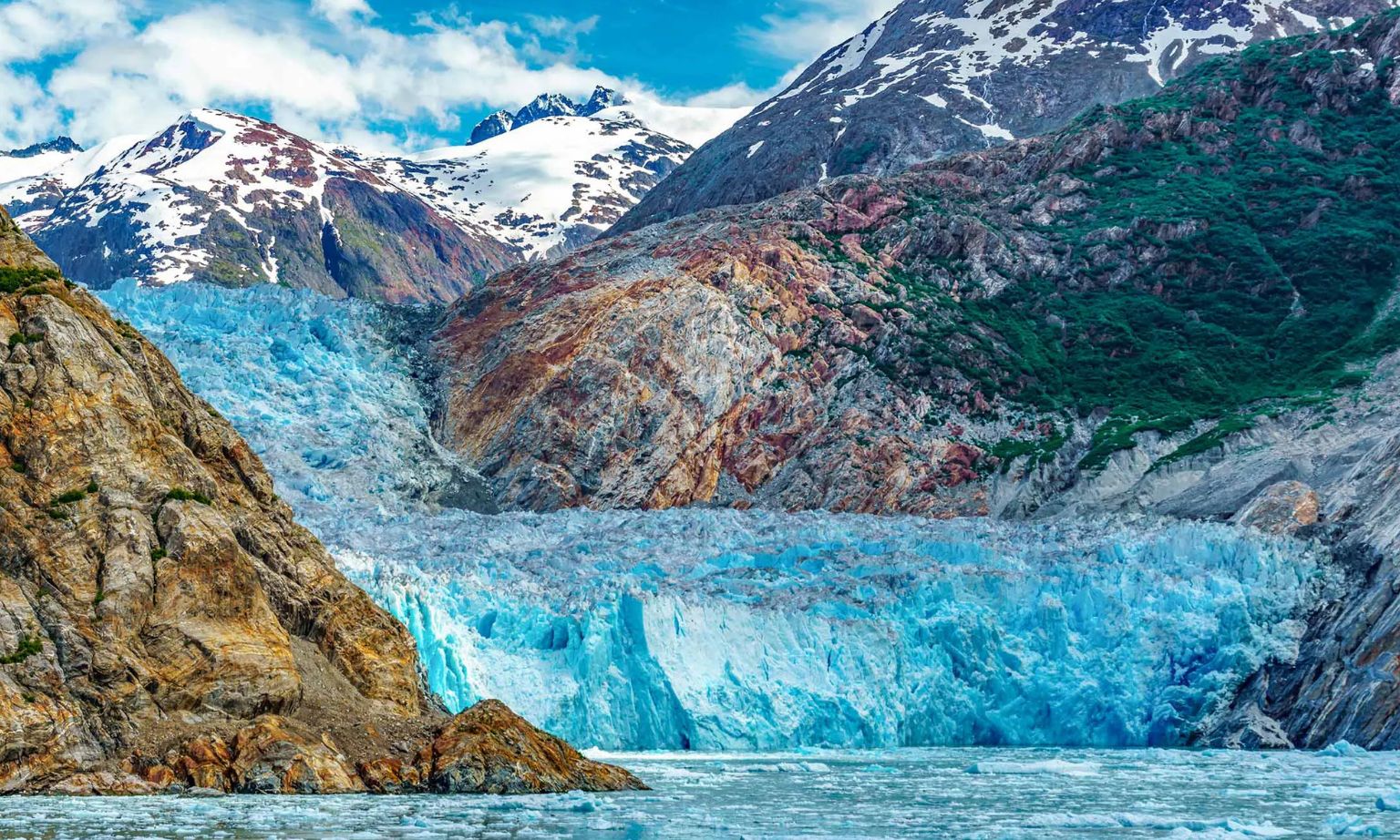
- Cruise ships are halting visits to Tracy Arm in Alaska, a famous fjord, with a view of a massive glacier.
- This is due to the aftermath of a landslide from last year, and potential follow-up events.
- Cruise ships will be visiting Endicott Arm instead.
Cruise lines are skipping the famous attraction Tracy Arm in Alaska after a massive landslide last summer. There are suggestions that the surrounding area could now be vulnerable to landslides as well, which would then trigger massive waves and create a danger for cruise ships.
Lines like Carnival, Royal Caribbean, Holland America Line, Virgin Voyages have all been replacing Tracy Arm with Endicott Arm instead.
MSC Cruises recently made the same choice as well, telling passengers: “Due to current geological conditions, MSC Poesia will sail through Endicott Arm instead of Tracy Arm Fjord.
“Endicott Arm is a remarkable destination known for its dramatic landscapes and active glacier activity and provides the chance to admire close-up views of the Dawes Glacier.”
Royal Caribbean told guests: “As guest safety remains our top priority, and current waterway conditions are not suitable for cruise ship navigation in Tracy Arm Fjord, Alaskan itineraries will instead visit the Endicott Arm and Dawes Glacier.”
Tracy Arm is a famous fjord which offers one of the best sights in all of Alaska, but cruise lines will of course always prioritise safety in these situations and cruisers will still get the chance to spot plenty of other fjords and landmarks.
Mike West, the Alaska state seismologist and director of the Alaska Earthquake Center told Alaska Public: “Anytime you collapse the side of a mountain, I think it’s a safe assumption to assume that you’ve got an unstable mountainside, right? It is perfectly reasonable, or geologically reasonable, that there could be follow-on activity.”
Dave Snider, the tsunami warning coordinator with the National Oceanic and Atmospheric Administration, added: “This is a natural part of our landscape, to have landslides and gravitational releases of material that are close to the water.
“They’re extraordinary, unusual events that can happen with little to no notice at all. And because of that, we have to stress those natural hazard warning signs that very well could be the only alert that you get during an event like that.”

Related Posts
-

The USA has been seeing an uptick in outbreaks of norovirus onboard cruise ships, and it appears that a new strain of the virus could be to blame.
-
Much has been written in recent years about the decline of Melbourne as a cruising city, and on the eve of the 2025/26 cruise season, the situation is at critical…
-
While Western Australia was celebrating the success of its 2023/24 cruise season, where 290 cruise ship visits were recorded and more than $385 million was injected into the economy, there…
-
Until now, Broome has been a tide-dependent port, due to its unusually large tidal ranges, where low tide and high tide can change water depth by up to 10 metres