

- Cruise lines worldwide are rapidly expanding their fleets, with 50 ship orders on the way.
- With Europe halting growth and cruisers demanding new itineraries, some lines are looking towards the mild Aussie winter as a new opportunity to redirect some of their inventory.
- Now the Captain of the Anthem of the Seas has let slip the giant cruise line has had discussions about year-round sailings.
As cruise lines continue to grow their fleet, major companies like Royal Caribbean Group, Norwegian Cruise Line Holdings and the Carnival Corporation are looking to new areas and times of the year to position their vessels.
Australia’s favourable mild winters and warm states are looking increasingly attractive for lines to sail between May and September.
Industry executives have told Cruise Passenger that they see the Aussie winter as a real possibility as their inventory increases and they look for new growth opportunities.
Now the Captain of Anthem of the Seas, currently sailing in Australia, has let slip that Royal Caribbean has been holding discussions about year-round sailings.
The Captain hinted that Australia ‘could get lucky’ when asked about the possibility of year-round cruising in Australia.
He added: “Hopefully it will happen, there’s a lot of discussions going on, I don’t know what is confidential and what is not, I think you might get lucky in the future. Maybe you’ll get bigger ships also.”
You can hear his full answer here.
While Australia has been struggling to attract new ships and cruise lines over recent years, as more ships are launched, they have to go somewhere. Australian winter cruising could provide the perfect new opportunity for cruise lines and could aim to recreate the boom that’s opened for America’s West Coast.
And, of course, Royal Caribbean is opening a beach club in Vanuatu next year – a strong reason to be using it year round.
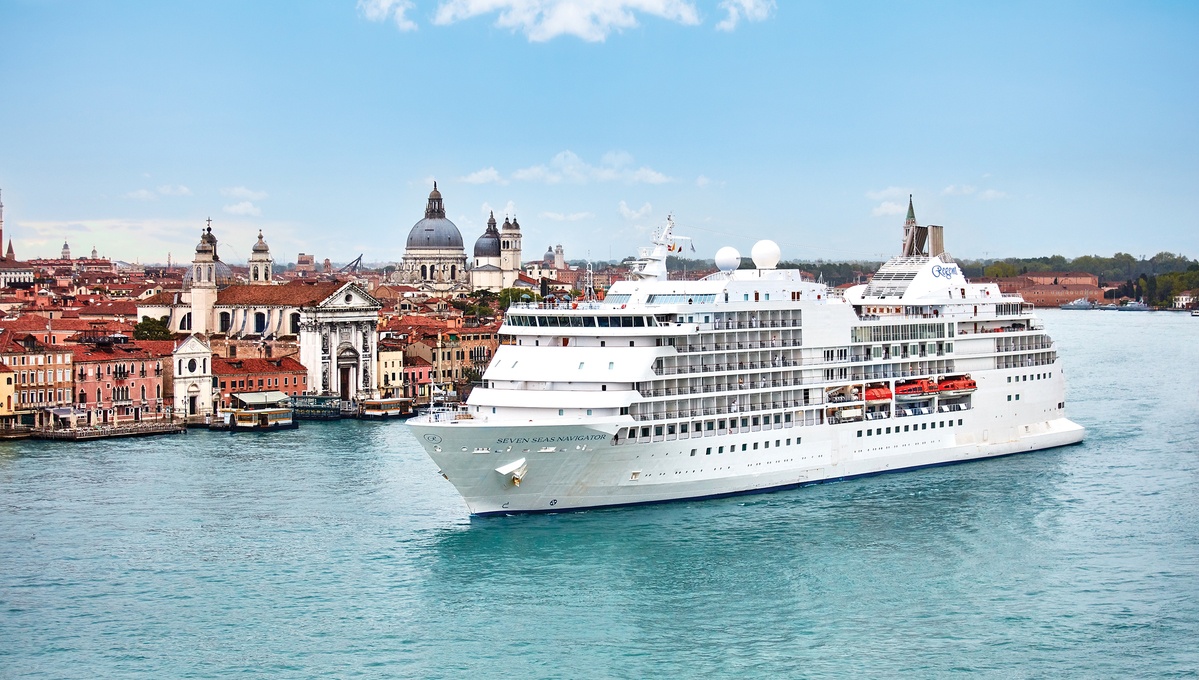
Last week, Cruise Passenger reported Regent Seven Seas will base Seven Seas Navigator on a three-month ultra-luxury winter season in 2027 after the ship has undergone a major refurbishment.
Lisa Pile, Vice President Sales & General Manager, Asia Pacific, told Cruise Passenger the new winter itineraries are already creating “huge interest”, particularly in the overseas market.
“Seven Seas Navigator will be doing the most beautiful sailing through the South Pacific and also for the first time, winter in Australia.
“She is going from Fremantle to Darwin, to Cairns, round-trip Cairns. She’s doing Fiji, all in those non-traditional cruise months, which is, of course, the perfect months for travel to those areas, which is the dry season.
“They have just been selling like hot cakes. I think people have got a taste of luxury cruising close to home and different itineraries in the dry season in those parts of Australia.”
New ships on their way but where will they go?
Across NCL Holdings, a massive 17 ships are on the way between now and 2037, across Norwegian Cruise Line, Oceania Cruises and Regent Seven Seas cruising.
Royal Caribbean has six new ships currently being built, with options for additional ships as well, which will likely be snapped up. Carnival has at least five new ships coming through to 2033, MSC Cruises will have 10 new ships by 2033, Disney has announced four new ships, Viking has eight new Ocean ships scheduled, Celebrity has a new ship on the way in 2028, and there are other cruise lines also building and growing all the time.
This accounts for 51 new vessels that will be sailing over the next 10 years. The Caribbean and Europe are popular for new builds and launches so this begs the question, where will the older ships in the lines go?
There are issues in Europe with over-tourism where some cities have implemented increased fees or proposed bans on ships from entering the centre of the cities.
Major cruise hubs like Amsterdam, Venice and Barcelona clearly signal to the industry that their cities will not allow cruise to continue in its current quantities, let alone grow, and cruise lines will be looking around for other options.
This has forced some lines to think of new destinations and create strategic partnerships with alternative destinations and ports.
For example, there has been significant investment put into the West Coast of the United States of America.
Destinations like Los Angeles, San Francisco and San Diego had been largely neglected as homeports by many cruise lines and now, they’ve seen a quick explosion in cruise traffic over recent years, sailing itineraries down into Mexico’s Pacific Coast.
The investment is now flowing in, with cruise lines building private destinations in Mexico, a massive Los Angeles cruise terminal overhaul being planned, and cruise lines settling year-round and competing over port spaces.
Where could these ships sail in the Australian winter?
For decades, Australia’s cruise calendar has been shaped by a familiar pattern: the big summer season anchored around peak demand from December to March, with the winters seeing only Carnival’s four ships.
But this traditional seasonality has left a glaring gap: our winter months, particularly May through July, are ripe with opportunity.
Australia and its neighbours offer warm, dry weather and spectacular natural environments at a time when much of the northern hemisphere is in its off-season.
Seven Seas Navigator’s deployment isn’t simply notable because she’s sailing here in winter. It’s significant because of who she is. She’s a truly ultra-luxury vessel, carrying around 496 passengers with an all-suite, all-inclusive experience that epitomises the high end of cruising.
Her programme in 2027 includes:
- Western and northern Australian sailings linking Fremantle, Darwin, Cairns and beyond, blending renowned natural beauty with warm seasonal weather.
- Voyages that thread together remote regions, Indigenous cultural experiences, reef gateways and island ports rarely visited by bigger ships.
- Pacific and South Pacific legs that tap into the broader Australasian cruising opportunity
The economic stakes are massive
According to Cruise Lines International Association Australasia (CLIA), cruise tourism delivered A$7.32 billion in economic impact to Australia in 2024-25, supporting more than 22,000 jobs across sectors from hospitality and transport to retail and excursions.
That economic footprint is notable, but it’s also temporary. In 2023-24, the broader cruise tourism impact peaked at over A$8 billion before contracting last year – a telling reminder that our cruise market is not guaranteed growth without a proactive strategy and better competitiveness.
If lines like Regent shift more capacity into shoulder and winter seasons, the upside could be transformative. Doubling cruise tourism output back to previous levels or higher is within reach, particularly if we tap into the global appetite for warm-weather cruising and premium experiences that go beyond the mainstream market.
Western Australia, Queensland, the Top End and the Pacific islands all boast climates and coastlines that naturally lend themselves to extended itineraries, especially when global lines are searching for alternative selling seasons to fill growing fleets.
The case for year-round cruising
What makes winter cruising here so compelling isn’t just the weather — it’s the diversity of experiences available. It’s one thing to cruise the Pacific Islands or the Kimberley in summer; it’s another to do so when the climate is softer, the landscapes vibrant, and the tourist flows lighter.
Lines like Regent are recognising that Australia’s shoulder and winter months align beautifully with global demand cycles. For Australian travellers – long accustomed to booking fly-drive or beach holidays in winter – cruising offers an enticing, all-inclusive lifestyle escape that pairs perfectly with the dry season in the north and mild conditions in temperate regions.
Queensland’s Reef gateways, Western Australia’s rugged coast, and the Top End’s unique World Heritage landscapes suddenly have appeal outside the peak summer crush.
What we need to do next
For this potential to be fully realised, industry and government need to work in partnership. CLIA and the Australian Cruise Association have already called for coordinated national action to make Australia more competitive and attractive to cruise lines, arguing that regulatory hurdles and infrastructure bottlenecks are costs that risk losing ground to other markets.
Ports, local operators and tourism stakeholders must also prepare for year-round cruising. That means developing experiences, excursions and community engagement that can sustain visitors and deliver memorable, repeatable value.
Seven Seas Navigator’s winter season may be the first of its kind in a long time, but it shouldn’t be the last. Her deployment is a wake-up call – the cruise industry’s quiet but decisive vote that Australia, in winter and beyond, belongs on the world cruising map.
Our natural seasons, vast coastlines and appetite for travel make Australia uniquely positioned to lead a new era of cruising. If we play our cards right – embracing smarter regulation, welcoming more capacity in shoulder periods, and marketing our strengths effectively – Australia could well double its cruise tourism impact, turning what was once a seasonal game into a year-round opportunity.
Royal Caribbean is set to build a private destination at Lelepa in the South Pacific, and it’s assumed that this will eventually bring year-round cruising, as it would make little sense to leave the destination without guests for six months of the year.

Related Posts
-

While Western Australia was celebrating the success of its 2023/24 cruise season, where 290 cruise ship visits were recorded and more than $385 million was injected into the economy, there…
-
Luxury line Seabourn will debut an epic 145-day World Cruise in 2027 which will include a circumnavigation of Australia.
-
It's Cruise Month - four weeks of celebration where cruise lines unveil their best offers and travel agents inspire their clients. But local cruise is suffering and Canberra isn't listening.
-
EXPLORA I will also visit Australia, New Zealand and the South Pacific on a number of segments.




I’ve always said….that visiting Australia and especially the Northern part of Australia is during our winter season. As a Hire Car driver that has been advice to my passengers. The cruise ships have that opportunity to circumnavigate from Brisbane to the north around to Darwin and down the Kimberley coast to Perth or V.v….taking into account of Vanuatu and Fiji…for this to happen the government must reduce Port Taxes too….Don’t waste an opportunity like this to go away!
Cruising in winter is all very good but it can be very cold on deck as a ship is always moving. It is a good time of year to visit the islands and northern Australia. Need to be some guidelines in having the flu injection before you sale otherwise the ships are going to be full with sick people. Not nice.
Except for Melbourne thanks to our Labor government
It would be great to cruise again
I think a lot of people would like to see single cabins and prices advertised for single travel. Not everyone wants to travel with another person.
This is good news! Ships could sail to Southeast Asia where there is no winter season.
Too cold to cruise southern states of Australia in winter and New Zealand
Needs to be northern states and islands , something different please and we will book
No real news or surprise there. RCL is developing its private island in the Pacific, so they’re not going to leave that not earning for half the year. Meaning when it opens they will also sail there over Winter.
And it’s not as though they haven’t hinted at that in the past either. So just more of the same.