
- The Australian Government released more information on its bold new plan for tourism for the next four years this week.
- But there was one thriving part of the tourism sector that didn’t get a mention – cruising.
- Worth over $7 billion, cruising was largely ignored. Publisher Peter Lynch asks: Why?
The Australian Government this week released another part of its grand tourism blueprint, THRIVE 2030. It talks about growth. It talks about sustainability. It talks about international markets, regional dispersal, workforce development and global competitiveness.
But it barely talks about the cruise industry. The silence is deafening.
Cruise tourism in Australia is not some niche sideline to the visitor economy. According to public figures from Cruise Lines International Association (CLIA) and the Australian Cruise Association (ACA), the industry delivered A$7.32 billion in economic benefits to the national economy in 2024/25 and supported more than 22,000 Australian jobs.
That’s not small change.
That’s thousands of livelihoods — from shore tour operators and port workers to regional cafes, coach companies, providores, entertainers and small tourism businesses in every state and territory.
Yet in the Federal Government’s tourism documentation and Austrade’s material, cruise barely rates a mention.
The original document was released in 2023. No cruise. An addendum was released in 2024, and there was a column on cruise from Cruise Lines International Association. Tick. But this week’s release, another update, appeared to contain nothing.
How does an industry worth over seven billion dollars get left out of the national conversation?
Cruise isn’t a niche, it’s a national asset
Cruise delivers visitors to places traditional tourism struggles to reach.
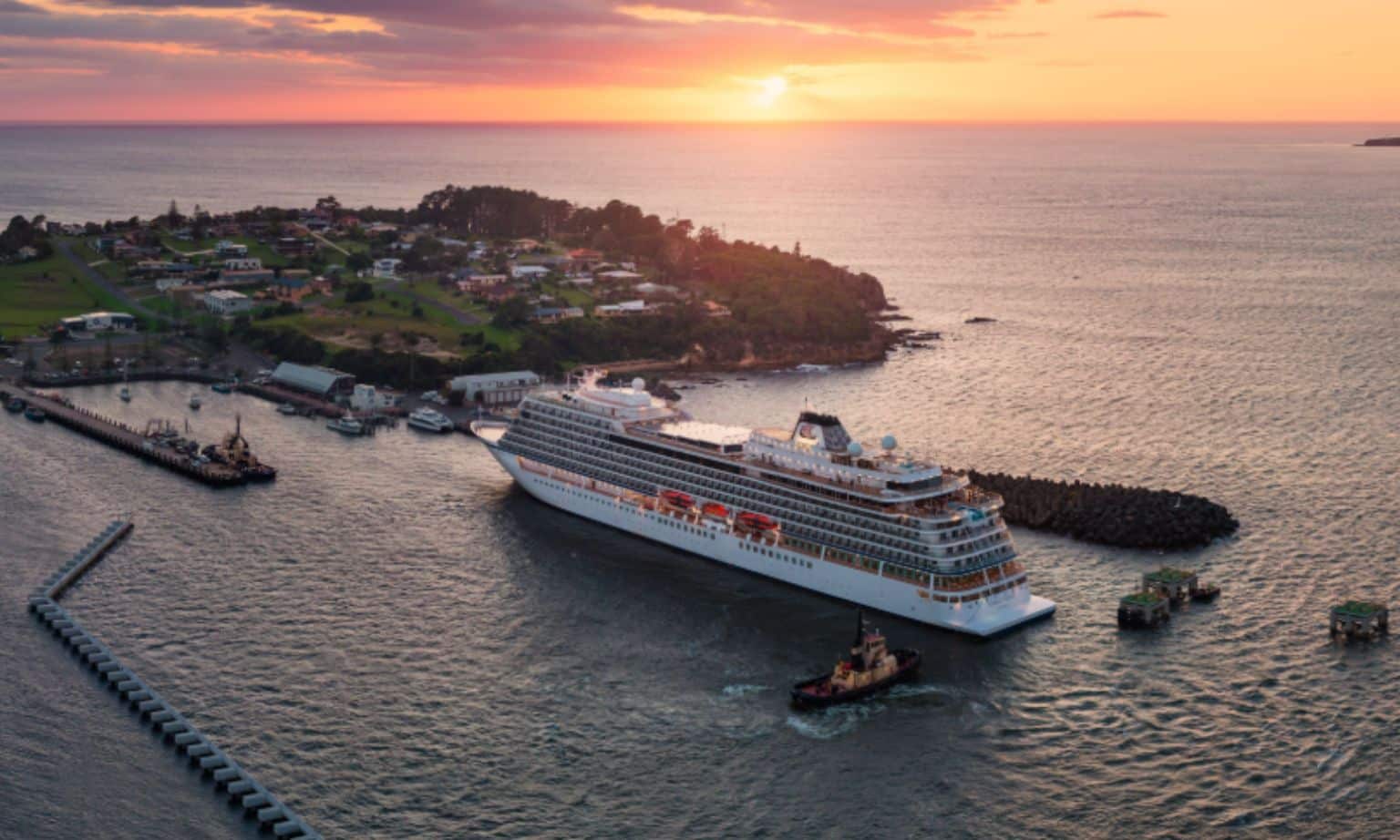
It injects money directly into regional ports like Eden, Kangaroo Island, Broome, Port Arthur and Burnie. It sustains small businesses that rely on passenger days for survival. It spreads economic benefit beyond the capital cities — exactly what every tourism strategy claims it wants to achieve.
Cruise passengers don’t just pass through. They book tours. They eat locally. They shop. They return later for land holidays. They generate repeat visitation and word-of-mouth promotion abroad.
And cruise lines invest heavily in provisioning, fuel, port services and Australian suppliers. The economic ripple effect is significant and measurable.
So why isn’t Canberra championing it?
NZ shows how it should be done
Across the Tasman, New Zealand has taken a coordinated, whole-of-government approach to cruise recovery and growth. Ministers engage. Agencies align. Ports, immigration, biosecurity and tourism bodies work together to remove friction and create certainty.
The result? Cruise lines are responding positively.
In Australia, the industry has been calling for that same alignment. A national strategy. Regulatory clarity. Consistency across states. Engagement at ministerial level.
The Cruise Industry has sought meetings with Tourism Minister Don Farrell — who also serves as Trade Minister and oversees Austrade.
So far, there has been no visible movement.
This matters. Because a cruise is not just tourism. It intersects with trade, border policy, biosecurity, transport infrastructure, maritime regulation and international relations. Without a coordinated approach, the industry faces complexity at every turn — higher port costs, regulatory inconsistencies, and operational uncertainty that can push deployment elsewhere.
Cruise ships are mobile assets. They can – and do – go where governments are easier to work with.
The cruise sector was one of the hardest hit during COVID. It endured prolonged shutdowns, reputational damage and regulatory hurdles. Yet it has come back strongly.
Passengers are surging back. Ships are redeploying. Regional communities are benefiting again. But recovery doesn’t equal security.
Cruise lines make deployment decisions years in advance. If Australia appears indifferent, costly or bureaucratically fragmented, those ships can simply reposition to Asia, North America or Europe.
And once lost, capacity is hard to regain.
At a time when Australia says it wants to grow its visitor economy to $230 billion by 2030, ignoring a sector already delivering $7.32 billion annually seems shortsighted at best.
Why the silence?
Is cruise politically inconvenient? Is it misunderstood? Or is it simply overlooked?
The industry has worked hard to improve environmental performance, investing in cleaner fuels, shore power capability and next-generation vessels. It contributes significantly to regional dispersal. It supports tens of thousands of jobs.
Yet in the national tourism narrative, cruise is treated as an afterthought.
Cruise Lines International Association (CLIA) told us:
“CLIA works closely with Austrade to ensure Cruise remains an established and important component of the visitor economy framework underpinning THRIVE 2030 and continues to be reflected in the strategy’s broader objectives around regional dispersal, international visitation, border modernisation, infrastructure and sustainable growth.”
“The cruise sector is directly engaged in the delivery of THRIVE 2030 priorities through a range of formal mechanisms. Representation includes participation in Austrade’s Visitor Economy Stakeholder Forum, where industry perspectives are incorporated into policy and planning discussions, as well as co-chairing the National Sea Passenger Facilitation Committee. This committee brings together all relevant government agencies with responsibility for cruise policy, operations and border facilitation, ensuring ongoing coordination and alignment with national tourism priorities.
“In addition, the cruise industry has welcomed the establishment of the new Office of Tourism and Visitor Economy and has already held constructive initial discussions on shared priorities, including strengthening Australia’s competitiveness, supporting regional visitation and enhancing visitor experience.
Even symbolic recognition matters. So we’re glad CLIA appears to have a seat at the table.
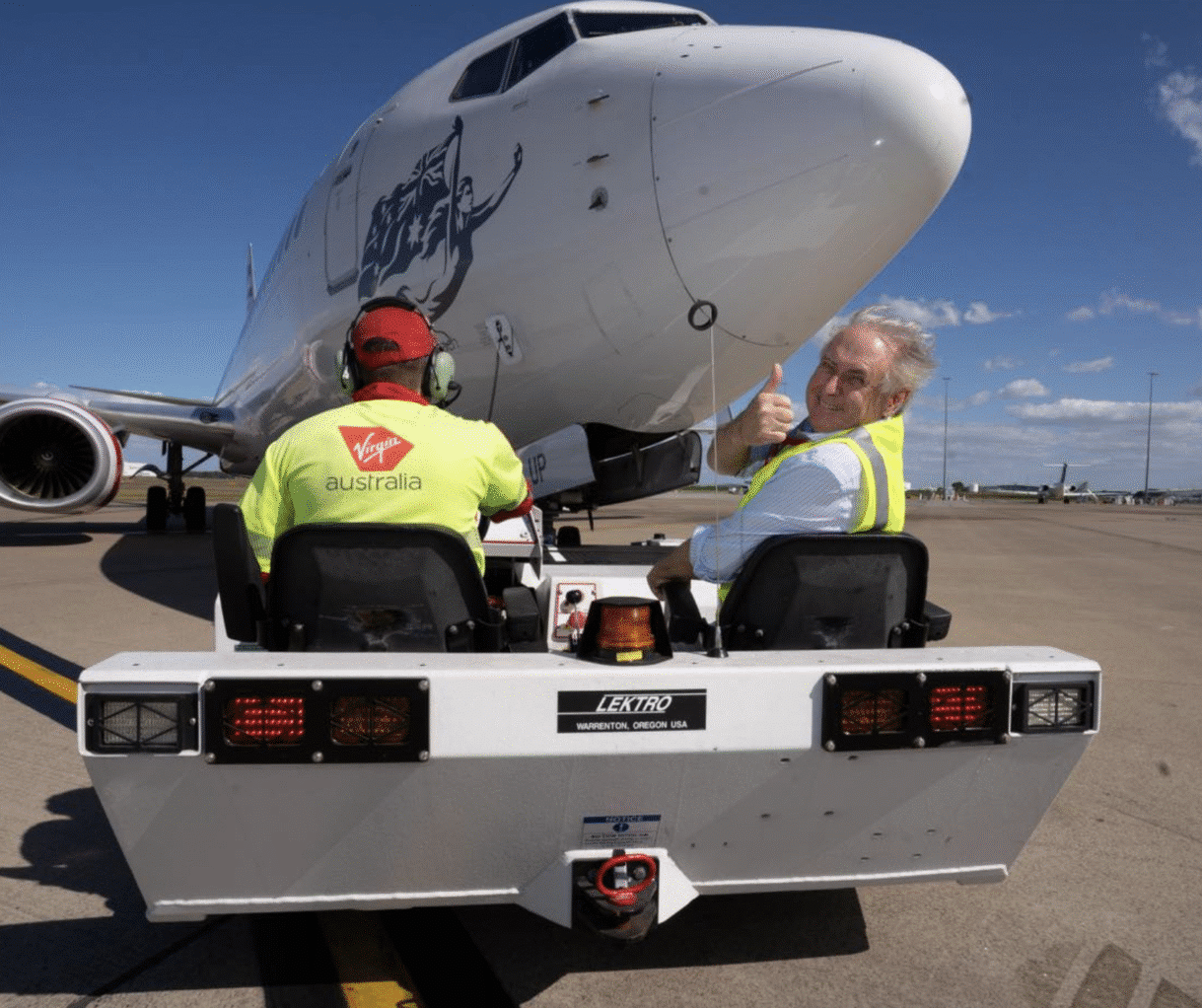
Minister Don Farrell holds dual responsibilities — tourism and trade — that uniquely position him to champion cruise as both an economic and diplomatic asset.
Cruise brings high-yield international visitors. It strengthens relationships with key markets. It supports export-style revenue generation without shipping goods overseas, because the customers come here.
The industry is not asking for handouts. It is asking for engagement. Coordination. Recognition. A seat at the table.
It is asking for the same whole-of-government approach New Zealand has adopted with demonstrable success.
We asked Don Farrell’s office for comment. They sent us the Minister’s statement which did not contain anything about cruising.
THRIVE 2030 is Australia’s national strategy for the long-term sustainable growth of the visitor economy, and provides a roadmap to grow Australia’s international visitor markets, embrace leading-edge business practices, deliver unique experiences, grow a resilient workforce and improve tourism data and insights.
So is the government including cruise or not?
It is understood the THRIVE 2030 action plan focuses on areas that will deliver the greatest impact for the whole tourism industry, and that Canberra concedes the cruise sector is a valued part of the tourism and travel industry and will benefit from this action plan.
Demand-driving activities, such as Tourism Australia’s Come and say G’day campaign, will encourage visitation to all potential visitors, including those arriving via cruise.
But, sadly, no new strategies or meetings involving cruise.
The Cost of Inaction
Cruise Passenger has been reporting the gradual erosion of our cruise capacity for three years. This season, we are 30% down on our best performance in 2024 – that cost $1 billion in money to our economy.
What happens if this continues? Fewer ship deployments. Shorter seasons. Ports dropped from itineraries. Investment diverted elsewhere. The communities that depend on cruise calls will feel it first. Then the supply chains.
For a government that speaks often about jobs, regional growth and economic resilience, overlooking an industry supporting more than 22,000 Australian jobs is difficult to reconcile.
Cruise tourism is not a fringe player in the visitor economy. It is a $7.32 billion contributor. It is a regional lifeline. It is a globally competitive industry operating in a fiercely mobile marketplace.

Related Posts
-

Cruise Lines International Association Australasia held its 22nd annual cruise industry awards in Sydney last night, and what emerged was the changing face of how you are buying your itineraries…
-
The Hawaiian Department of Transportation will significantly cut cruise visits to the islands of Hawaii, as part of a larger effort to reduce carbon emissions.
-
With China and the USA engaging in a well publicised trade war, we’re now seeing the effects bubble over into cruise.
-
This means the industry generated about $120 million less in economic activity over the 2024/25 season when compared to the 2023/24 season.





Cruise ships are part of the trickle down economy proven to be a fallacy from the Reagan times. Little bits of money makes it way to ports where cruise ships stop, most money stays on board. It doesn’t make sense for the billionaire owners to have passengers spend their money there. I know in one regional Aussie town where you pay $20 to go up a hill 500m in a bus to go a museum costing $15 entry! (The issue here is they hide things like that). It’s to squeeze every drop from all passengers. Environmentally they are poisonous. They pay their crews a pittance sack you at a drop of a hat work hours are excessive etc etc etc.
Another example of Government not doing there jobs
There is one simple reason driving total inaction by not just the Federal LABOR government but also in Victoria and to some extent NSW. All these Labor governments are heavily influenced and beholding to far left wing hatred of anything that is not powered by the wind, sun or gravity. The ministers in charge are fearful of the Green/Teal leftist agendas ripping support from under them. No guts to do their job in securing a better cruise industry and the millions it adds to the whole economy or is Don Farrell just a land-lover who hates the seas ?