Tour Review: India’s Wild West, A Luxury Safari Among the Last Asiatic Lions

As the jeep weaved its way along the sandy forest tracks of India’s Sasan Gir National Park, the early morning sunlight splintered the canopy of the broad-leaved teak trees above us. Emerging from the forest into a grassland clearing bathed in the golden light of dawn, the shrill alarm calls from chital deer and barks of langur monkeys interrupted the chorus of bulbuls, alerting Ankit, my naturalist guide, to the chance that we may be close to spotting one of the park’s big cat apex predators.
Uniquely, it was not a sighting of a Bengal tiger that we were hoping for, but a rare Asiatic lion. The vast teak forests and grasslands of Gujarat’s wild west are the last places on Earth where prides of wild lions roam in a natural habitat beyond the borders of Africa.
We heard the sound of leaves crunching slowly underfoot and discerned the undefined shape of a beast strolling towards the edge of the forest. As it moved closer, the dappled camouflage protection of the trees faded to reveal a magnificent, fully maned adult male lion walking with nonchalant muscular confidence straight towards us.
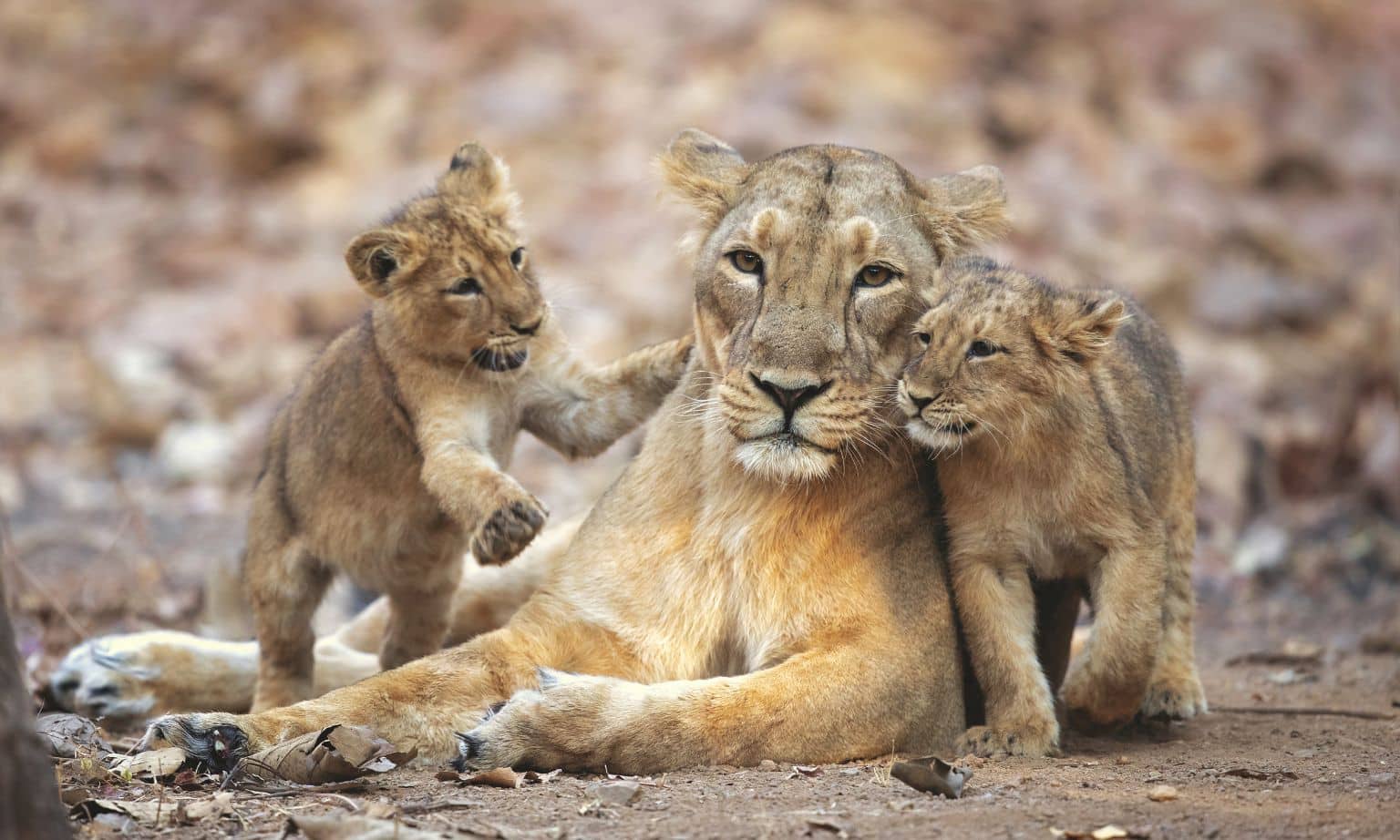
He gave us a cursory glance and a faint guttural purr as he passed the jeep, then headed down the sandy track, leading us onwards. We followed at a discreet distance and were rewarded for our patience – he led us straight to his pride. Cubs played like kittens among the sand dunes while the older females reclined in a circle around them. By the time we returned to our lodge, I had had close encounters with 20 Asiatic lions – all before breakfast.
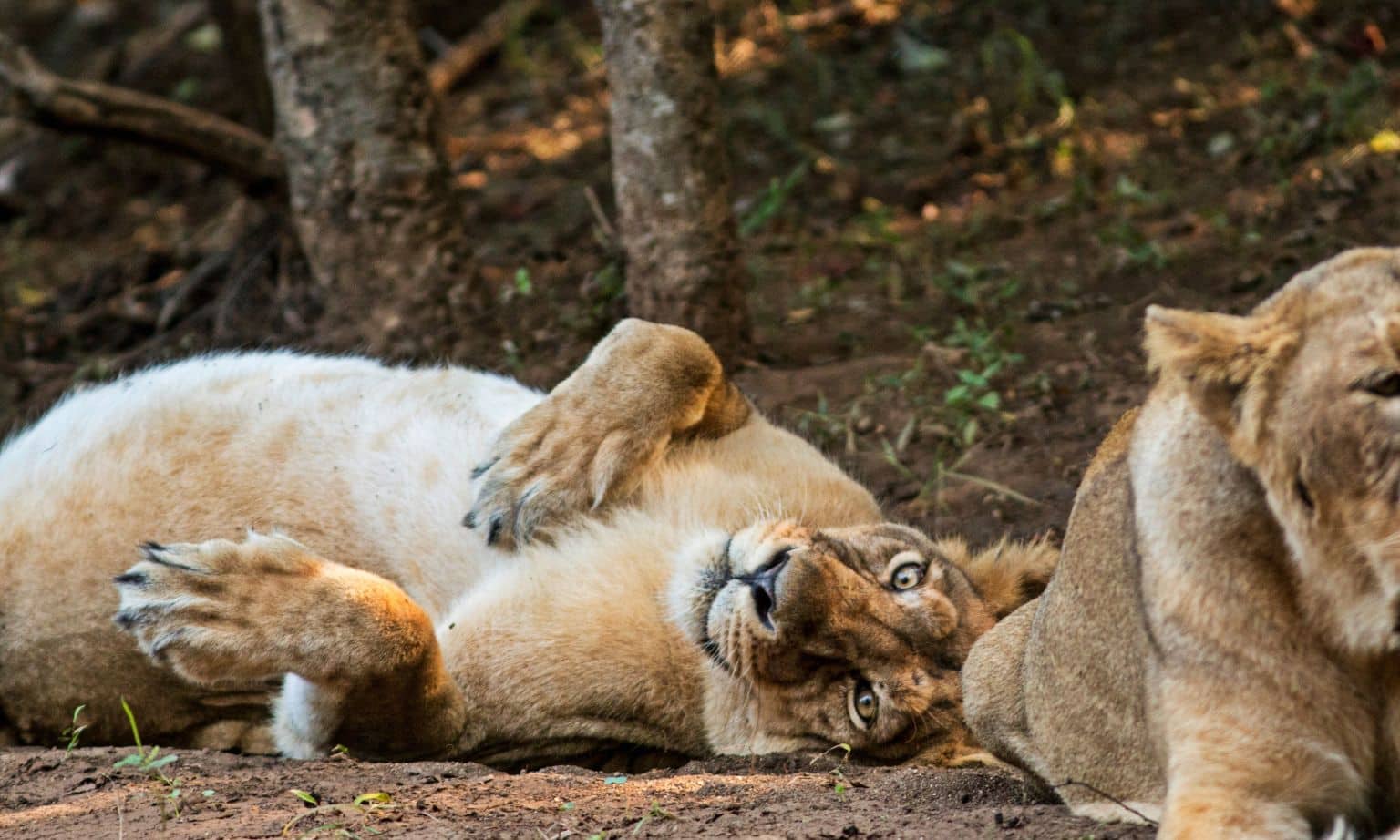
Asiatic lions evolved separately from their African relatives for thousands of years and Ankit diligently pointed out the subtle differences between the species. As with elephants, Asiatic lions are smaller than their African cousins. They also feature a prominent fold of skin the length of the abdomen and the males have rather less luxuriant manes that don’t quite cover the tops of their heads or ears.
Two thousand years ago, their habitat stretched all the way from the Levant and Persia to Central India, but none have been seen outside India for centuries. By 1900, they had been hunted almost to extinction, with just one single pride remaining in Sasan Gir. An effort to save the species began when the Nawab of Junagadh turned his hunting grounds in Sasan Gir into India’s first wildlife sanctuary.
The state government took this over in 1972 when it became necessary to help relocate the hamlets (or “nesses”) of the local semi-nomadic Maldhari cattle herders away from the ever-increasing number of lions. Since then the project has been a roaring conservation success, and the lions have regained most of their lost territory, with the latest census in 2020 confirming a population of 674.
I had tried to see Asiatic lions on two previous visits to Sasan Gir, but – despite their increasing numbers – had failed both times. The chaotic and unfathomable system of issuing permits for safaris had defeated me, and the accommodation options had been shabby and limited. So I was pleased to find that the park management had vastly improved. I was equally delighted by the newly opened Aramness Lodge, right on the edge of the park, which proved to not only be a breath of fresh air in this wild corner of the world, but a complete game-changer in the realms of India’s luxury safari offering.
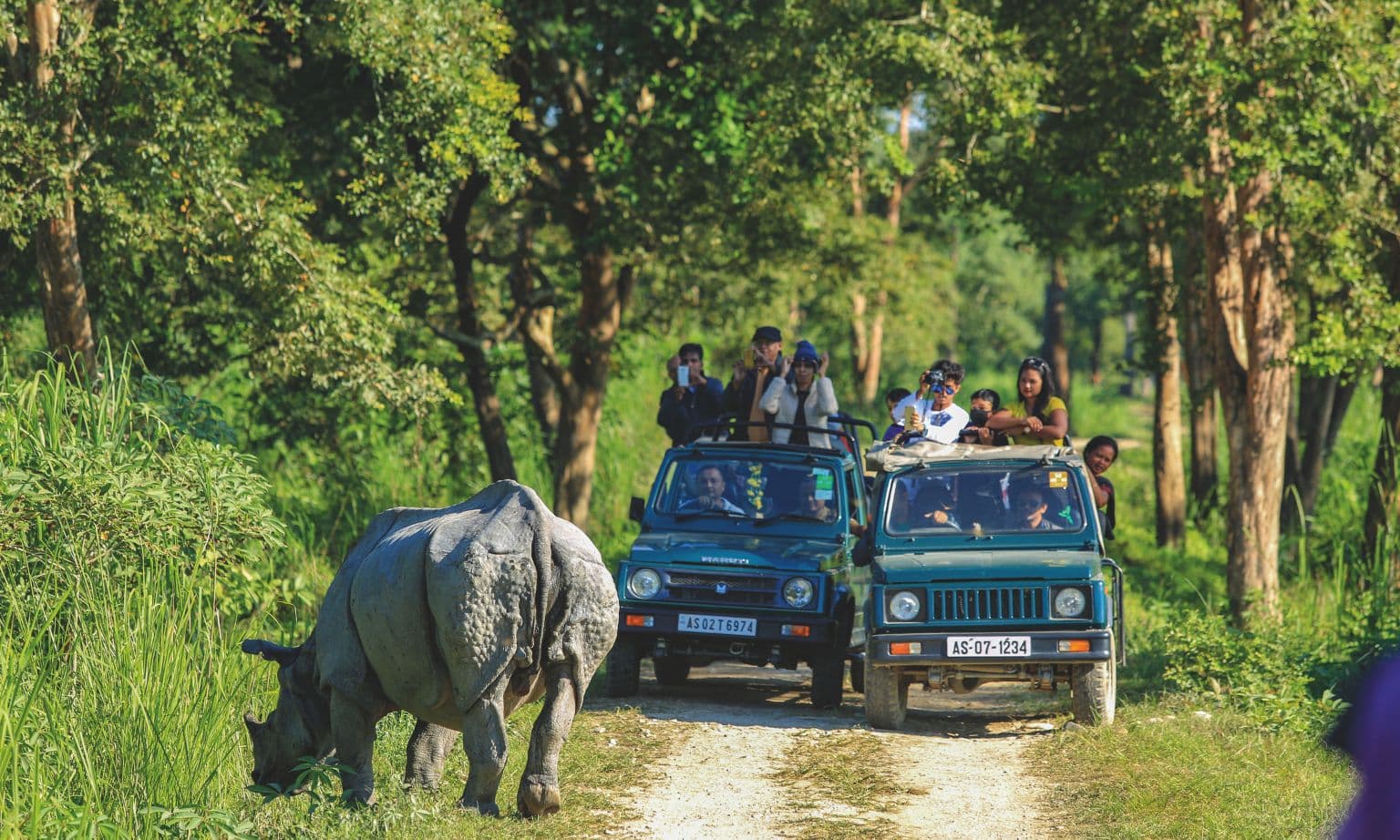
Ankit accompanied me on all of my game drives in a comfortable open-top Bandolier safari jeep. To my delight, I discovered that there were three slots to choose from for the daily game drives: a pre-dawn morning departure, a post-breakfast 9:30am option, or the late afternoon sundowner safari. On the drives, it wasn’t just potential sightings of the hot-ticket Asiatic lions that we scoured the landscape for; Indian leopards are prolific in Sasan Gir, and more likely to be seen returning from a nocturnal hunt on the dawn drive.
There are also substantial populations of herbivores, such as chital and sambar deer, nilgai antelope and wild boar, all of which are prey for the big cats. Indian safari offers a very different experience to the conventional African equivalent. Sightings of tigers, leopards or, in this case, lions, are never guaranteed on a single game drive, so they require a different mindset.
Where Africa is full of sweeping plains and protected land, in crowded India, game parks offer a very rare experience of the country’s natural wilderness, rich with indigenous flora and fauna. This alone can be a valid reason to visit, yet however hard you try not to be “big-cat-centric”, there is bound to be a sense of disappointment if they remain elusive. In most parks, just a single sighting of a tiger or leopard makes for a very good day, so my multiple lion sightings in just two game drives left me feeling rather smug.
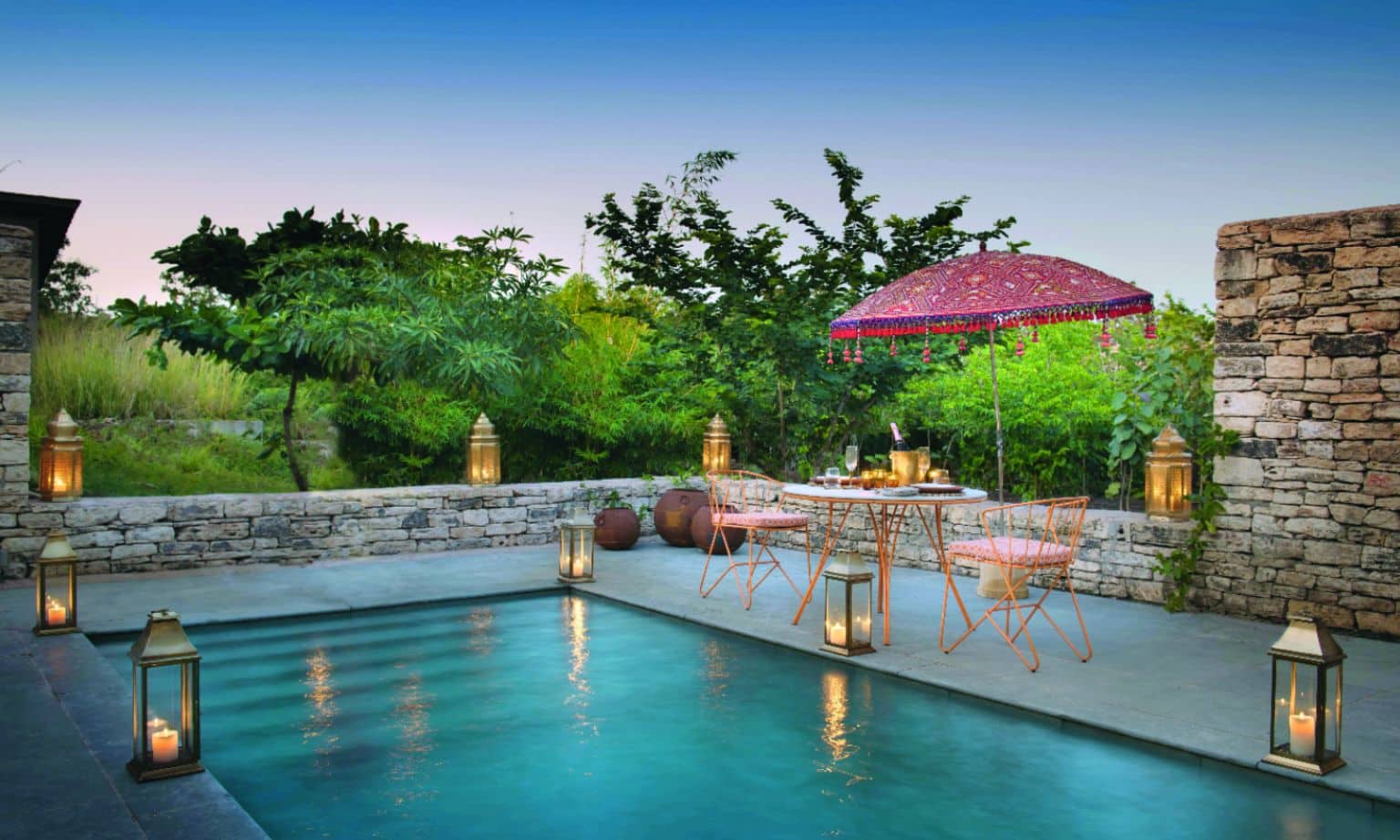
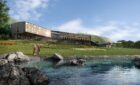
And between these drives, it was no hardship to indulge in the pleasures of Aramness, which provides an Indian safari lodge experience in a league of its own; more on par with one you may expect to find in Botswana or South Africa, rather than the sub-continent.
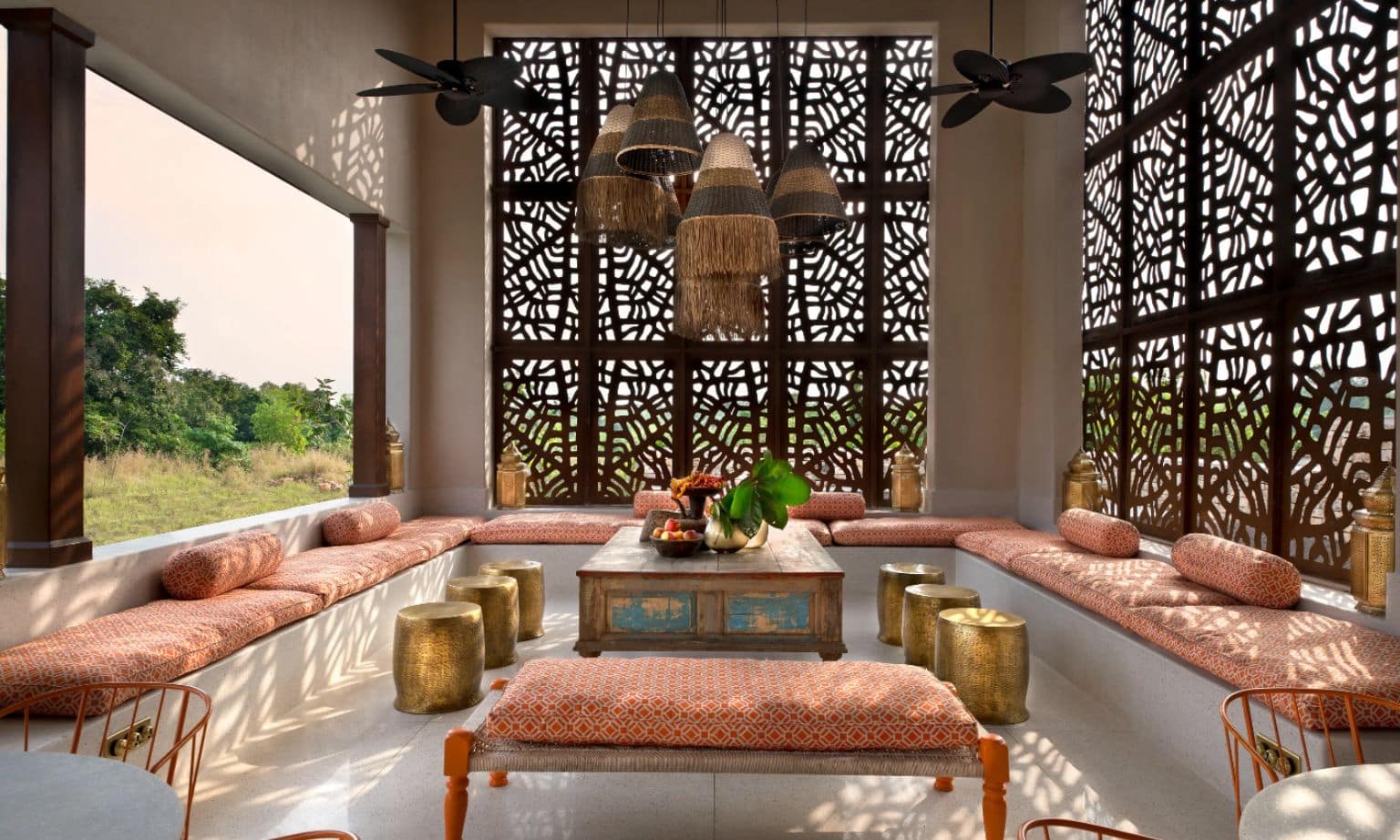
The lodge’s 18 two-storey suites, referred to as kothis, are spread along a winding lane and were inspired by the architecture and layout of a Maldhari ness (settlement), with each promising a clean-line contemporary, minimalist design. They have an indoor-outdoor feel, with upstairs verandas, courtyards and plunge pools (very welcome after a dusty dawn safari). Shared areas include elegant lounges, a library, spa, infinity pool and plenty of lovely hand-carved sandstone jali screens that cast a pleasing dappled light.
Yet such abundant luxury comes at a high price, so after a couple of days, I moved on to the nearby Postcard Gir lodge. At around half the price, it nevertheless proved to be a worthy alternative to Aramness. The 15 villa rooms are airy, set among the mango orchids and organic vegetable and spice gardens that provide the kitchen with zero-mile ingredients.
As I sat on my final morning, tucking into a breakfast of hot rotla rotis served with warm ghee, roasted chillis and jaggery, I felt a great sense of privilege. Few foreign tourists make it this far off the well-beaten tracks of Rajasthan and Madhya Pradesh – but they really should. Susan Gir offers a whole new way to experience majestic big cats in the wild, but beyond that, it offers a whole new way to safari, too.
Attracting large family groups of locals – who club together to share a jeep, complete with babes in arms and toddlers, for a fun day out – there is a far greater sense of inclusivity here, a sense that these beautiful creatures are for everyone. And in my book, that can only be a good thing.
India’s iconic wildlife experiences
For leopards: Aravali Hills
This is the best place to see wild Indian leopards in a desert environment with the huge advantage of not being a national park, so there is unlimited access day and night including walking safaris, night drives and off-road trails. The sublime Suján Jawai offers an African level of luxury glamping and works with very photogenic local Rabari villagers as guides.
Leopard sightings are almost guaranteed as the predators emerge at dawn and dusk to survey the granite boulder-strewn surreal landscape between traditional pastoral villages for potential prey. Several species of rare birds, deer, crocodile and porcupine also populate the wilderness.
Stay: Suján Jawai camp, Jawai Bandh, Rajasthan. Abercrombie & Kent’s 16-day tour Icons & Hidden Treasures of Northern India (from $13,030 per person) spends two nights at the camp. Sujan Jawai is closed from May to September.
For rhinos: Kaziranga National Park
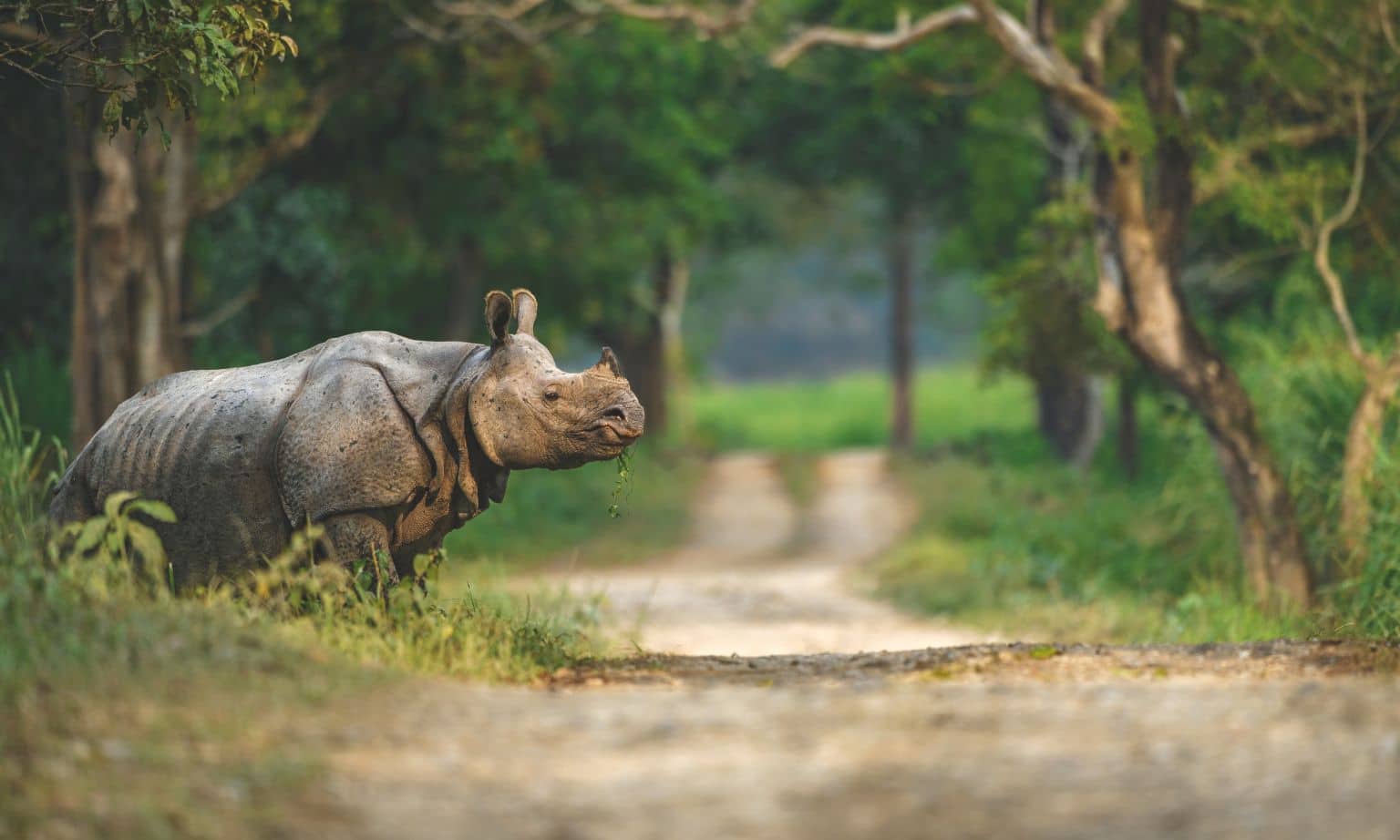
Another ‘out of Africa’ yet essentially Asian wildlife experience can be had at Kaziranga in India’s northeastern state of Assam, a home of the endangered great Indian one-horned ‘unicorn’ rhinoceros. The sight of a mother and calf emerging from the vast expanse of tall elephant grass marshland on a misty morning is unforgettable.
Kaziranga is one of the last parks in India where elephant-back safaris are still on the menu, allowing visitors to move slowly and almost silently among the wildlife. Jeep and boat safari options are also available. As well as rhinos, herds of Indian elephants, wild water buffalo, swamp deer, gharial crocodiles and occasionally even Royal Bengal tigers can be seen on the dawn and dusk safaris.
Stay: Book into Diphlu River Lodge, where an all-inclusive package of safaris and meals costs from $345 per person, per night. Alternatively, Intrepid Travel’s 16-day India Expedition: Sikkim, Assam & Nagaland tour (from $4245 per person) spends two days exploring the park and staying in local hotels.
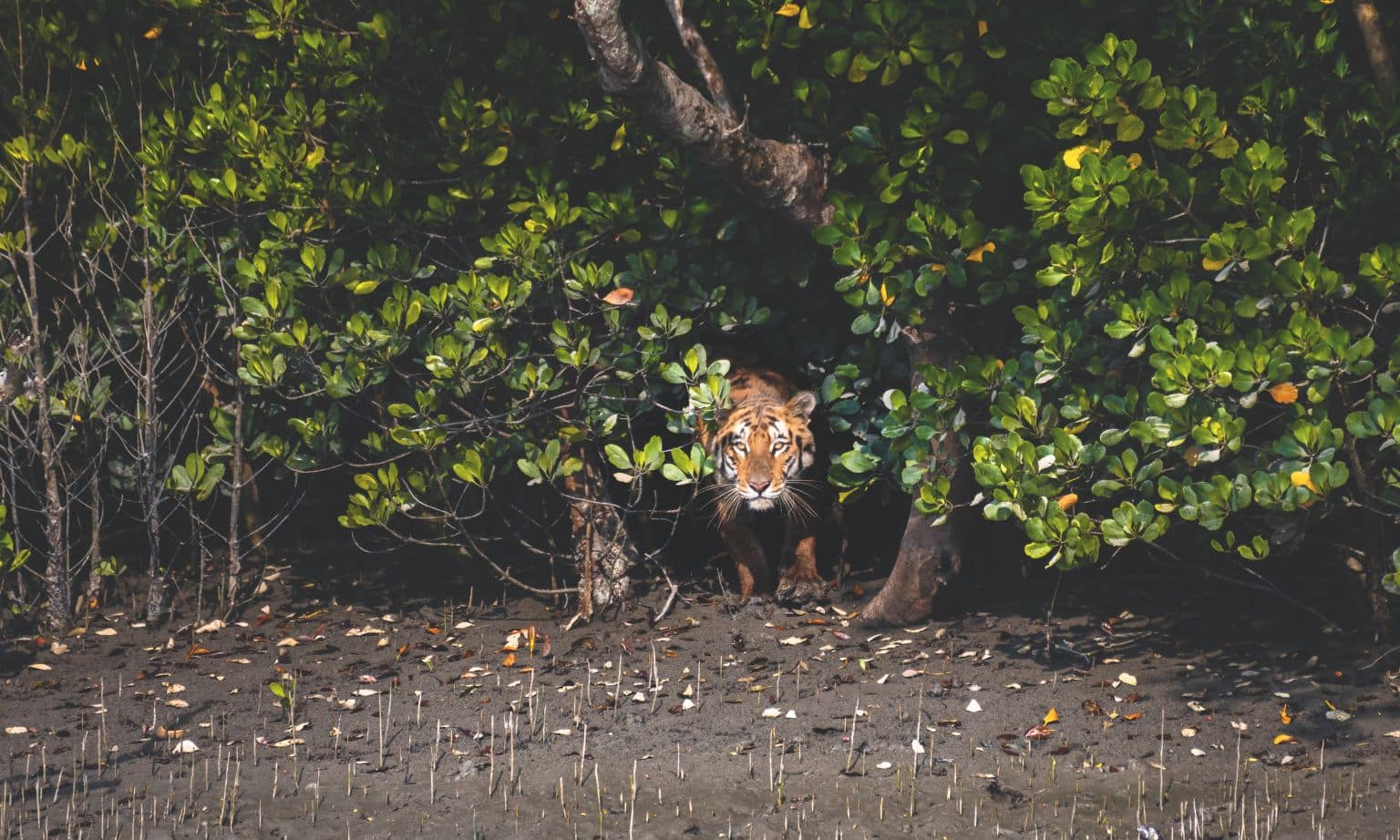
For Bengal tigers: Ranthambore National Park
This is one of the most renowned national parks in Northern India and the perfect base from which to explore the territory of the majestic Bengal tiger. Embark on a safari adventure in search of the tigers as well as leopards, deer, wild boar, striped hyena, monkeys and sloth bears, not to mention an orchestra of birdlife. Tigers are most commonly sighted during May and June.
Stay: The luxury tented accommodation at The Oberoi Vanyavilas, Ranthambore National Park. On Abercrombie & Kent’s 12-day tour The Golden Triangle & Beyond (from $10,520 per person) you stay two nights at the jungle resort and take early morning and afternoon private game drives in an exclusive jeep.

Related Posts
-

Uniworld Boutique River Cruises has unveiled a wave of new developments that promise to reshape the way Australians experience luxury travel.
-
The Comorant at 55 South is designed for guests who want to fly over the Drake Passage.
-
The launch of the company's first vessel has been delayed by two months, and will now set sail for the first time in March 2026.
-
When Crystal launches three Grand Voyages in 2026 taking guests from America, Europe, Africa, Asia and the South Pacific, passengers can look forward to a range of unique shore excursions…