

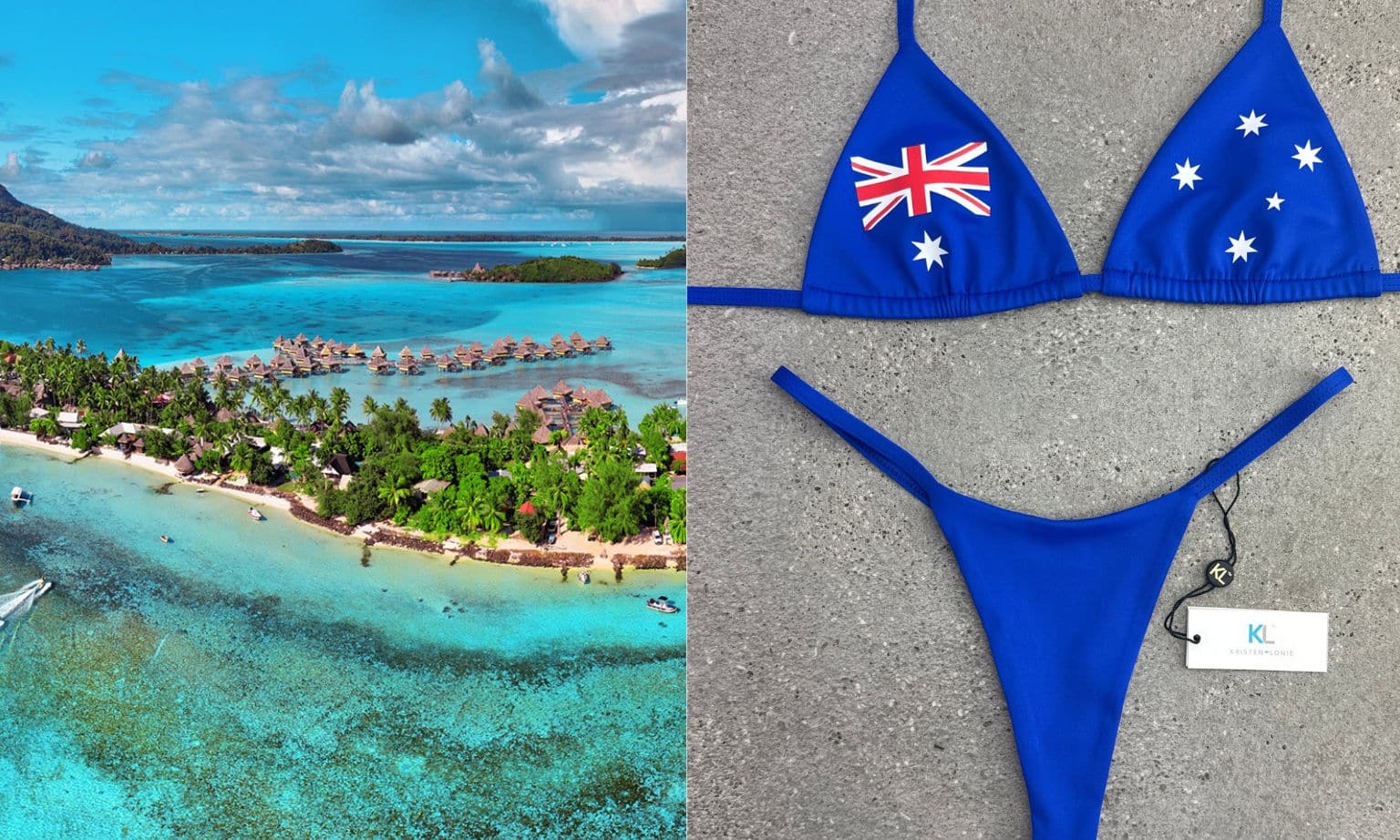
- Cruisers have been reporting that Aussies are still failing to meet dress codes imposed by cruise lines in the South Pacific.
- Local cultures demand a more modest way of dressing – but many Aussie cruisers are still flouting the rules.
- Here’s why it’s offensive – and this is how you should be dressing.
Last week saw the resurfacing of a cruise debate over dress codes and appropriate swimwear for Aussies travellers while in the South Pacific.
The conversation started when we reported that Carnival had sent out a note to cruisers onboard its ships to dress appropriately and cover up when visiting the port of Lifou in New Caledonia.
Guests were told: “To observe the local customs of the island, a respectful dress code is essential. Swimwear should only be worn at the beach or by a pool and should be very modest in nature. G-strings, thongs, monokinis or mankinis should not be worn (even on the beach) and topless sunbathing is also not permitted at any time.
“When exploring the island and its local sites, including churches and market places, casual clothing (such as shorts and a shirt or cover-up) must be worn at all times.”
Why these letters are commonly given to guests, this doesn’t mean cruisers follow the rules or have a full understanding as to why it’s necessary.
Why it’s offensive
Culture and religion in many areas of the South Pacific demands that dressing modestly is the norm. It varies significantly from Australia in terms of what swimwear and clothing is appropriate in what spaces. A combination of religious and indigenous culture and traditions highly encourage modesty. Revealing clothing is not permitted.
For example, common Australian swimwear that reveals a lot of skin such as g-strings or speedos could be offensive to locals in the South Pacific.
However, it’s also important to note that this extends outside of the beach as well.
For example, why Australian’s may be used to seeing someone duck into a shop quickly without a shirt on, or people wearing their swimmers in parks or even stores, this is not common practice in the South Pacific and will be viewed as offensive by some.
Are Aussies failing to dress appropriately?
Many cruisers wrote to Cruise Passenger after a cruise to the Pacific aboard Carnival Splendor and mentioned that despite the warnings, people have not been following the rules and continue to wear revealing swimwear.
This is making cruisers not only worried about upsetting locals, but also being worried about future port stops being cancelled if Aussies can’t learn to adapt to the local culture.
A reader wrote: “They did not cover up. It was rude and disrespectful and Carnival should not have allowed them off the ship dressed like that. It will ruin it for everyone if people don’t respect the culture.”
One cruiser even reported that they saw crew members who are dancers onboard wearing swimwear that did not fit the dress code.
“We went to Mystery Island and everyone was asked to dress accordingly but the dance crew got off and went for a swim with very little on. I think the cruise line should be enforcing it with their own staff too.”
Many other cruisers reported this as well, however, there was also a debate between whether this was due to cruisers simply ignoring the rules, or a failure in communicating them effectively.

Are Carnival giving enough warnings?
One Carnival cruiser agrees with the dress code warnings and their importance, but believes Carnival doesn’t prioritise communicating it as much as with other rules and topics.
“It’s disrespectful, we might lose Lifou and Mystery as ports. Carnival should be have people on the island sending them back to the boat, and announce it over the speakers to deter it, instead of telling us 500 times that you can’t take food for the boat.
Another cruiser said they feel that the warnings should be more clear before the cruise, so people can pack with the knowledge of what is and isn’t appropriate.
“We were given a letter with the rules but I would bet that the young woman wearing the g-strings wouldn’t have bought any other swimmers. They need to tell people prior to sailing. I know my Daughter only owns g-strings and would have needed to buy a pair of swimmers just for the trip.”
Carnival does hand out notices among other ways of informing guests.
Given that it is an important issue for the local community, it was suggested that Carnival could also use crew members to police the policy and potentially punish customers who refuse to abide by the dress code
Tips to better cover up
- Overly revealing swimwear should be avoided, meaning no g-strings or speedos. Bikinis with more coverage, one pieces and board shorts are better options.
- When moving around in towns, it’s better to wear normal clothes rather than swimmers.
- To make it easier, bringing light clothing that covers your skin is a great option. For example sarongs, light weight dresses and cover ups for women, or linen shirts for men.
- Many recommend the ‘knee and shoulder’ rule, which means always have your knees and shoulders covered when travelling through the town. Packing two sarongs is ideal, as you can drape one around your waist and another around your shoulders.
- In some countries, for example Fiji, generally only the village chief can wear a hat, and you should remove headwear before your visit.
- If you haven’t packed well or have forgotten to bring acceptable clothes on the day, you can generally buy a sarong in most towns at the market, and you should do this first before travelling to different parts of town.
- Make sure you actually read the notices from the cruise line, don’t just skim them. The cruise line can provide information specific to each port and don’t be afraid to ask crew members if you’re unsure about anything.

Related Posts
-

A massive 8.8 magnitude earthquake near Russia has led to the issuing of tsunami warnings across the Pacific. A range of cruise ships could be affected, with warnings issued across…
-
It’s a cruise debate as old as the sails on a schooner: Can denim jeans - even the coolest brands - ever be worn on a formal night?
-
Cruise Passenger readers always have plenty to say about what’s going on in Australian cruise, and in the broader cruise community.
-
Aussie cruisers heading out to the South Pacific have received a stern warning from Carnival to use swimwear that isn't offensive to the locals of these islands.